 English
 简体中文

Short answer: Rental moves the buying decision from the machine user to the company monetizing uptime, and the metric from purchase price to cost per hour. Five levers decide that number: modular split construction (repair without machine downtime), quick-change roller interfaces (4 hours to 1 hour per roller), pre-fitted sensor points (failures handled in planned windows), cross-model parts commonality (safety stock halved), and repairability that protects residual value.
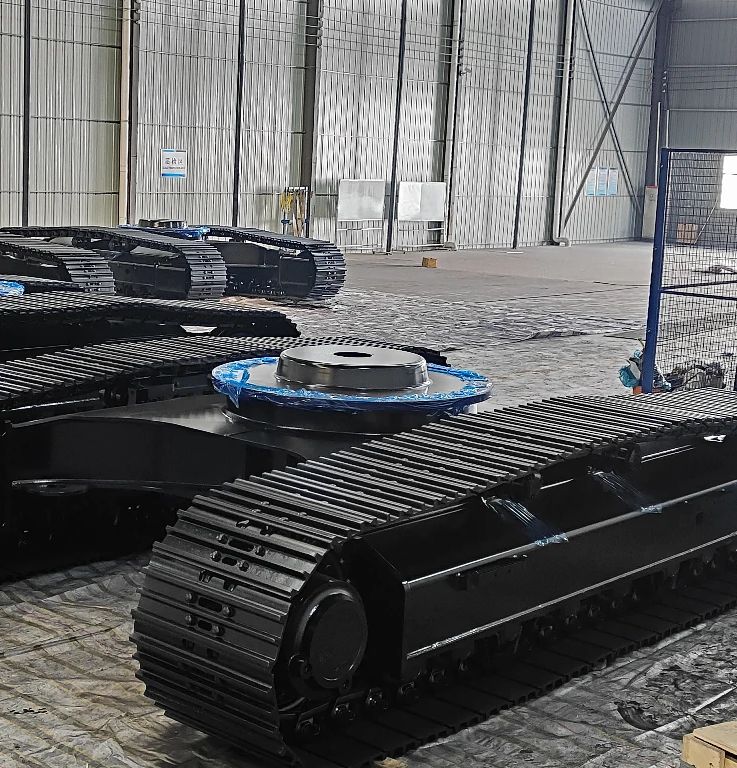
1. The decision-maker changed, so the metric changed
In owned fleets the chassis is a component of the machine and negotiation centers on price and lead time. Rental companies price revenue by the day: a chassis down for a day costs rent, not parts. Their technical negotiations lead with MTBF, single-repair downtime and committed parts availability; price slips to third. This reshuffles the supplier's design priorities - a costly structural optimization may be worth less than an interface that saves three hours per roller change.
Lifecycle costing finally has a real calculator. Rental firms divide purchase plus maintenance plus downtime minus residual by total hours. A chassis supplier who walks in with that sheet computed for their own product negotiates from a different table.
2. Five maintainability levers
Modularity: track beams, drive units and roller sets as independently extractable modules - the split frame with fitted bolts is the base, and the hidden requirement is repeatable location: modular only holds if alignment stays in tolerance after five teardown cycles. Quick-change interfaces: shaft-end fast-release with jack-out threads brings single-roller time from 4 hours to 1; the interface must be foolproofed so wrong assembly simply does not fit.
Sensor pre-fit: three measurement points - cavity temperature, final-drive oil temperature, motor case-drain pressure - with mounting bosses and wiring channels in the frame, so retrofit needs no drilling or welding. Parts commonality: shared rollers, bolts and seals across models halves the fleet's SKU count - the most valuable single clause in framework agreements. Repairability: replaceable rail-seat inserts, flippable sprocket rings, frames that accept straightening - these set residual value, and residual value is the denominator of rental pricing.
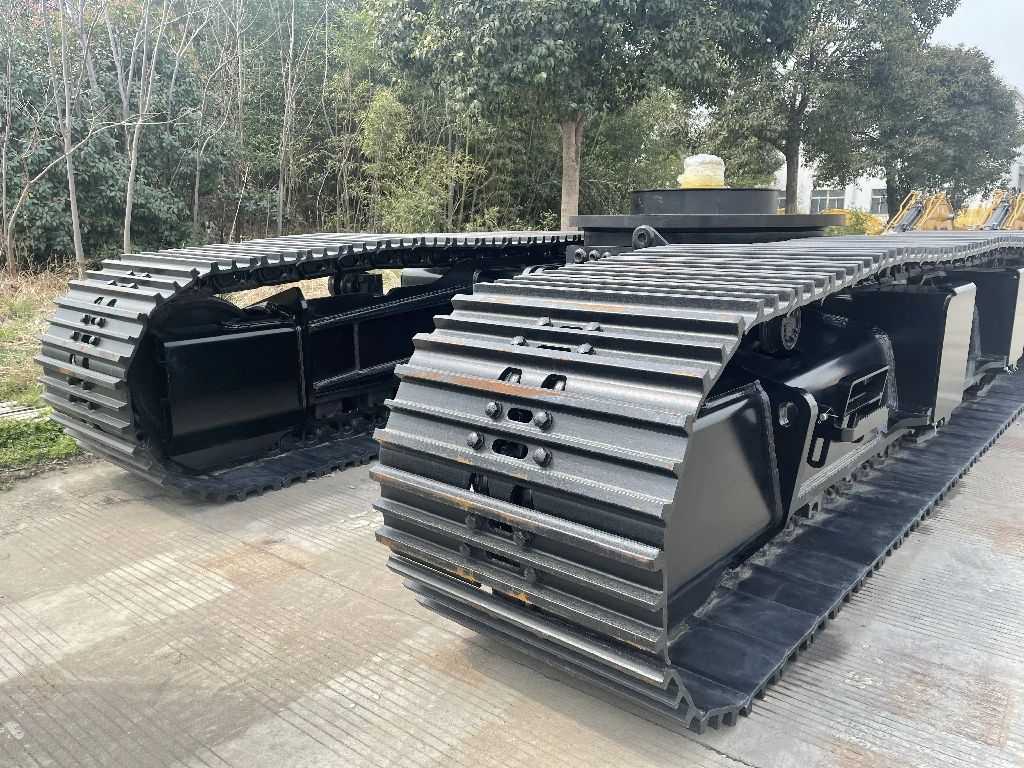
3. MAGEON's response and the numbers
Since 2026 MAGEON offers rental customers a maintainability package - quick-change roller interface, sensor pre-fit and a commonality list as options - deployed on 90 units across two rental groups. Follow-up data: single-roller replacement averaged 3.8 hours down to 1.1, unplanned downtime fell 42 percent, and SKU count dropped from 47 to 21 items. Those numbers now sit in the customers' asset-evaluation sheets and feed directly into reorder decisions.
The other structural change is data delivery: fleets demand CAN-bus field lists (hours, fault codes, temperature trends) compatible with their fleet-management systems. On custom projects the protocol field list is now a contract annex, equal in status to the mechanical interface drawing.
4. What OEMs should write into the spec
For models aimed at rental channels, add three clauses to the chassis technical agreement: a maximum teardown-and-replace time per module (verified at acceptance), a commonality ratio (60 percent or better across models), and a field-level data-interface protocol. Traditional sales channels tolerate omitting these; rental channels make them the difference between utilization rates - and therefore between OEM market share in that channel.
5. Maintainability levers and measured results
| Lever | Design content | Result (90 units) |
|---|---|---|
| Quick-change roller interface | Shaft-end release + jack-out threads + foolproofing | 3.8 to 1.1 hours per roller |
| Sensor pre-fit | Temperature / oil / drain-pressure points pre-wired | Unplanned downtime -42% |
| Parts commonality | Cross-model shared items list | SKU 47 to 21 items |
| Repairability | Replaceable inserts, flippable rings, straightenable frames | Enters rental residual-value model |
Key takeaways
- Rental replaces purchase price with cost per hour; MTBF and repair downtime lead the technical negotiation.
- Five levers - modularity, quick-change, sensor pre-fit, commonality, repairability - add up to lifecycle cost.
- Measured on 90 units: roller change 3.8 to 1.1 hours, unplanned downtime -42 percent, SKU 47 to 21.
- OEMs targeting rental should write teardown-time limits, commonality ratios and data protocols into the chassis agreement.
Further reading
Steel Track Undercarriage System 1-60 Tons · MG050 0.5-Ton Rubber Track Undercarriage · Industry trends column
Prepared by the MAGEON engineering team from custom project records and factory load-test data. Figures are engineering references; final selection should follow approved drawings and the actual duty spectrum.