 English
 简体中文

The 2026 crawler undercarriage market is defined by three forces pulling in different directions: infrastructure investment keeping demand for steel track chassis strong, the electrification of compact construction equipment pushing rubber track adoption upward, and OEM outsourcing consolidating custom undercarriage supply into specialised manufacturers rather than in-house production. For a buyer, the practical outlook is that a customised crawler undercarriage is becoming a standard purchased component — specified from a drawing and delivered as a complete assembly — rather than a part that equipment builders fabricate themselves. MAGEON, manufacturing steel track undercarriages from 1 to 60 tons and rubber track undercarriages from 1 to 15 tons from Xuzhou, Jiangsu, supplies exactly this outsourced, drawing-based model to more than 60 export markets.
This article sets out the three market forces, what they mean for lead times and specification, and how a buyer should position a custom undercarriage order in 2026.
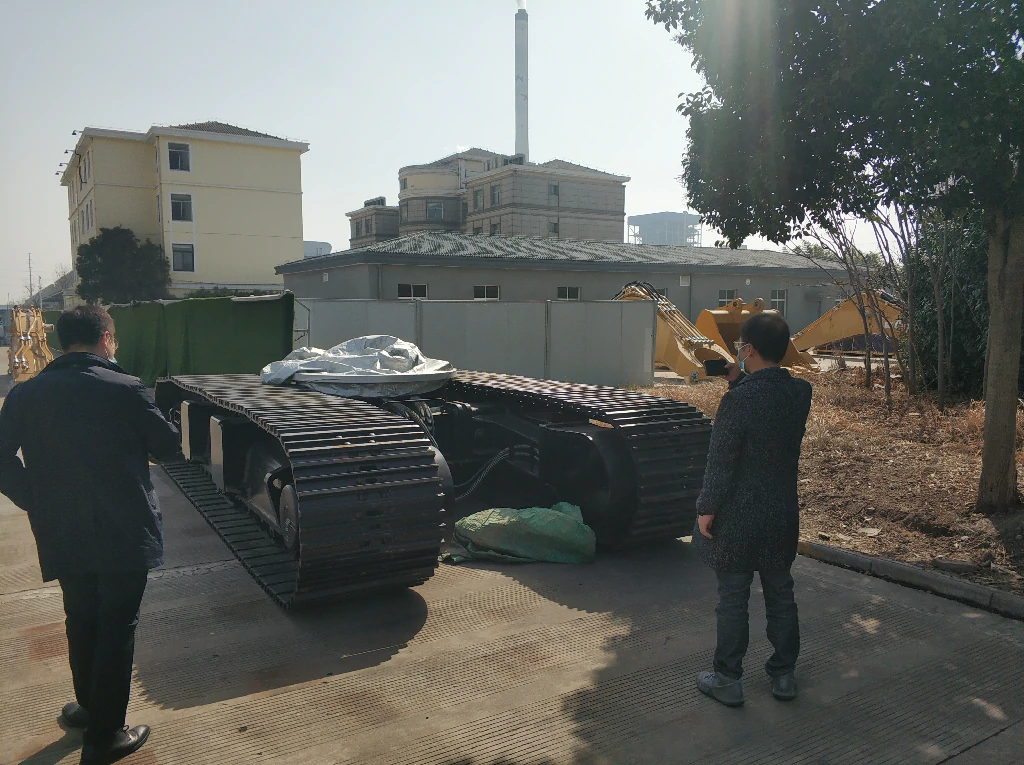
What is driving demand for crawler undercarriages in 2026?
Three demand drivers dominate. The first is infrastructure and mining capital expenditure, which keeps the 15–60 ton steel track chassis class busy — drilling rigs, crawler cranes, mining equipment and heavy excavators all run on steel track undercarriages with 200–500 mm track width, and MAGEON's steel range covers this envelope in full. The second is the electrification of compact equipment, which is expanding the 1–15 ton rubber track class, because a low-ground-pressure rubber pad is both battery-friendly and surface-friendly for municipal and agricultural machines. The third is the repair and retrofit cycle on ageing fleets, which generates steady demand for drop-in replacement chassis built to an existing machine's drawings.
The common thread is customisation. Buyers are not purchasing off-the-shelf chassis in this market; they are ordering to a drawing, with the mounting flange, bolt pattern, drive shaft height and hydraulic interface matched to a specific host machine. That is the structural fact that shapes everything else in the 2026 outlook.
Why are OEMs outsourcing custom undercarriage production?
Because the economics of a bespoke chassis no longer favour in-house fabrication. A customised steel track undercarriage requires a welded Q345B frame, matched running gear, and a drive package — hydraulic, electric or mechanical — integrated with the machine's power system, plus the quality documentation (factory inspection report, material mill certificate, ISO 9001:2015 certification) that an OEM's own buyers now demand. Building that in-house ties up welding and machining capacity for a component that is not the OEM's differentiator.
The result is that the undercarriage has become a standard purchased assembly, specified from a drawing in DXF, DWG or PDF format and delivered complete. MAGEON's minimum order quantity of one set is part of this — an OEM can order a single prototype chassis without a batch penalty, which removes the last reason to fabricate a one-off in-house.
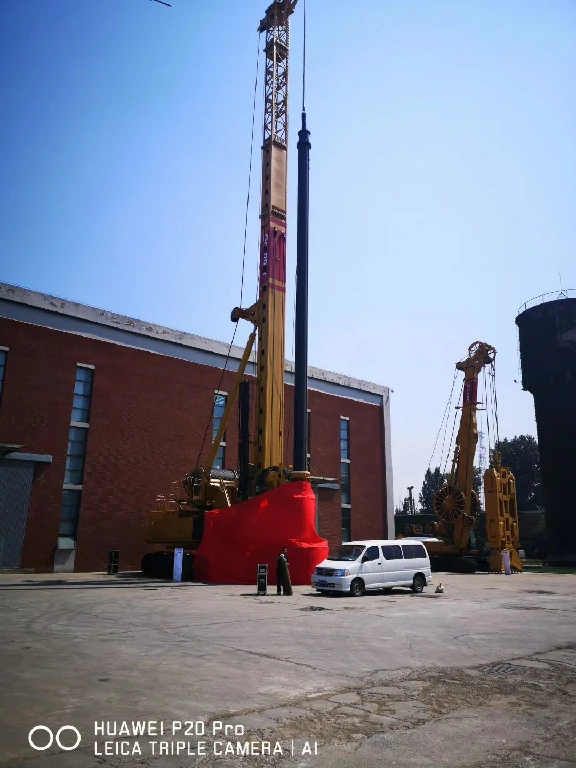
What is the outlook for steel versus rubber track demand?
Both grow, but on different paths. Steel track chassis demand tracks the heavy machinery cycle — mining, construction, drilling and crane work — and is steady, driven by the 5,000–8,000 working hour chain life that makes a steel chassis the durable capital choice above 15 tons. Rubber track chassis demand tracks electrification and surface-protection applications, growing faster in the compact 1–15 ton class where a rubber pad's 800–1,500 hour life is offset by its low ground pressure and battery-friendly rolling resistance.
The crossover product is the steel track with rubber pads, which MAGEON supplies at 3–15 tons and 2–4 km/h travelling speed for drilling rigs and mobile crushers that move between paved and soft surfaces. As electrified machines grow in size, this hybrid configuration is where the two demand curves meet.
How are lead times and specification changing in 2026?
Lead times are stabilising around a build-to-order norm: approximately 20 days for one set and 30 days for two to three sets, with longer timelines negotiated for volume orders. The reason the window is predictable is that the chassis is built to a drawing, so the fabrication cycle starts when the design is frozen — and the design cycle is the variable a buyer controls, not the factory.
Specification is becoming more data-driven on both sides. Buyers are expected to supply machine weight and load distribution, the mounting interface dimensions, travelling speed, ground and duty conditions, and the drive configuration; suppliers like MAGEON return a configuration and price within one working day of a technical enquiry and confirm the interface before any material is cut. The 2026 buyer who loses time on a custom undercarriage loses it at the drawing stage, not at the machine tool.
What should a buyer do differently in 2026?
Treat the undercarriage as a spec'd component, not a commodity. That means sending a drawing and the five data points (weight and load distribution, interface dimensions, travelling speed, ground conditions, drive configuration) at first contact, and expecting a configuration and price back quickly. It also means checking the supplier's documentation — the material mill certificate, factory inspection report and video outgoing inspection — because in an outsourced market the paper trail is what separates a build-to-order manufacturer from a reseller.
Finally, a buyer should confirm the supplier can deliver the consumable set — chain, shoes, rollers, idler and sprocket — against the exact configuration, because the whole point of a reconditionable chassis is that the frame outlasts the machine and only the consumables are renewed. MAGEON's model is built on this: a Q345B frame that is a capital component, consumables supplied against the configuration, and a one-year or 1,000-hour warranty under ISO 9001:2015 certification.
| Market force | Effect in 2026 | MAGEON position |
|---|---|---|
| Infrastructure and mining capex | Sustains 15–60 ton steel chassis demand | 1–60 ton steel range, 200–500 mm track width |
| Electrification of compact equipment | Grows 1–15 ton rubber track demand | 1–15 ton rubber range, battery-friendly |
| OEM outsourcing | Chassis becomes a standard purchased assembly | Drawing-based, MOQ 1 set, 60+ export markets |
| Fleet repair and retrofit | Steady drop-in replacement demand | One-to-one interface survey, drop-in design |
Frequently asked questions
Is the crawler undercarriage market growing in 2026?
Yes, on two fronts. Heavy machinery investment sustains steel track chassis demand in the 15–60 ton class, while the electrification of compact equipment expands the 1–15 ton rubber track class. MAGEON supplies both ranges and exports to more than 60 markets, and the structural trend is that the custom undercarriage is becoming a standard purchased component specified from a drawing.
Why do OEMs buy undercarriages instead of making them?
Because a bespoke chassis needs a welded Q345B frame, matched running gear and an integrated drive package, plus the documentation that OEM buyers now demand. Building that in-house ties up capacity for a component that is not the OEM's differentiator, and a minimum order quantity of one set removes the batch penalty that used to make one-off fabrication attractive. The undercarriage has become a spec'd purchased assembly.
What are typical lead times for a custom undercarriage in 2026?
Approximately 20 days for one set and 30 days for two to three sets from the point the design is frozen, with longer timelines negotiated for volume orders. The variable a buyer controls is the design stage — sending complete drawings and the five data points (weight, interface, speed, ground conditions, drive) at first contact keeps the whole schedule tight.
Is steel or rubber track demand growing faster?
Rubber track demand is growing faster in the compact 1–15 ton class, driven by electrification and surface-protection applications, while steel track demand is steadier and tracks the heavy machinery cycle. The crossover product is the 3–15 ton steel track with rubber pads, which serves machines that move between paved and soft surfaces and is where the two demand curves meet.
What should I check before choosing an undercarriage supplier?
Check that they build to order from a drawing rather than reselling stock, that they supply the material mill certificate and factory inspection report with the chassis, that they can deliver the consumable set against the exact configuration, and that the mounting interface is confirmed in writing before manufacturing. MAGEON's process — one-to-one interface survey, configuration and price within one working day, video inspection before dispatch — is the benchmark for those checks.
What is the minimum order and warranty?
The minimum order quantity is one set, so a prototype carries no batch penalty. Every chassis ships with a one-year or 1,000-hour warranty under ISO 9001:2015 certification, a material mill certificate for the Q345B beam, a factory inspection report, and video outgoing inspection before dispatch. Packaging is a wooden pallet or case, with FOB available at Shanghai, Ningbo or Shenzhen.