 English
 简体中文

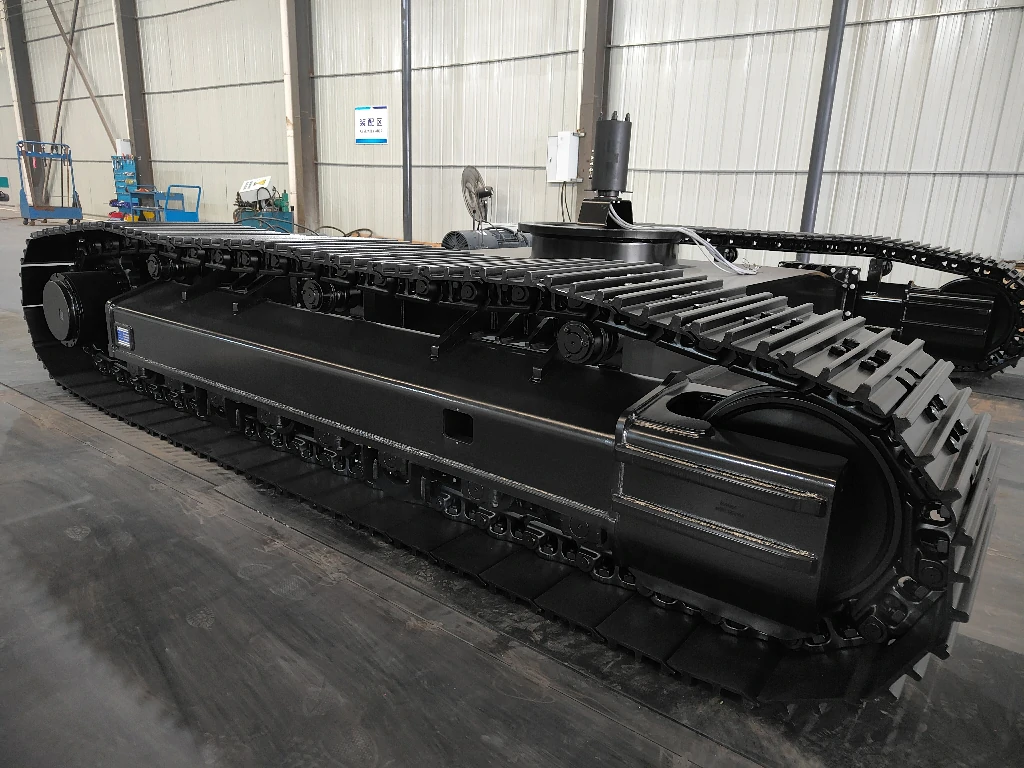
The most consequential sustainable trend in track chassis manufacturing is the shift from disposable wear parts to a long-lived, reparable frame. A crawler undercarriage is not consumed as a unit — the welded Q345B frame outlasts the machine, and the chain, track shoes, rollers, idler and sprocket are replaced as scheduled consumables. MAGEON designs its steel track undercarriages from 1 to 60 tons around exactly this principle: a 5,000–8,000 working hour chain life on a frame that is not itself a wear item, so that a machine is not scrapped for a worn chassis but is reconditioned on a reusable structure. The sustainability story in this industry is therefore less about marketing and more about how many hours a given tonne of steel works before it is replaced.
This article covers the four sustainable trends that actually matter — life extension, material traceability, energy efficiency through track choice, and reconditioning — and what an OEM should ask a supplier about each.
Why is frame life the biggest sustainability lever?
Because the frame is the most material-intensive part of the chassis. A welded Q345B high-strength steel structure, optimised for load capacity and torsional rigidity, represents the majority of the embodied material in an undercarriage, and if it is scrapped when the chain wears out, that material is written off. MAGEON's design keeps the frame as a capital component and treats the running gear as consumables, which means the environmental cost of the heavy steel is amortised over a much longer service life.
The same logic applies to the rubber track range from 1 to 15 tons, where the pad set is the consumable at 800–1,500 working hours but the steel-cord-reinforced pad is replaced in sections rather than as a complete set, and the frame and running gear are retained. The sustainable choice is the one that keeps the reusable structure in service longest, and that is a design decision, not a material label.
What does material traceability contribute?
Traceability is what makes a sustainability claim verifiable instead of rhetorical. MAGEON supplies a material mill certificate with every chassis, documenting the steel used in the Q345B beam, alongside the factory inspection report and ISO 9001:2015 certification. For an OEM that is itself making sustainability commitments to its buyers, the certificate is the evidence that the undercarriage supplier can name the material, its specification and its origin rather than asserting them.
Traceability also supports the reconditioning decision. A maintenance team that knows the exact material and specification of a chain can specify a matching replacement and rebuild the running gear rather than replacing the whole chassis, and the certificate is what lets them do that with confidence. This is the practical link between documentation and the extended life that sustainability depends on.
How does track material choice affect energy and emissions?
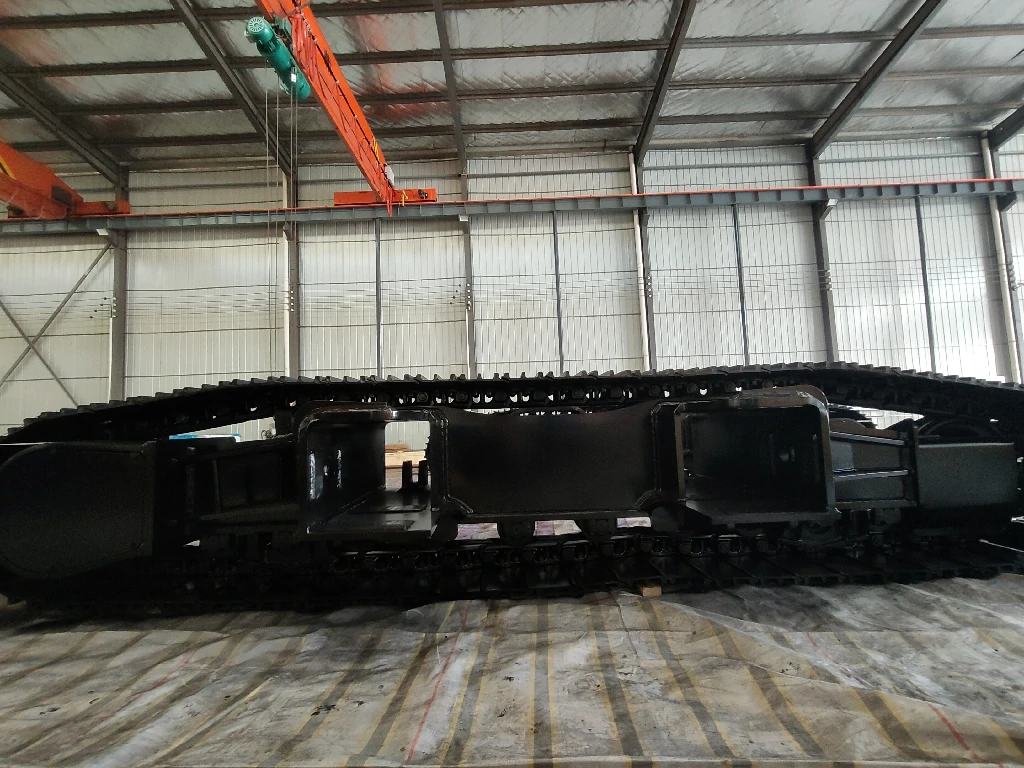
Track material affects both the machine's energy use and the ground it works on. A rubber track undercarriage spreads the load across the full pad width, giving low ground pressure and low rolling resistance on soft ground — which on an electrified machine translates directly into more range from the same battery, and on any machine into less energy spent overcoming the machine's own sinking. A steel track concentrates the load on the grouser bar, which is efficient on rock and hardpan but wasteful on soft ground and damaging to paving and turf.
The sustainable specification is therefore the one matched to the duty: a rubber or rubber-padded steel track for machines that travel on surfaces that must be preserved, and a bare steel track for machines that work in rock where ground damage is not a consideration. MAGEON's 3–15 ton rubber-padded steel track undercarriage, at 2–4 km/h travelling speed, is the bridge for drilling rigs and mobile crushers that move between paved and soft surfaces — it keeps the steel load path while the pads protect the surface.
What is reconditioning, and why does it matter for fleets?
Reconditioning is the practice of rebuilding a worn undercarriage onto its existing frame rather than replacing the whole assembly. Because the frame and running gear are retained and only the consumables are renewed, the material and energy cost of a recondition is a fraction of a new chassis, and the downtime is shorter. This is where the design decision to make the frame reusable pays off — a chassis that cannot be reconditioned because the frame was consumed along with the chain is the least sustainable design, whatever its marketing says.
For a fleet, reconditioning is also a cost decision. MAGEON supplies the complete consumable set — chain, shoes, rollers, idler and sprocket — so a rebuild is a parts order rather than a new chassis purchase, and the one-to-one survey of the mounting interface means the reconditioned chassis drops back onto the same host structure it came from. The minimum order quantity of one set means a single machine's recondition is as practical as a fleet programme.
What should an OEM ask a supplier about sustainability?
Ask whether the frame is designed as a reusable structure or consumed with the chain, because that is the difference between a chassis that is reconditioned and one that is scrapped. Ask for the material mill certificate and the inspection package, because a claim without documentation is not verifiable. Ask whether the consumable set can be supplied on its own, because that is what makes reconditioning possible. And ask about the track material recommendation for the actual duty, because a machine forced onto the wrong track wastes energy and damages the ground it works on.
MAGEON's answer to these is built into how the chassis is specified: a Q345B frame that outlasts the chain, a one-year or 1,000-hour warranty under ISO 9001:2015 certification, a full consumable set available against the exact configuration, and a requirement assessment that matches track material, width and drive package to the machine's weight, ground conditions and duty.
Frequently asked questions
Is a steel track chassis more sustainable than a rubber one?
Neither is intrinsically more sustainable — the sustainability comes from the design, not the material. A steel chassis whose Q345B frame is reusable and whose chain is replaced as a consumable over a 5,000–8,000 hour life amortises its heavy steel across a long service. A rubber chassis whose pad set is replaced in sections at 800–1,500 hours and whose frame is retained is equally reconditionable. The sustainable choice is the one matched to the duty, because a machine on the wrong track wastes energy and damages the ground.
How does MAGEON document the sustainability of its chassis?
Through the material mill certificate for the Q345B beam, the factory inspection report, and ISO 9001:2015 certification, supplied with every customised chassis. These document the material and its specification so that the frame can be reconditioned and the consumables specified to match, rather than the sustainability being asserted without evidence.
Can an existing undercarriage be reconditioned rather than replaced?
Yes, and this is the highest-value sustainability practice in the industry. Because the frame is a reusable structure and the consumables are chain, shoes, rollers, idler and sprocket, a worn chassis can be rebuilt onto its own frame with a parts order rather than a new chassis purchase. MAGEON supplies the consumable set against the exact configuration, and the one-to-one interface survey means the reconditioned chassis drops back onto the same host machine.
Does the track material change the machine's emissions?
Indirectly, through energy use. On soft ground a rubber track's low ground pressure means less energy spent climbing out of the machine's own rut, which on an electrified machine becomes more range from the same battery. A steel track on soft ground sinks and wastes energy, while on rock it is the efficient choice. The track material is therefore a genuine energy decision on a battery platform, not just a wear decision.
What is the MOQ for a reconditioning parts order?
The minimum order quantity is one set, so a single machine's recondition is as practical as a fleet programme. Standard lead time is approximately 20 days for one set and 30 days for two to three sets, and the parts ship with the same documentation — material mill certificate, factory inspection report and video inspection — as a new chassis.
Why does the frame outlasting the chain matter for sustainability?
Because the frame is the most material-intensive part of the chassis. If it is scrapped when the chain wears out, that embodied material and the energy that produced it are written off. Designing the frame as a reusable structure — as MAGEON does with the Q345B beam across the 1–60 ton steel range — means the heavy steel works for the life of the machine and beyond, and only the light consumables are renewed.