 English
 简体中文

AI and IoT are changing crawler undercarriage maintenance in one decisive way: they move it from a fixed schedule to a condition-based one. Instead of lubricating every 200–250 working hours and replacing wear parts when the manual says so, a track chassis fitted with vibration, temperature and wear sensors reports its actual state, and the maintenance decision is made from that data rather than from a calendar. MAGEON, as a manufacturer of customised steel and rubber track undercarriages from 1 to 60 tons, sees the practical value of this shift not in the sensors themselves but in the two numbers they protect: the 5,000–8,000 working hour life of a steel chain, and the 800–1,500 hour life of a rubber pad set.
This article explains what condition monitoring actually changes for an undercarriage, which failures it catches before they become recoveries, and what an OEM or fleet owner should ask a chassis supplier about when the machine will carry sensors.
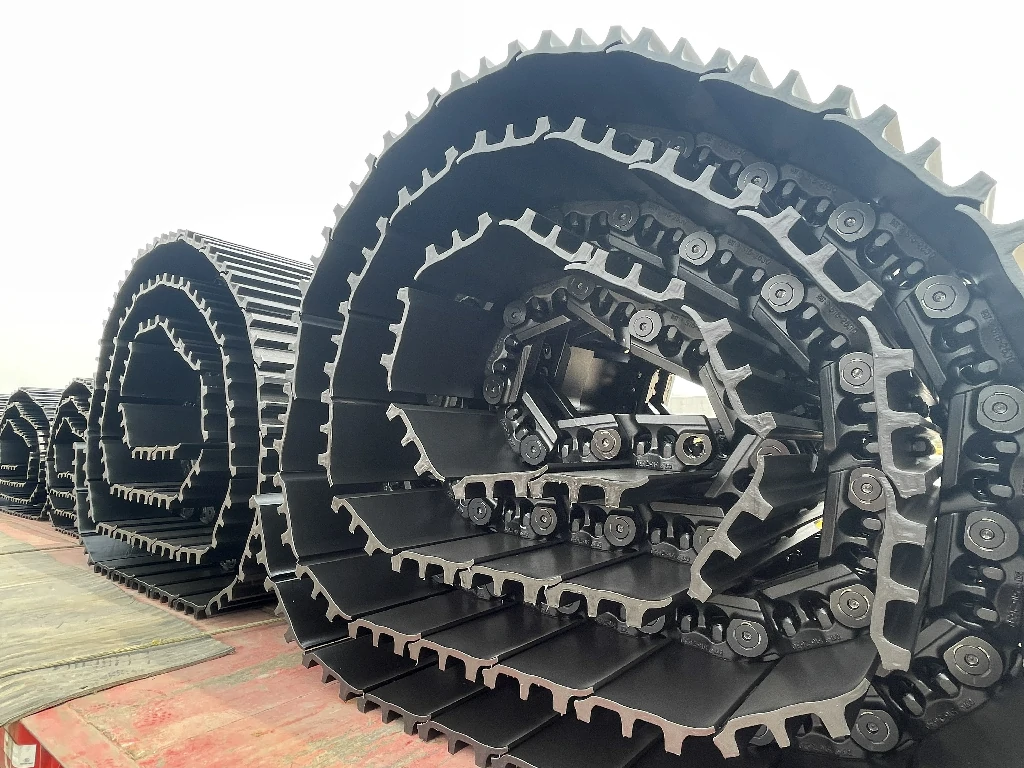
What does condition monitoring actually measure on an undercarriage?
Four signals cover most of the value. The first is track roller and idler vibration, which changes characteristically as a bearing begins to fail long before the roller seizes. The second is drive sprocket and travel gearbox temperature, which rises under the abnormal friction that precedes a seizure. The third is track tension, which drifts as the chain or pad wears and which is currently a manual check that is easy to miss. The fourth is wear measurement on the grouser bars and the chain pitch, which today is done with a gauge by a technician and which is exactly the kind of repetitive measurement a sensor can do continuously.
The important distinction is that none of this removes the need for physical inspection — an undercarriage still has to be looked at, because a crack in a welded Q345B frame does not announce itself through a vibration signature the way a failing bearing does. What the sensors change is the cadence: they tell you when to look, instead of looking on a fixed cycle and hoping.
Why does condition-based maintenance matter underground?
Because a part that fails 300 metres underground is a recovery, not a repair. In mining duty — one of the harshest classes MAGEON's steel track undercarriages serve — the availability cost of a seized roller or a broken chain is not the part price, it is the lost shift, the crew, the ventilation and the power that went with it. A sensor that flags a degrading roller two weeks before it seizes lets the part be changed at a planned interval on the surface, which is the difference between a consumable and a breakdown.
The same logic applies to any machine whose downtime cost dominates the parts cost — a crawler crane mid-lift, a drilling rig mid-hole, a crusher mid-campaign. Condition-based maintenance is not about being clever with data; it is about moving the repair out of the working cycle.
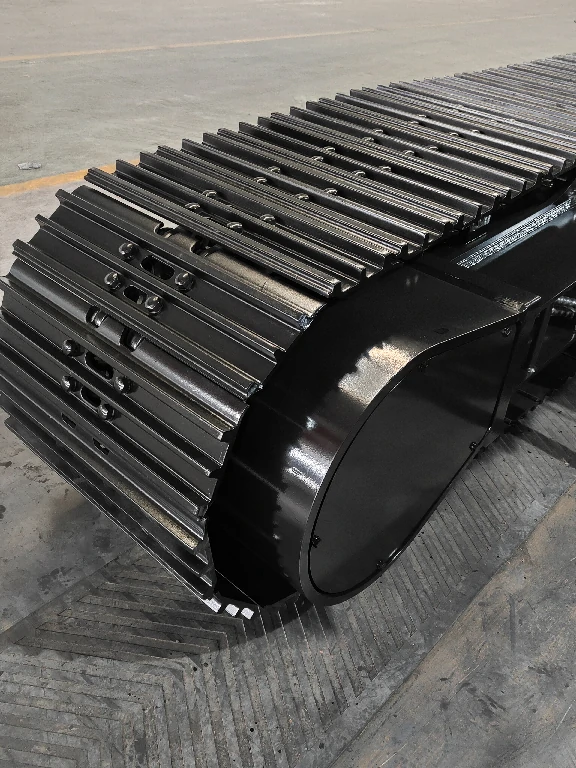
How does IoT change the spare parts decision?
IoT changes the spare parts decision by making wear predictable rather than reactive. A fleet owner who knows, from continuous wear measurement, that the chain on machine seven is degrading 12% faster than the fleet average can order the replacement chain before the machine reaches its wear limit — and can hold one chain for the fleet instead of one per machine. This is the undercarriage equivalent of just-in-time parts, and it depends on the chassis supplier being able to supply the exact consumable set on demand.
MAGEON's position is that this is an argument for specifying a chain and track configuration with a genuine standard equivalent where possible, even when the frame and mounting interface are fully custom. A non-standard pitch or width creates a bespoke spare part that cannot be substituted, and that breaks the predictability that IoT is supposed to create. The material mill certificate supplied with each chassis is what lets a maintenance team specify a matching replacement with confidence.
What is still a human decision, even with sensors?
Three things remain human. The first is the ground itself — no sensor tells you that a site has become more abrasive, or that the machine is crossing a new paved surface, and the track material choice between bare steel, rubber-padded steel and full rubber is a site decision that sensors only ever confirm after the fact. The second is the mounting interface: whether a chassis bolts onto the host structure is settled at the design stage by survey, and no amount of condition data changes a flange that does not fit.
The third is the maintenance of the monitoring itself. A sensor is a component that can fail, and a false "healthy" reading is worse than no reading at all, because it removes the human check that would otherwise have caught the problem. Condition-based maintenance augments the technician, it does not replace the discipline of scheduled inspection and the 200–250 hour lubrication interval that MAGEON specifies for steel track undercarriages.
What should you ask a chassis supplier about IoT readiness?
Ask three questions. First, does the chassis design leave a mounting position and a protected route for sensors at the rollers, idler and sprocket, or will the customer have to modify the frame to fit them. Second, can the supplier deliver the consumable set — chain, shoes, rollers, idler and sprocket — in the exact specification so that predictive ordering has something to order against. Third, does the warranty and the inspection package (factory inspection report, material mill certificate, video outgoing inspection) support the data the sensors generate, so that a warranty claim can be resolved against a measured wear history rather than a dispute about what happened.
On the MAGEON side, the chassis is built to order with the mounting flange, bolt pattern, drive shaft height and hydraulic interface customised to the host structure, which means the sensor mounts can be incorporated into the same custom design rather than retrofitted. The drive package — hydraulic, electric or mechanical — is matched to the machine's power system, and for an electrified platform an electric travel drive is the natural place to instrument because it already has a controller.
Frequently asked questions
Do you need to modify the chassis to add condition sensors?
It is better to design the sensor mounts in than to retrofit them. Because MAGEON builds the chassis to order and customises the mounting flange, bolt pattern and drive shaft height to the host structure, the roller, idler and sprocket sensor positions can be included in the same custom design. A retrofitted sensor bracket on an existing frame is possible but less protected, and the cable route is harder to keep away from the track path.
What is the most valuable measurement to start with?
Roller and idler bearing vibration, because a failing bearing gives a characteristic signature long before it seizes, and a seized roller underground or mid-lift is the most expensive single failure. Track tension and grouser wear are the natural additions after that, but the first sensor set should target the failure that costs the most downtime, which in most fleets is the running-gear bearing.
Does condition monitoring replace scheduled maintenance?
No. It changes the cadence of inspection but does not remove the physical checks or the lubrication discipline. MAGEON's steel track undercarriages are still lubricated at approximately 200–250 working hours and inspected on schedule. What the data adds is the ability to look sooner when a signal says so, and to replace a wear part before it fails rather than after.
How does predictive spare parts ordering work in practice?
Continuous wear measurement lets a fleet owner see which machine is degrading faster than the fleet average and order its replacement chain or pad set before the wear limit is reached. This works best when the consumable set has a standard equivalent that the supplier can deliver on demand, which is why MAGEON advises specifying a chain and track configuration with a genuine standard equivalent where possible, even on a fully custom frame.
Can the sensors feed into the warranty process?
Yes, and this is one of the underappreciated benefits. A measured wear history, combined with the factory inspection report and material mill certificate supplied with the chassis, turns a warranty claim into a review of data rather than a dispute about what happened. Video outgoing inspection before dispatch establishes the baseline condition the sensors then track against.
Is the drive system a place to add monitoring?
Yes. On an electrified platform the travel drive already has a controller, so drive temperature and current are essentially free measurements. On a hydraulic machine the travel motor and gearbox temperature are the useful signals, since abnormal friction ahead of a seizure shows up there first. MAGEON's steel track undercarriages are available with hydraulic, electric or mechanical drive, so the instrumentation path follows the drive choice.