 English
 简体中文

OEMs are moving toward modular custom undercarriages because a modular chassis lets them reuse one engineered platform across several machine models while still meeting each model's bespoke interface and duty. The frame, the running gear and the drive package are designed as standardised modules, and the customisation is concentrated where it has to be — the mounting flange, bolt pattern, drive shaft height and hydraulic interface — rather than spread across a one-off design for every model. MAGEON builds its steel track undercarriages from 1 to 60 tons with 200–500 mm track width on exactly this principle, with a slewing-bearing rotary system and hydraulic, electric or mechanical drive available as interchangeable options, so an OEM can cover a product family from a single modular platform.
This article explains what modular actually means for a chassis, why it reduces cost and lead time, and where the custom part still has to be custom.
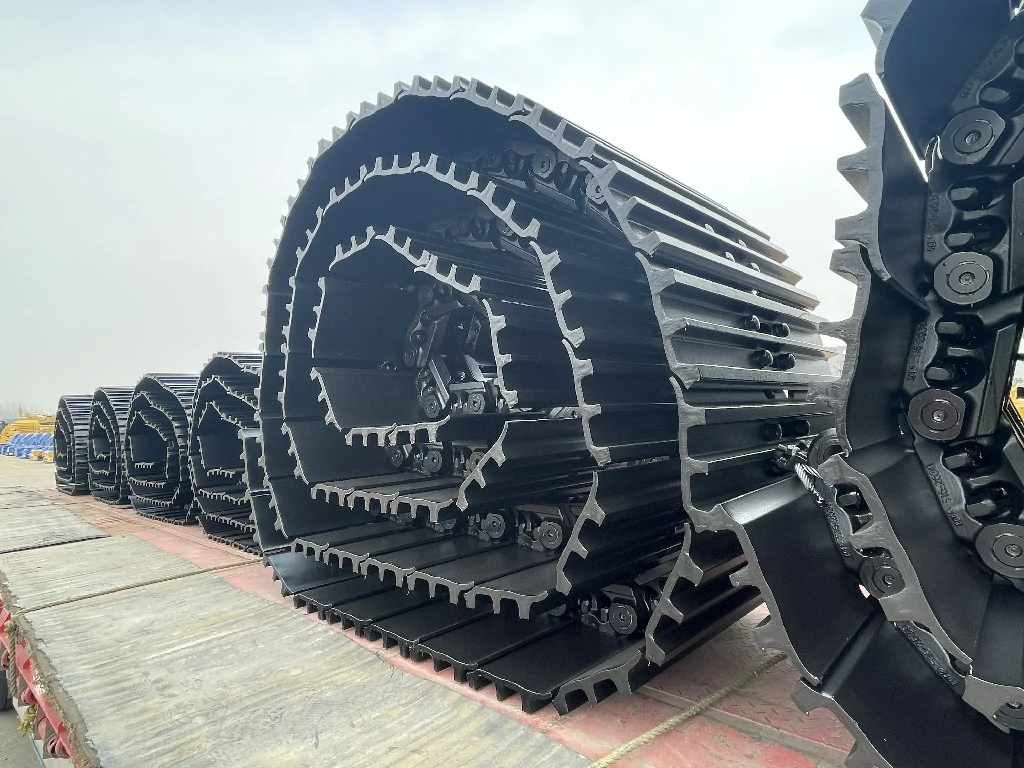
What does "modular" actually mean for an undercarriage?
It means the chassis is built from a small set of standardised sub-assemblies rather than as a single bespoke fabrication. The track frame, the Q345B crossbeam, the running gear and the drive package are each designed as a module with defined interfaces to the others, so that a 20-ton drilling-rig chassis and a 20-ton crusher chassis share the same frame and running-gear modules and differ only in the parts that meet the machine — the mounting interface, the track material and the drive choice.
The key discipline is that the modules have to be genuinely standard at the seams where they join. A modular platform that still requires re-engineering at every join is not modular, it is just a bespoke chassis with a label. MAGEON's approach concentrates the customisation at the mounting interface and keeps the load path, the running gear and the frame standardised across the range.
Why does modular design cut cost and lead time?
Because it moves the engineering from a per-model exercise to a per-family exercise. When an OEM's product family shares one modular chassis platform, the welding fixtures, the machining set-ups and the quality documentation (factory inspection report, material mill certificate, ISO 9001:2015 certification) are validated once and reused, instead of being re-created for every model. The design stage for a new model then becomes an interface adaptation rather than a full chassis design.
The lead time benefit follows directly. MAGEON's standard lead time of approximately 20 days for one set and 30 days for two to three sets is predicated on the frame and running gear being standardised, so the fabrication cycle starts as soon as the interface is confirmed. If every order were a clean-sheet design, the design stage would sit in front of that window for every single chassis, and the predictable lead time would not exist.
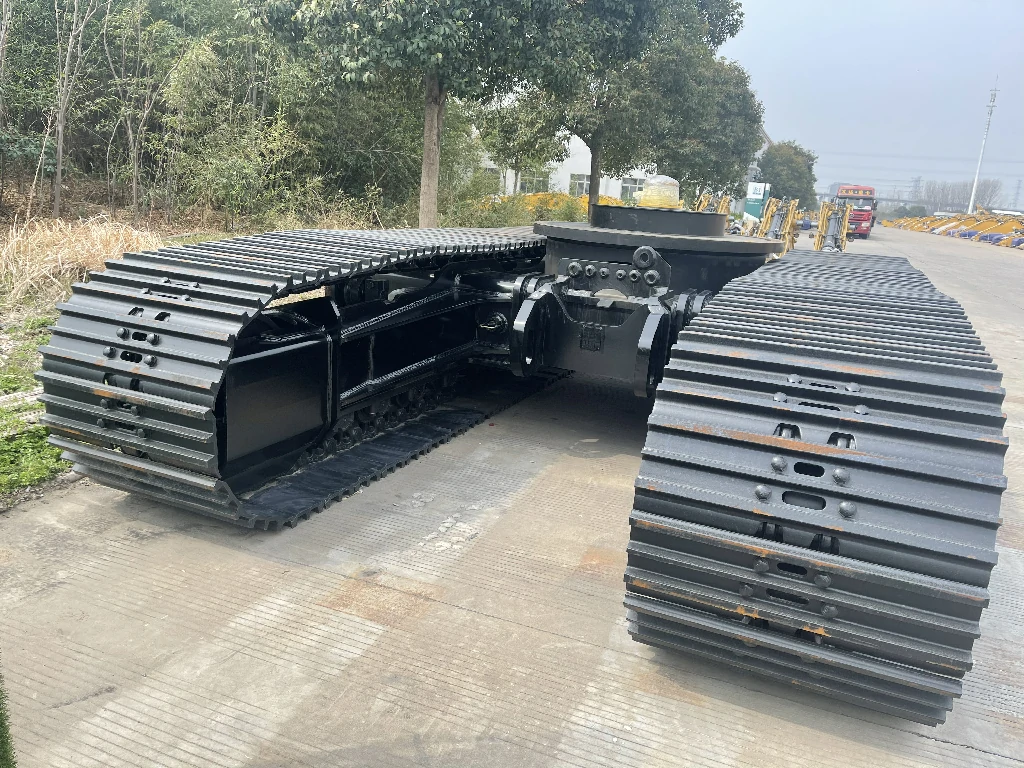
What stays custom in a modular undercarriage?
Three things, and they are the three that cannot be standardised. The mounting interface is the first — the flange, bolt pattern, drive shaft height and hydraulic interface have to match the host structure, and MAGEON surveys them one-to-one against the existing equipment so the chassis is a drop-in replacement. The second is the duty specification: track width within the 200–500 mm range, travelling speed from 1–4 km/h, and the track material choice between bare steel, rubber-padded steel and full rubber are set by the machine's weight, ground conditions and duty.
The third is the drive package, selected between hydraulic, electric and mechanical and matched to the machine's power system. These three custom dimensions are exactly where the engineering value is, and a modular platform protects them by not wasting custom engineering on the parts that do not need it.
How does modularity help an OEM's product family?
It lets one chassis platform span a range of machine weights and roles. MAGEON's 1–60 ton steel range covers excavators, drilling rigs, crushers, piling machines and mining equipment from a single modular architecture, with the slewing-bearing rotary system available as an option for machines that need 360° upper-structure rotation in confined spaces. For an OEM that builds several models, that means fewer chassis SKUs to qualify, fewer spare parts lines, and a single consumable set — chain, shoes, rollers, idler and sprocket — shared across the family.
The spare parts effect is the quiet benefit. A modular platform with a standard consumable set means a fleet can hold one chain and one roller set to cover several models, instead of bespoke spares per model. That is a working-capital and availability advantage that compounds across a fleet's life, and it is why MAGEON advises specifying a chain and track configuration with a genuine standard equivalent even on a custom frame.
What should an OEM look for in a modular chassis supplier?
Look for a supplier whose modularity is real at the seams — standardised frame, running gear and drive modules with the customisation concentrated at the interface — and who can demonstrate it with a range that spans your product family rather than with a single reference. Confirm the supplier can deliver the consumable set against the configuration, because that is where modularity pays off operationally. And confirm the documentation follows the platform: the material mill certificate and factory inspection report should be as standardised as the frame, so that qualifying one chassis effectively qualifies the family.
MAGEON's answer is a 1–60 ton steel range and a 1–15 ton rubber range built to order, with the mounting interface customised and the platform standardised, a minimum order quantity of one set so a first model can be prototyped without a batch penalty, and a one-year or 1,000-hour warranty under ISO 9001:2015 certification.
Frequently asked questions
Is a modular undercarriage less custom than a bespoke one?
No — the customisation is concentrated where it matters. The mounting flange, bolt pattern, drive shaft height and hydraulic interface are still engineered one-to-one to the host structure, and the track width, travelling speed, track material and drive package are still specified per duty. What modularity standardises is the frame, running gear and drive modules, which are the parts that gain nothing from being redesigned per model.
How much lead time does a modular platform actually save?
The lead time itself — approximately 20 days for one set and 30 days for two to three sets — is set by fabrication, but modularity removes the design stage that would otherwise sit in front of it for every new model. For an OEM launching a family of machines, that is the difference between an interface adaptation and a clean-sheet chassis design, and it is where the schedule is actually won.
Can one modular platform cover different machine weights?
Yes, within a designed envelope. MAGEON's steel range covers 1 to 60 tons with 200–500 mm track width, and the slewing-bearing rotary system and the hydraulic, electric or mechanical drive packages are interchangeable options. A product family spanning that envelope can share the frame and running-gear modules, with the customisation at the interface and the duty specification.
Does modularity make spare parts cheaper?
It makes them more available and easier to stock, because a standard consumable set — chain, shoes, rollers, idler and sprocket — covers several models instead of a bespoke line per model. A fleet can hold one chain and one roller set for the family, which is a working-capital and availability advantage that compounds over the fleet's life.
What documentation should a modular platform come with?
The same documentation as any build-to-order chassis, standardised across the platform: a material mill certificate for the Q345B beam, a factory inspection report, ISO 9001:2015 certification, and video outgoing inspection before dispatch. Standardised documentation is what lets an OEM qualify one chassis and effectively qualify the whole family.
What is the MOQ for a modular chassis platform?
The minimum order quantity is one set, so an OEM can prototype the first model on a new platform without a batch penalty. Standard lead time is approximately 20 days for one set and 30 days for two to three sets, with longer timelines negotiated for volume, and every chassis ships with a one-year or 1,000-hour warranty.