 English
 简体中文

Short answer: Three numbers govern lifting and transport: design lifting points at twice the static share per point, check lashing against 0.8 g lateral, 0.5 g longitudinal and 1.0 g vertical accelerations per the IMO CSS Code, and take steel-to-timber friction as 0.3. Every MAGEON unit ships with WLL-stamped lifting points, a center-of-gravity mark and a one-page lifting-and-lashing sheet - hanging slings off track-beam flanges or hydraulic lines remains the commonest field error.
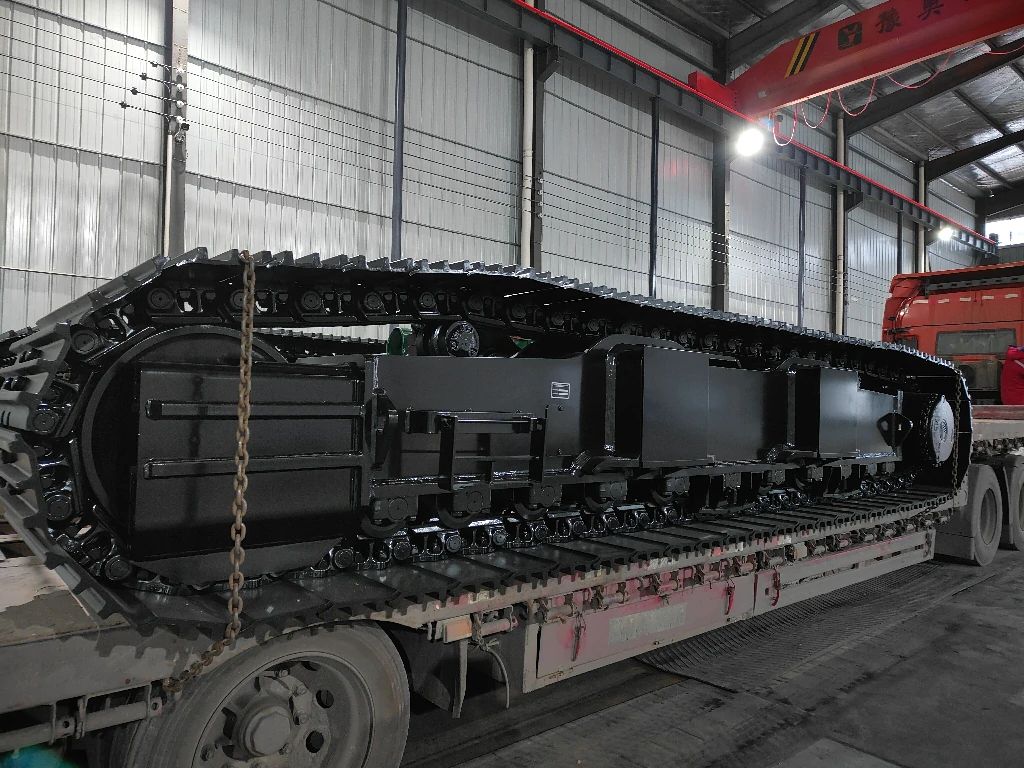
1. Why lifting points are rated at twice static load
Hoisting dynamics contribute 1.2-1.35 (lift acceleration), unequal load sharing between two points contributes 1.2, and sling angle multiplies the single-leg force (1.155 at 60 degrees). Stack the three and a per-point design load of twice the static share is sound engineering. Use forged lugs or thick-plate pierced eyes; welded lugs are full-penetration per load-bearing weld standards with MT inspection.
Positionally, the center-of-gravity vertical must fall between the lifting points and centered - which means the chassis designer needs the upper-structure weight and CG at design stage. This is why custom projects ask for the upper-structure CG early. Spray the ISO lifting symbol and CG mark on both sides; it is the detail most suppliers skip.
2. Lashing is calculated, not guessed
Sea transport lashing follows the CSS Code acceleration tables: 0.8 g lateral, 0.5 g longitudinal, 1.0 g vertical (higher values on deck). The calculation: overturning moment minus gravity-stability moment minus friction moment; the remainder is what the lashing's vertical component must supply. Lashing angle between 30 and 60 degrees - beyond 60 degrees a strap contributes almost nothing against tipping.
Friction is the lever that changes everything: steel on timber 0.3, steel on steel 0.1-0.15, friction mats up to 0.5. Timber dunnage is a calculation input, not a habit - the same chassis can need half the straps depending on what sits under it. Track-to-deck contact is line contact, so chocks or saddles front and rear are mandatory; lashing straps never replace a positive stop.
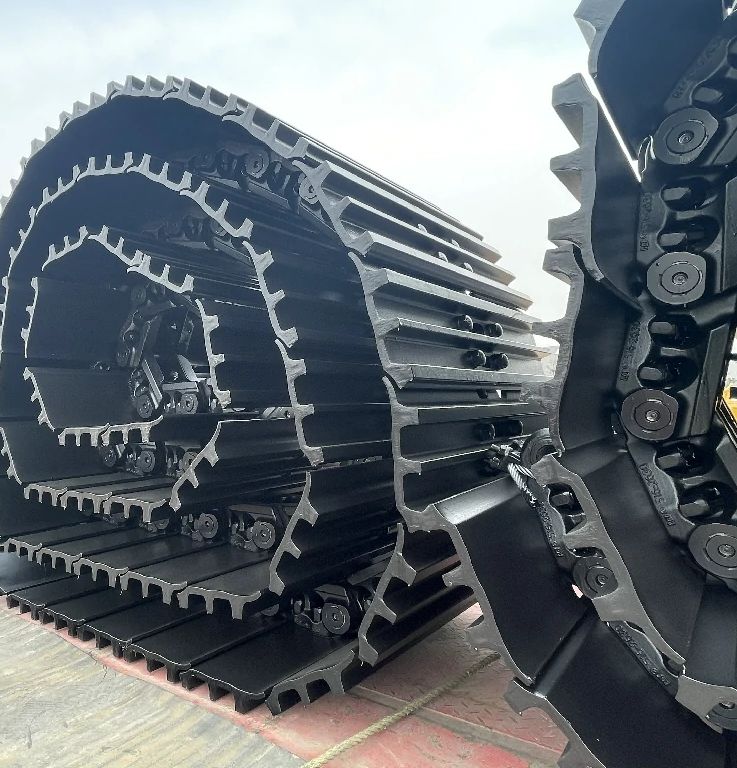
3. What ships with the unit
Every unit carries: WLL stamped on each lifting point, CG marks, tie-down point labels (directions of allowed lashing marked separately even where points double as lifting points), and a one-page lifting-and-lashing sheet with minimum sling sizes, maximum hook angles and a worked lashing scheme. Many incidents trace to the logistics leg receiving a bare machine with no sheet. For part shipments (track beams and frame packed separately), each piece carries its own weight and lifting marks and the sheet includes assembly-sequence lifting notes - site incidents outnumber plant incidents because site cranes are smaller and crews unfamiliar with piece CGs.
4. A field error checklist
Five recurring errors worth an audit: slings hung on track-beam flanges (flange plates are not tensile members), sling angles beyond 90 degrees, straps running over hydraulic lines, chocks fitted at the front only, and container loads held by friction alone with no lashings. One walk-through against this list usually surfaces several items on any yard.
5. Lifting and lashing design values
| Item | Value | Basis |
|---|---|---|
| Lifting point rating | 2 x static share per point | Dynamic 1.2-1.35 x sharing 1.2 x sling angle |
| Transport accelerations | 0.8 g lat / 0.5 g long / 1.0 g vert | IMO CSS Code (higher on deck) |
| Friction coefficients | steel-timber 0.3 / steel-steel 0.1-0.15 | Lashing calculation input |
| Lashing angle | 30-60 degrees | Beyond 60 degrees, anti-tip value approaches zero |
Key takeaways
- Rate lifting points at twice the static share; welded lugs get full-penetration welds and MT inspection.
- Lash to CSS Code accelerations (0.8 g lateral, 0.5 g longitudinal, 1.0 g vertical) and keep angles between 30 and 60 degrees.
- Timber dunnage is a calculation input: steel-timber 0.3 versus steel-steel 0.15 can halve the strap count.
- Ship the lifting-and-lashing sheet with every unit - WLL stamps, CG marks, sling sizes and a worked scheme for the logistics leg.
Further reading
MG10000B 110-Ton Steel Track Undercarriage · Steel Track Undercarriage System 1-60 Tons · Selection guide column
Prepared by the MAGEON engineering team from custom project records and factory load-test data. Figures are engineering references; final selection should follow approved drawings and the actual duty spectrum.