 English
 简体中文

Short answer: Correct grease management eliminates more than half of premature roller failures: use NLGI 2 EP lithium grease in dry duty, switch to calcium sulfonate grease wherever mud or salt water is present, fill each cavity to one half of its volume at relubrication, and act on oil analysis when iron content exceeds 50 ppm or cutting-wear particles appear - that is the point to open the cavity, not to add more grease.
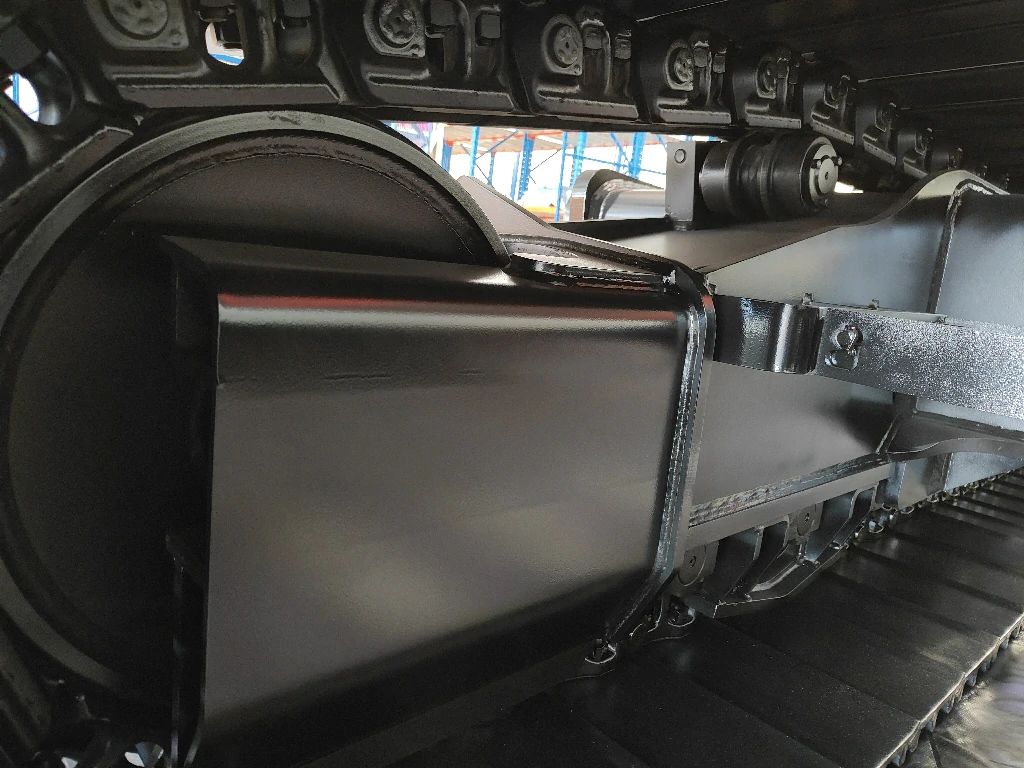
1. Why a fixed greasing schedule is not the same as correct greasing
A roller cavity is a classic low-speed, heavily loaded boundary-lubrication duty: shaft speed below 60 rpm, load above a quarter of machine weight, film thickness measured in microns. Ordinary NLGI 2 lithium grease copes in dry duty, but its washout resistance is weak - once mud slurry invades the cavity the soap thickener emulsifies, the grease loses its structure within hours and the bearing runs metal-to-metal.
Water exposure is the first selection divider. For dry or indoor duty, EP lithium grease is sufficient. Where rice fields, river beds, swamps or coastal salt fog are routine, calcium sulfonate grease is the correct answer - it actually stiffens on contact with water, offers three to five times the washout resistance, and holds structure past 300 degrees C, which matters on continuous slope work. Below -30 C, a synthetic-base low-temperature grease is required so the grease shears properly at cold start.
2. Setting fill volume and relubrication intervals
More grease is not better. A fully packed cavity builds pressure as it warms, pushing the seal lip outward and accelerating both leakage and water ingress. The working rule: fill to two thirds of cavity volume at assembly, and to one half at routine relubrication. A practical endpoint is simpler - pump slowly until fresh grease extrudes from the relief port; what comes out is last interval's contaminated charge.
Intervals scale with duty: 250 hours on dry firm ground, 150 hours where mud and abrasive dust are present, 100 hours in mud, water or salt-fog environments. Continuous slope work raises cavity temperature, and every extra 10 degrees C roughly doubles oxidation - shorten intervals by a further 30 percent there. Always grease with a low-pressure gun, slowly: forcing grease at high pressure flips the seal lip, the most common self-inflicted seal damage in the field.
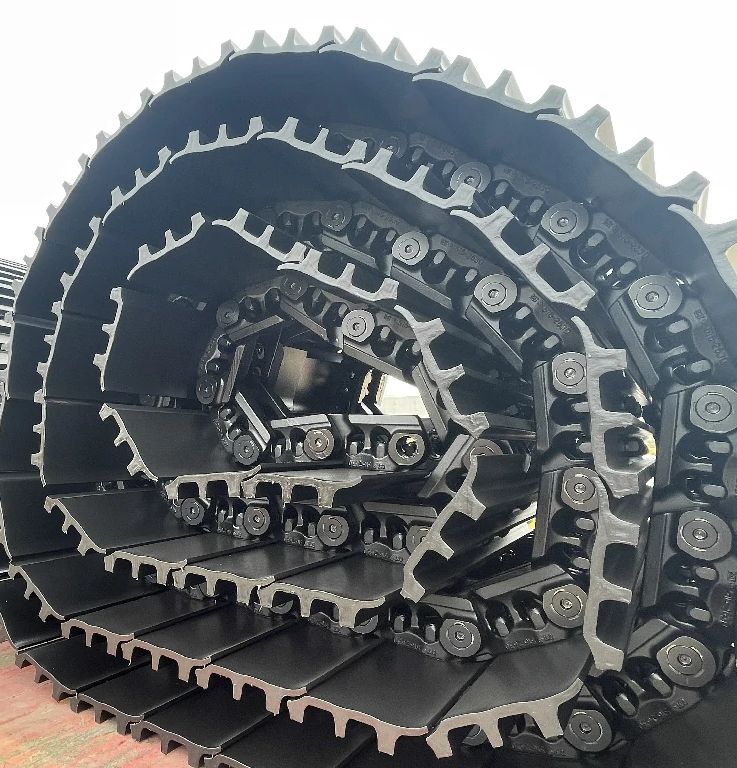
3. Grease analysis turns open-and-inspect into on-demand work
Sample every cavity every 500 hours, before relubrication, and run wear-metal or ferrographic analysis. Action thresholds: iron above 50 ppm, a clear rise in copper (cage wear), or cutting-wear particles above 50 microns - any one of these justifies opening the cavity. Trend comparison beats single readings: a cavity whose iron count doubles between consecutive samples is abnormal even if still under threshold.
Label every sample with roller position, machine hours, last grease date and grade, and bottle each cavity separately. Failures concentrate in one or two rollers; pooled samples dilute the signal. Analysis cost is trivial next to one cavity rebuild, which makes quarterly sampling the highest-return preventive task on the undercarriage.
4. Three discipline points for the field
First, clean the fitting and the gun tip every time - the fitting itself is a main mud-water path into the cavity. Second, never mix thickener systems: lithium and calcium sulfonate are incompatible, so a grade change means purging as much old grease as possible and running one shortened interval as transition. Third, confirm the relief port is open at every greasing - a blocked port pushes new grease out through the seal instead of into the bearing zone.
Written into the daily checklist alongside the interval table, these three habits keep seal failures clustered at end of life instead of appearing at random.
5. Grease selection and interval quick table
| Duty | Grease type | Regrease interval | Sampling interval |
|---|---|---|---|
| Dry firm ground | NLGI 2 EP lithium | 250 h | 500 h |
| Muddy / abrasive | NLGI 2 EP lithium (shortened) | 150 h | 400 h |
| Water / river / salt fog | Calcium sulfonate complex | 100 h | 300 h |
| Severe cold (below -30 C) | Synthetic low-temperature EP | 200 h | 500 h |
Key takeaways
- Grease governs half of roller life: EP lithium for dry duty, calcium sulfonate wherever mud or salt water appears.
- Fill to one half of cavity volume at relubrication - a packed cavity pushes the seal lip open; grease slowly, low pressure.
- Intervals of 100-250 hours by duty, minus 30 percent on continuous slope or high-temperature work.
- Iron above 50 ppm, cutting particles, or a doubling trend: any one means open the cavity, not add grease.
Further reading
MG2500B 25-Ton Steel Track Undercarriage · Steel Track Undercarriage System 1-60 Tons · Maintenance knowledge column
Prepared by the MAGEON engineering team from custom project records and factory load-test data. Figures are engineering references; final selection should follow approved drawings and the actual duty spectrum.