 English
 简体中文

Short answer: The whole project compressed into three numbers: 2.6 m tunnel clearance, a platform floor no lower than 1.18 m, and 1.9 m of usable width inside the track limits. The delivered chassis stands 1.42 m tall on a 1.62 m track gauge, achieved through a co-axial low-mounted drive and a split frame. Loaded 12-degree climbs passed on test, and the first three months of service logged 640 km without a single failure.
1. Why every catalog chassis was eliminated
The vehicle carries a catenary inspection platform and rail-flaw equipment, running on the paved margins beside the track during service windows. Catalog 8-ton undercarriages start at roughly 1.6 m overall height - not because the technology is missing, but because standard layouts put the motor above the drive sprocket and use a one-piece box frame, each adding about 0.1 m. Subtract those from the clearance budget and the platform loses its working envelope.
Width is the harder constraint: the chassis must stay fully inside the track-side limits with 0.28 m of running margin. Narrowing the gauge to 1.62 m reduces lateral stability, which must be bought back with a lower center of gravity - so height and gauge form one coupled problem that cannot be negotiated separately.
2. Two decisions that made the package work
Decision one: co-axial low drive. Instead of motor-above-sprocket with a side-mounted reducer, a low-speed high-torque motor drives the sprocket directly on the same axis. Torque reserve drops from 1.6 to 1.3 times and travel speed comes down from 3.2 to 2.4 km/h - acceptable, since service-window speed rarely exceeds 3 km/h. Height gained: 110 mm across the drive unit.
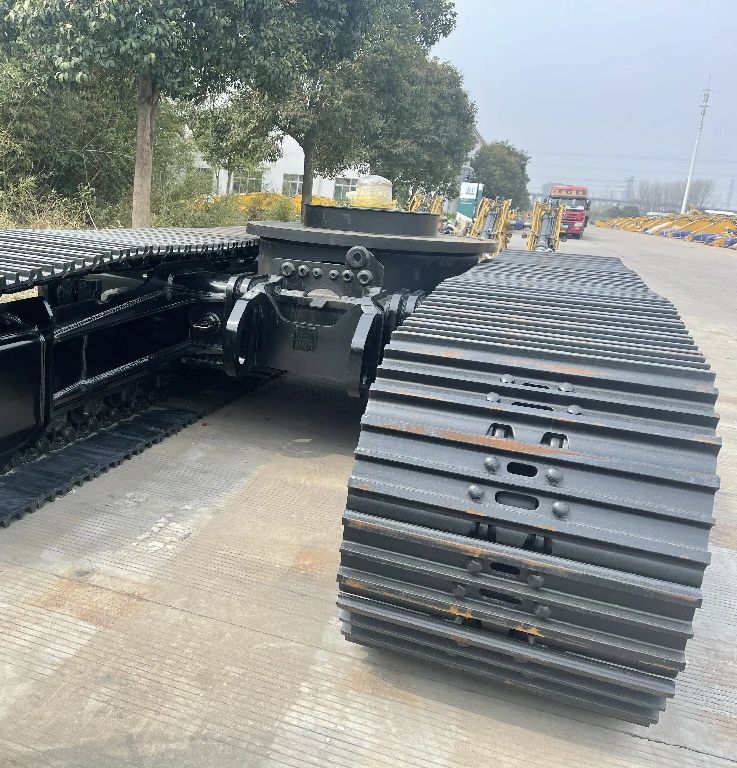
Decision two: split frame. The frame mid-section is integrated with the platform posts, and the two track beams bolt to it with fitted bolts. Single-side beam extraction becomes possible, halving on-site replacement time, and the posts carry load directly, lowering the center of gravity another 80 mm. The price is machining the mating faces to 0.1 mm class and rechecking fitted-bolt torque every 500 km.
3. Verification and in-service data
Factory verification ran in three stages: two-hour unloaded thermal test (motor case 68 C against an 85 C limit); three loaded round trips on a 12-degree ramp with no slip and no abnormal temperature rise; 200 spot-turn cycles with no derailment or abnormal wear. The delivery pack included a duty-spectrum file merging tunnel grades, curve centrifugal loads and platform lifting shocks into five representative cases for future variants.
Three-month follow-up: 640 km accumulated, track pitch elongation 0.4 percent against a 2 percent limit, zero leakage on both floating seal sets. The customer reused the chassis drawings unchanged for the second vehicle, adjusting only the platform post height.
4. Transferable conclusions
The commonest error in low-clearance projects is freezing the upper structure first: once chassis height is locked, the drive layout is forced into lower torque reserves, and both speed and reliability pay. Correct sequence - let the chassis engineer map the height-speed-cost feasible region before the platform datum is fixed. In this case, accepting a 50 mm lower platform would have allowed the standard drive layout and cut purchase cost by roughly 12 percent.
Second transferable point: split frames pay where equipment lives in tunnels or underground and extraction is difficult - over machine life, single-side beam access saves at least two full-vehicle lifts.
5. Key parameters and test results
| Parameter | Standard 8-ton chassis | This custom build | Result / note |
|---|---|---|---|
| Overall height | 1.60 m or more | 1.42 m | Fits the 2.6 m clearance chain |
| Track gauge | 1.90-2.10 m | 1.62 m | 0.28 m running margin |
| Travel speed | 3.2 km/h | 2.4 km/h | 1.3x torque reserve |
| Loaded ramp | - | 12 degrees | Three passes, no slip |
Key takeaways
- Map the height-speed-cost feasible region of the chassis before freezing the upper-structure datum - reversed order costs speed and reliability.
- A co-axial low drive buys 110 mm of height at the cost of torque reserve (1.6 to 1.3) and speed (2.4 km/h).
- A split frame with bolted track beams allows single-side extraction and saves at least two full-vehicle lifts over machine life.
- Deliver a duty-spectrum file with five representative cases; the client reused the drawings for vehicle two unchanged.
Further reading
MG500B 6-Ton Steel Track Undercarriage · Steel Track Undercarriage System 1-60 Tons · Case studies column
Prepared by the MAGEON engineering team from custom project records and factory load-test data. Figures are engineering references; final selection should follow approved drawings and the actual duty spectrum.