 English
 简体中文

Short answer: Broken track shoe bolts are fatigue fractures: with preload low, the shoe micro-moves on the rail seat and the bolt picks up alternating bending until the root fails. The fix is not bigger bolts but three habits - crosswise tightening in two passes to spec, checking tapped-hole condition at every removal, and re-verifying torque every 150-300 hours with paint marks. Fleets that hold the routine see breakage drop to a handful of bolts a year.
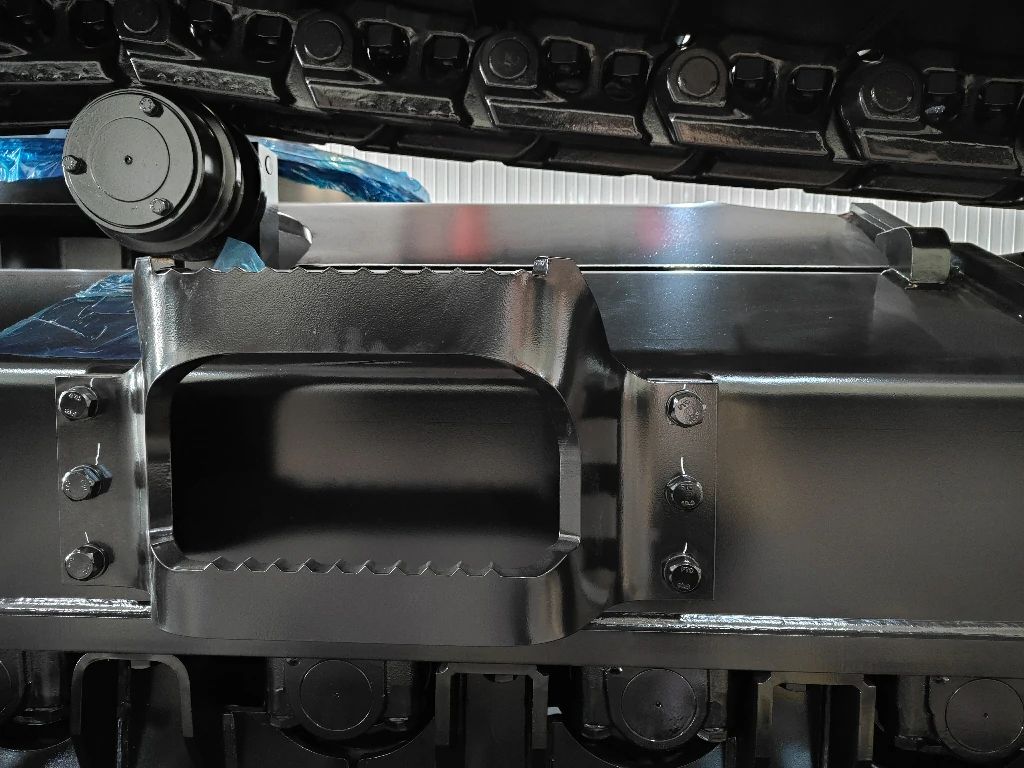
1. The real mechanism: fretting and preload decay
Tightening exists to clamp the joint so loads transfer by friction, not by bolt shear. Once preload decays past about 30 percent, the shoe starts to micro-move, the bolt picks up alternating bending load, and fatigue life collapses from tens of thousands of hours to hundreds. Replacing the broken bolt without restoring preload simply schedules the next failure a few hundred hours out.
Preload decays three ways: embedment during early service (15-25 percent torque loss as threads and bearing faces settle), vibration loosening of the thread pair, and bearing-surface failure from dents or trapped debris. The three defenses map one-to-one: post-install recheck, thread locking, and clean prepared faces.
2. Correct tightening practice
Tighten crosswise in two passes: first pass to 50 percent of spec torque, second pass to 100 percent in the same sequence. Tightening once straight to full torque lets previously tightened bolts relax as the plate deforms - measured scatter up to plus or minus 30 percent; two passes bring it inside plus or minus 8. Torque values come from the supplier's manual: a typical M20 10.9 bolt with MoS2 lubrication sits at 480-560 Nm, and dry-friction values must not be reused.
Thread-lock choice: anaerobic adhesive suits joints that are rarely opened, but pick the temperature grade deliberately - shoe joints see 80 C and more. Nylon-insert nuts suit frequently opened joints but lose over half their locking after three reuses. Double-nutting is not recommended on site: added weight, and the second nut is the one that gets missed. Factory default is thread adhesive plus witness paint; any reassembly re-applies both.
3. Recheck schedule and records
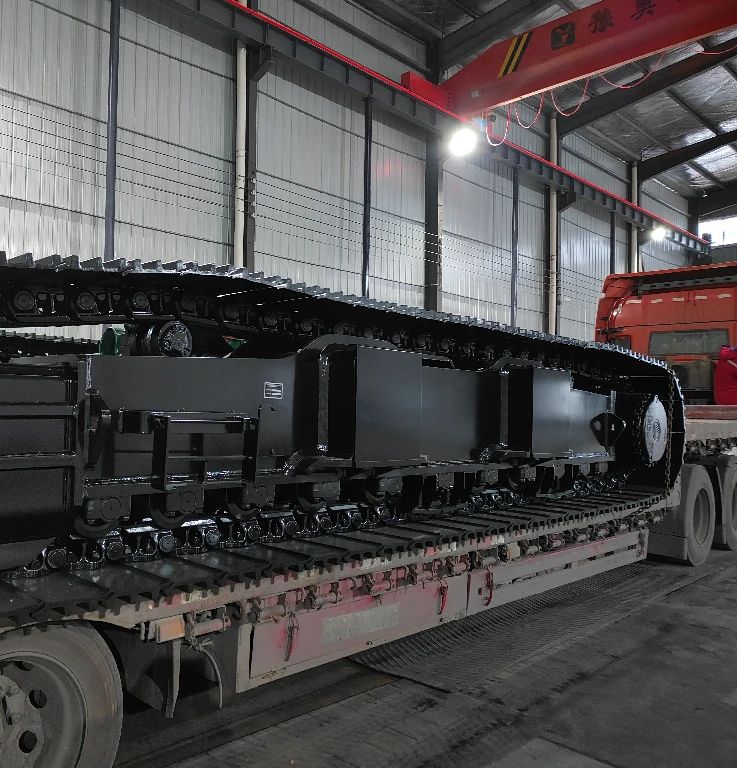
Recheck every 300 hours on firm level ground, every 150 hours in mud, sand or impact duty. The recheck is a confirm-to-torque pass with a calibrated wrench, not a strip-and-retighten: bolts that do not move pass; those that move get re-torqued and a fresh mark. Witness paint is the efficiency tool - one line across bolt and shoe makes a turned bolt visible in a two-minute walk-around.
When a bolt breaks, inspect the tapped hole before installing its replacement: breakage usually drags and scores the hole wall, and a damaged seat means the new bolt will never reach preload. Repair the thread or replace the rail-seat part - that is the real root cause behind the same-corner-breaks-again pattern.
4. A fleet's before-and-after
One rental operator ran the routine across 26 machines for a year: broken bolts fell from 6.2 to 0.3 per machine-year, and lost-shoe incidents (a bolt fails in travel, the shoe departs and strikes hoses) went from three to zero. The added labor is about 40 minutes per 300 hours - negligible against one roadside recovery.
5. Bolt maintenance schedule
| Item | Standard duty | Mud / impact duty |
|---|---|---|
| Torque verification | 300 h | 150 h |
| Witness-mark check | Each verification | Each verification + daily walk-around |
| Tapped-hole inspection | At every removal | At every removal (mandatory) |
| Thread locking | Re-apply adhesive on reassembly | Same + shorter interval |
Key takeaways
- Broken bolts are preload-driven fatigue; the cure is restoring clamp load, not fitting a bigger bolt.
- Tighten crosswise in two passes (50 to 100 percent) - single-pass tightening scatters preload by up to 30 percent.
- Verify torque every 300 hours (150 in mud or impact duty); witness paint covers a full machine in two minutes of looking.
- Same corner breaking repeatedly means check the tapped hole - a scored seat is why the new bolt never reaches preload.
Further reading
MG300B 3-4 Ton Steel Track Undercarriage · Rubber-Pad Steel Track Undercarriage · Maintenance knowledge column
Prepared by the MAGEON engineering team from custom project records and factory load-test data. Figures are engineering references; final selection should follow approved drawings and the actual duty spectrum.