 English
 简体中文

Whether a wear part should be replaced should not be a matter of judgement or waiting for a chain failure. This article sets out measured thresholds for seven major wear components - reference values drawn from our delivery and aftermarket tracking, to be adjusted for actual duty.
1. Track Shoes: Measure Grouser Height, Not Appearance
The most common misjudgement on track shoes is assuming they are fine because they still look intact. What actually governs life is remaining grouser height: once the grouser wears below 50% of original height, chain engagement depth on the sprocket becomes insufficient and climbing or skipping begins.
| Component | Check | Replacement threshold | Early warning |
|---|---|---|---|
| Track shoe | Grouser height | < 50% of original | Climbing noise, chain flutter |
| Pin | Bend / diameter wear | Bend > 0.3 mm or diameter < 97% nominal | Bush and pin clearance out of spec |
| Bushing | Ovality | > 5% of nominal | Pin slop, abnormal noise |
| Track roller | Bearing end play / flange wear | End play > 0.5 mm | Rising temperature, one-sided wear |
| Sprocket | Tooth face pitting area | > 20% of tooth face | Climbing, chain skipping |
| Seals | Weeping / lubricant condition | Any visible weeping | Oil staining at hub, darkened grease |
| Tensioner | Remaining rod stroke | < 20% stroke remaining | Chain stays slack |
2. Pins and Bushings: Judge the Fit, Not Either Part Alone
Pins and bushings are a mating pair, and neither is meaningful on its own. What matters is the clearance between them: pin diameter wear and bushing bore compression occur together, so clearance grows faster than either wear rate suggests. Beyond 0.5 mm the pair should be replaced together - fitting a new pin into a worn bushing does not restore life.
Checking this properly means measuring bushing bore and pin diameter with a micrometer and comparing against the new-part specification. Eyeballing is not accurate enough, and this step is frequently skipped on site.
3. Track Rollers: Bearing End Play and Uneven Wear Together
Two criteria apply: bearing end play and flange wear. Once end play exceeds 0.5 mm the wheel rocks under load, which pushes the track off line and accelerates wear on neighbouring rollers. One failing roller accelerates the failure of those around it, which is why group inspection matters.
The wear pattern itself points to the cause: one edge polished flat indicates frame distortion or mounting misalignment; wear concentrated at the centre suggests insufficient chain tension letting the roller sink; uniform but rapid wear simply reflects the abrasive duty.
4. Sprockets: Pitting Area Is the Relevant Measure
Replace the sprocket when tooth face pitting exceeds 20% of the face. This is a better criterion than measuring tooth thickness, because pitting is the result of contact stress concentration and directly reflects the mismatch between chain pitch and tooth profile.
Worth emphasising: excessive chain elongation accelerates sprocket tooth damage. When chain pitch exceeds design, contact shifts from face to point and stress multiplies. So an unexpectedly worn sprocket should always trigger a chain pitch measurement alongside the replacement.
5. Seals and Lubrication: The Preventive Call
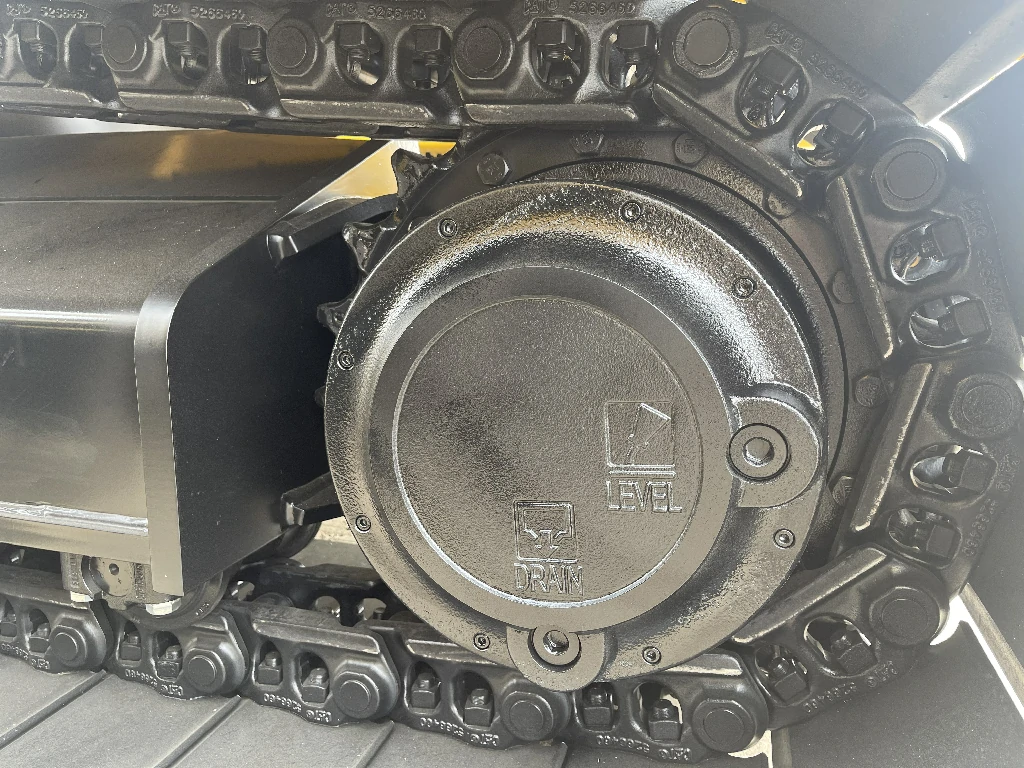
Seals are the one component you should replace before function fails: any weeping should be actioned immediately. Once lubricant is lost, bearings fail quickly from starvation and dust ingress, and the cost of replacing the seal at that point far exceeds replacing it early.
Lubricant condition is equally diagnostic. Healthy grease is pale yellow or off-white; if it turns dark brown or black, abrasive particles have entered, and the wheel set needs a full clean rather than a top-up.
6. A Wear Log Beats After-the-Fact Judgement
Measure and record on a 500-hour cycle: grouser height, pin clearance, roller end play and sprocket tooth condition. With trend data you can schedule replacement ahead of failure and convert breakdowns into planned work.
Part specifications and spare part references are listed under Steel Crawler Undercarriage and Rubber Crawler Undercarriage; the complete inspection checklist is covered in Technical Support, and lifetime theory is discussed further in Maintenance Knowledge.