 English
 简体中文

Short answer: The most reliable way to decide whether a track chain should be replaced is pitch elongation: measure the total length across four to five links with the chain at standard tension and compare it with nominal pitch times the number of links. Below 2% keep running with normal inspections, 2-3% shorten inspection intervals and order spares, above 3% replace the whole chain. Judging by tensioner travel or visible sag alone consistently underestimates internal pin and bushing wear.
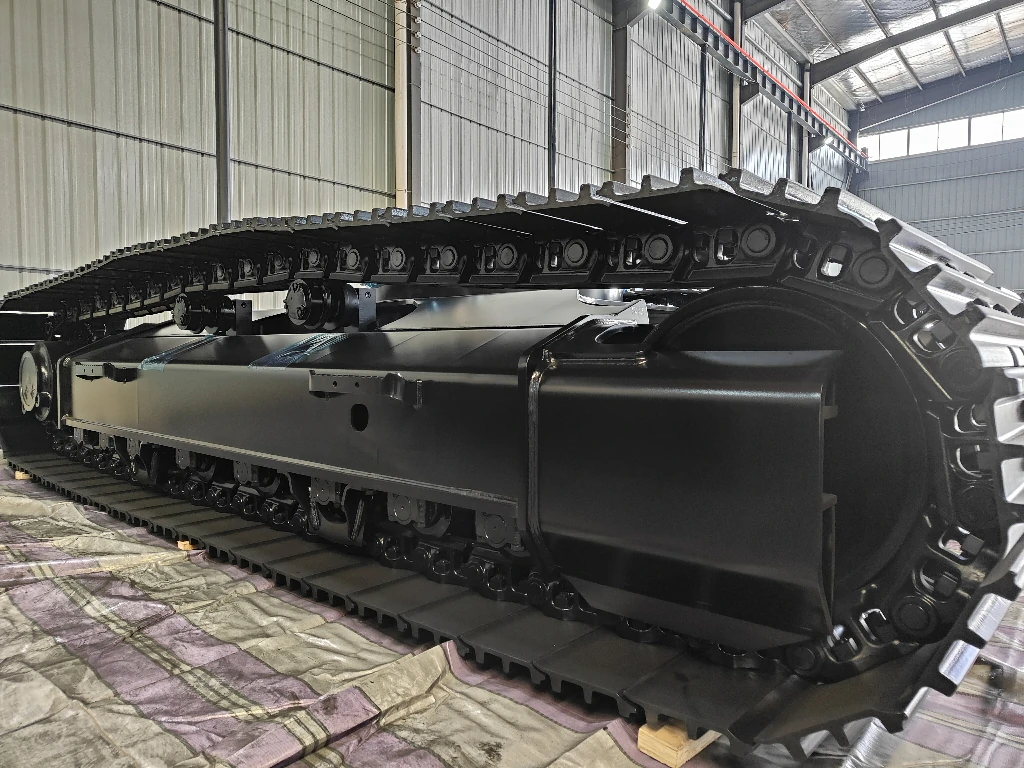
1. Why measure pitch rather than sag
Sag reflects current chain tightness and moves with temperature, packed mud and tensioner condition. Pitch elongation reflects cumulative, irreversible wear of the pin and bushing pair. They correlate but are not the same thing: a chassis that has just been re-tensioned can show perfect sag while the chain is already at its wear limit.
Once pitch grows, the chain no longer matches the sprocket tooth form. Mesh stress concentrates, accelerating tooth pitting and tooth climbing. Many apparently mysterious de-tracking events trace back here, not to a tensioning mistake.
2. Four steps for a field measurement
Park on level hard ground, unload the machine and set standard chain tension. Mark two clear pin centres on the side of the chain. Measure across four to five links with a steel rule or calliper, skipping links with visible impact damage. Compute (measured length - nominal pitch x links) / (nominal pitch x links).
Take three to four samples covering left, right, front and rear, and use the largest value. On machines that regularly work with eccentric loads, the two sides often differ by more than 0.5%, so a single sample will miss the worse side.
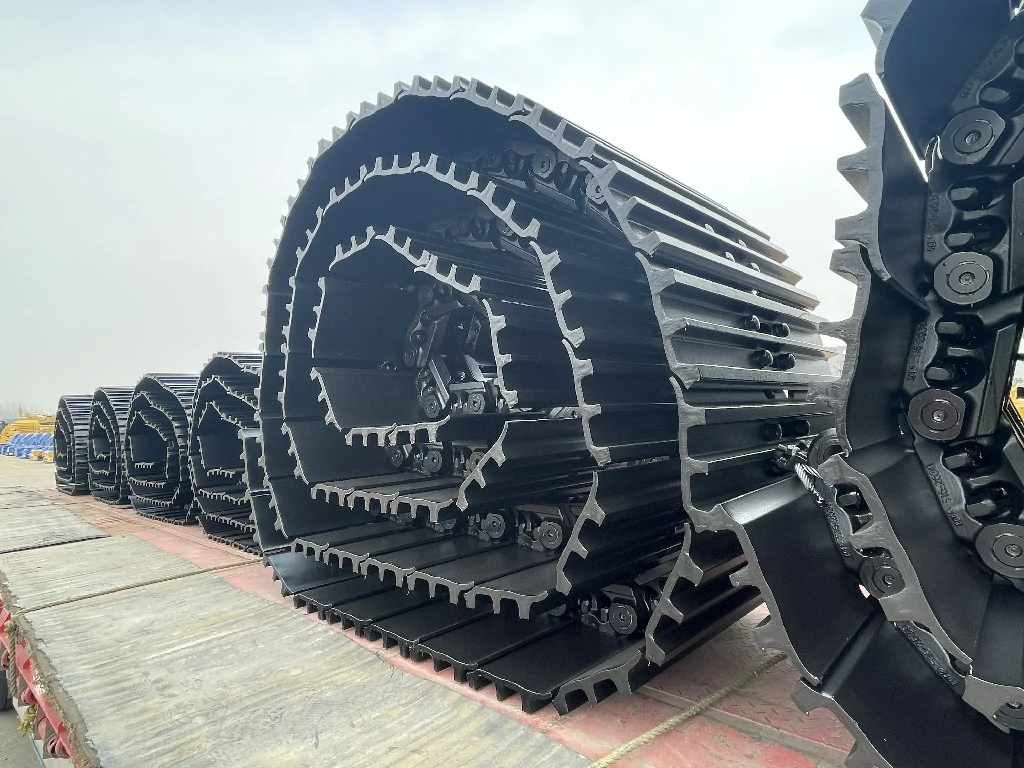
3. Action thresholds and what to do
Under 2%: continue with the normal 250-hour inspection. Two to three percent: shorten to 100 hours, check remaining tensioner travel and place the spare order. Above 3%: replace the entire chain. Do not mix new links into an old chain - mixed pitch causes uneven mesh immediately.
When replacing the chain, inspect sprocket tooth flanks at the same time. Pointed or pitted teeth will cut the new chain's life short, and changing them during the same shutdown is usually cheaper than another day of downtime.
4. Keep the record simple: mark the tensioner rod
Paint a reference line on the tensioner cylinder rod and record the distance from that line to the cylinder body at every inspection. The resulting curve shows how fast the chain is stretching. A sudden increase over three months usually signals a duty change or lost lubrication, not normal wear.
Combine that with a short inspection table - date, operating hours, elongation, tensioner reading, left/right difference - and chain replacement moves from experience-based guesswork to a data-based decision that also makes spare planning accurate.
5. Elongation and Action
| Elongation | Condition | Inspection interval | Action |
|---|---|---|---|
| Under 2% | Normal wear | 250 h | Continue, log data |
| 2% - 3% | Approaching limit | 100 h | Stage spares, check tensioner travel |
| Over 3% | Replace | Every shift until changed | Full chain + sprocket check |
| Side difference over 0.5% | Eccentric loading | 100 h | Check frame alignment and roller plane |
Key takeaways
- Pitch elongation captures irreversible pin and bushing wear and predicts de-tracking better than sag.
- Measure four to five links at several positions on both sides and act on the largest value.
- Tighten inspection at 2%, replace the full chain at 3%, never mix old and new links.
- A painted tensioner reference line plus a log turns replacement into a data decision.
Further reading
Maintenance Knowledge · Steel Crawler Undercarriage · FAQ · Technical Support
Prepared by the MAGEON engineering team from custom project records and factory load-test data. Figures are engineering references; final selection should follow approved drawings and the actual duty spectrum.