 English
 简体中文

Short answer: MAGEON's phase-II line entered production in November 2026 with two dual-station robot cells, a 3D laser cutting cell and laser seam tracking. Monthly frame capacity rose from 95 to 160 sets; weld penetration scatter tightened from plus or minus 1.4 mm to plus or minus 0.55 mm, reinforcement variation fell about 60 percent, and post-weld grinding time dropped 45 percent.
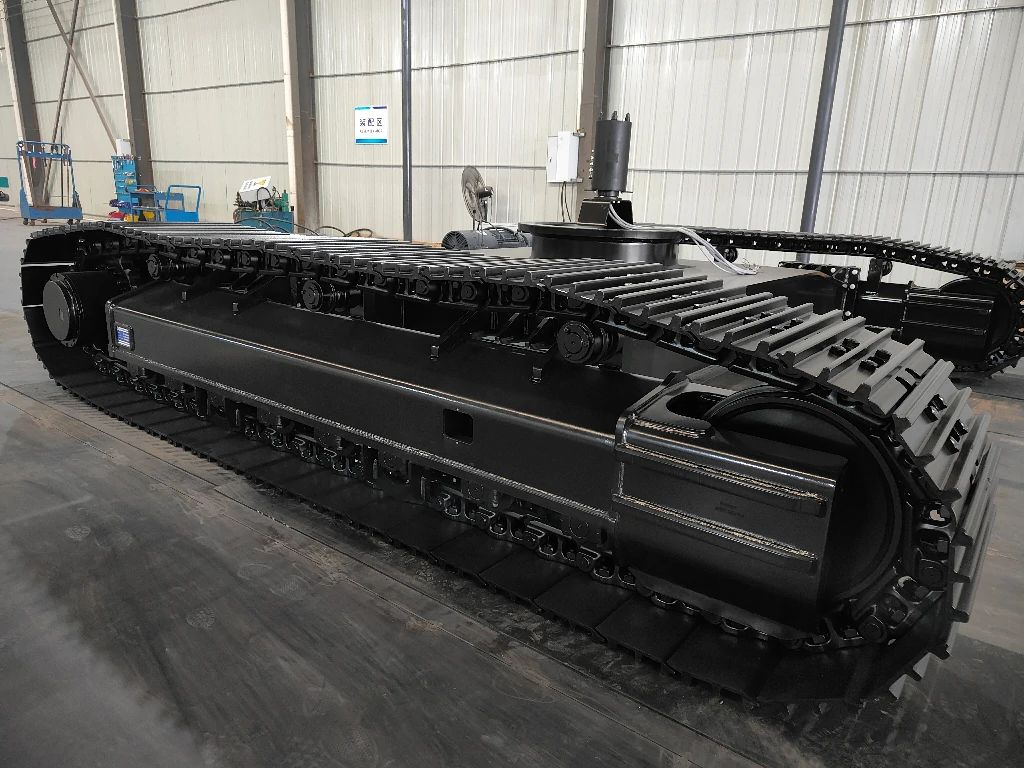
1. Why chassis frames suit robotic welding
Frame welding is the low-variety, high-volume, fixed-position case: the same weld appears in exactly the same place across tens of thousands of units. The manual bottleneck is not welder skill but fatigue drift across an eight-hour shift - undercut incidence in the afternoon shift runs about twice the morning rate. Robots do not solve whether the shop can weld; they solve whether every pass is identical.
That defines the line split: prototypes and small batches stay on the manual line, where process trials and first-article confirmation happen; production frames and batch roller seats run on the robot cells. Acceptance criteria are identical on both lines and the traceability system is shared.
2. Three configurations that matter
Laser cutting upstream: blank accuracy improves from plus or minus 0.8 mm (plasma) to plus or minus 0.2 mm, which is the actual input condition for stable penetration - half of weld quality is decided at the cutting stage, and that was the biggest lesson of ramp-up. Laser seam tracking corrects gaps up to plus or minus 1 mm automatically and stops the arc beyond it, closing the silent miss where a weld runs off-line unnoticed. Dual-station swap keeps one fixture loading while the other welds, lifting utilization from 55 to 82 percent.
Interpass cleaning is where humans stay in the loop: the robot pauses every three passes for slag removal and visual inspection, then continues. No mature automation exists for this step, so the cell layout was designed to hide cleaning time inside the cycle.
3. Capacity and quality data
Capacity: monthly frame output 95 to 160 sets, with the standard lead-time promise for the 6-ton class cut from 35 to 25 days (subject to contract). Quality: penetration scatter plus or minus 1.4 to plus or minus 0.55 mm, weld rework rate 3.1 to 0.9 percent, grinding time down 45 percent. Cost: welding cost per frame down 18 percent, led by labor and rework.
Transition plan: the first 300 frames run in dual-line mode - the same model produced on both lines with three months of parallel tracking - before the robot line becomes primary. Open orders are unaffected by the switch.
4. What it means for customers
Three direct effects. Shorter and tighter lead times - delivery-date standard deviation falls from six days to under three. Better batch consistency - chassis from one lot no longer depend on which welder was on shift. Finer traceability - current, voltage, speed and pass sequence are logged automatically for every weld, and the parameter curve for any chassis is retrievable by serial number on request.
5. Before and after phase II
| Metric | Before | After | Change |
|---|---|---|---|
| Frame capacity (monthly) | 95 sets | 160 sets | +68% |
| Penetration scatter | +/-1.4 mm | +/-0.55 mm | -61% |
| Weld rework rate | 3.1% | 0.9% | -71% |
| 6-ton standard lead time | 35 days | 25 days | -10 days (per contract) |
Key takeaways
- Frame capacity 95 to 160 sets monthly; 6-ton standard lead time cut to 25 days.
- Half of weld quality is decided upstream: laser-cut blanks at plus or minus 0.2 mm are the precondition for stable robotic penetration.
- Scatter, not single-point skill, is the robot's value: penetration scatter -61 percent, rework rate -71 percent.
- Every weld's current-voltage-speed curve is archived; customers can retrieve the parameter file by chassis serial number.
Further reading
MG500B 6-Ton Steel Track Undercarriage · Steel Track Undercarriage System 1-60 Tons · Company news column
Prepared by the MAGEON engineering team from custom project records and factory load-test data. Figures are engineering references; final selection should follow approved drawings and the actual duty spectrum.