 English
 简体中文
简体中文
The same batch of track undercarriages can have a service life difference of more than 3 times between different users — behind this gap, beyond the difference in operating conditions themselves, whether the maintenance system is complete is the key variable. Track undercarriage maintenance is not simply “repair after failure,” but a systematic engineering covering six modules: periodic inspection, cleaning maintenance, lubrication, anti-corrosion treatment, standardised operation, and storage management. As a globally leading manufacturer of Custom Tracked Chassis, MAGEON draws on hundreds of actual matching project experiences covering the full load range of 0.5 to 120 tons to provide a systematic analysis of the six maintenance modules for track undercarriages — helping equipment managers establish a complete maintenance system.
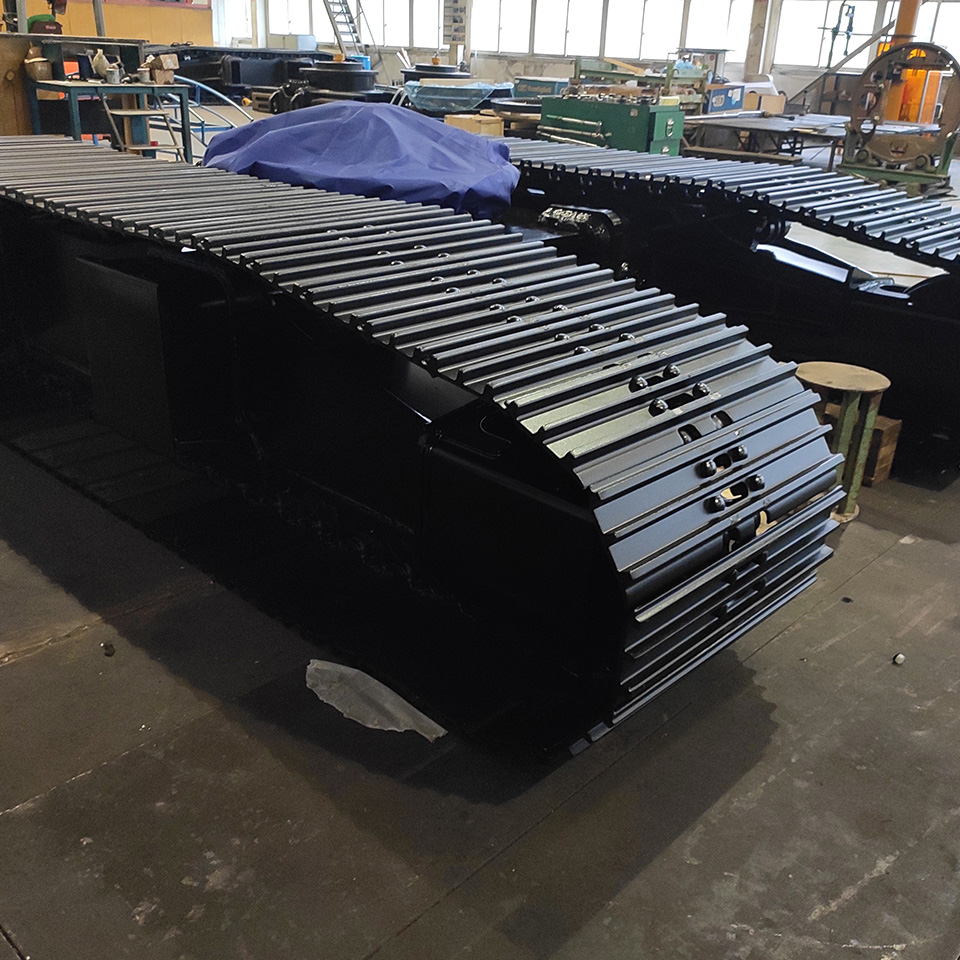
1. Track Undercarriage Types and Selection: The Prerequisite for Maintenance
Before discussing maintenance methods, one prerequisite must be clarified: different types of track undercarriages require completely different maintenance strategies.
1.1 Technical Divide Between Two Major Types
Track undercarriages are primarily divided into Steel Crawler Undercarriage and Rubber Track Undercarriage based on track material.
| Comparison Dimension | Steel Crawler Undercarriage | Rubber Track Undercarriage |
|---|---|---|
| Load Range | 2 – 120 tons | 0.5 – 12 tons |
| Track Material | High-strength alloy steel chain + steel shoes | Rubber + steel cord |
| Operating Temperature | No special limit (depends on grease) | -25℃ to 55℃ |
| Surface Protection | Poor (rubber pads optional) | Excellent (does not damage surfaces) |
| Noise Level | Higher | Low |
| Wear Resistance | Excellent | Fair |
| Service Life (Heavy Load) | 3,000 – 8,000 hours | 800 – 2,000 hours |
| Typical Applications | Mining machinery, rotary drilling rigs, bulldozers | Mini excavators, agricultural machinery, small drills |
1.2 Differentiated Maintenance Strategies
Steel crawler undercarriage maintenance focuses on gear, bearing, and chain lubrication and anti-corrosion treatment; rubber track undercarriage maintenance focuses on rubber ageing protection, external damage inspection, and storage management. MAGEON recommends equipment managers develop targeted maintenance plans based on undercarriage type.
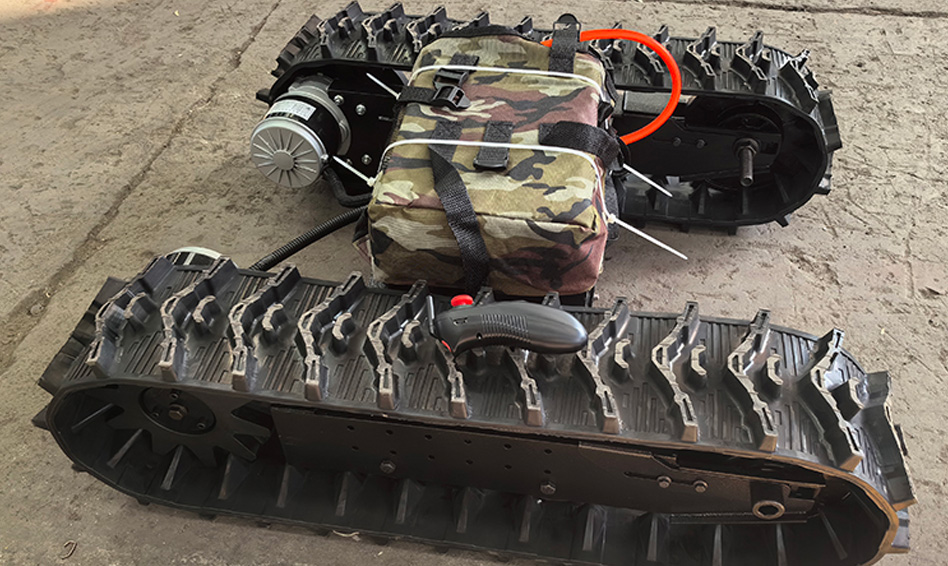
2. Track Undercarriage Core Structure: The Maintenance Object
Understanding the structure of Undercarriage Parts is the foundation for developing maintenance plans.
| Component | Function | Key Maintenance Points |
|---|---|---|
| Track Chain | Forms travel loop, transmits power | Check pitch stretch, pin wear |
| Track Shoe | Ground contact, provides traction | Check grouser wear, bolt tightness, cracks |
| Drive Sprocket | Engages chain, transmits power | Check tooth wear, tooth root cracks |
| Track Roller | Bears equipment weight | Check floating seal leaks, roller depressions |
| Idler | Guides track direction, maintains tension | Check seals, lubricant leakage |
| Carrier Roller | Supports upper track run | Check rotation smoothness, bearing noise |
| Tensioning System | Adjusts track tightness | Check tension, cylinder seals |
3. Six Maintenance Modules: A Comprehensive Track Undercarriage Maintenance System
3.1 Module 1: Periodic Inspection — The First Line of Defence
(1)System Routine Inspection
Before and after each use, the oil, electrical, water, and air systems of the track undercarriage should be routinely inspected to ensure all systems are functioning properly and to eliminate potential faults. This step, though simple, is the first line of defence against major failures.
(2)Wear Component Inspection
Regularly inspect track shoes, sprockets, drive wheels, and other components for wear, paying particular attention to cracks, deformation, or excessive wear, and replace severely worn components promptly.
| Inspection Item | Inspection Content | Judgement Standard | Action |
|---|---|---|---|
| Track Shoe | Cracks, deformation, grouser wear | Cracks >10mm or grouser wear >30% | Replace or weld repair |
| Drive Sprocket | Tooth wear, tooth root cracks | “Hooking” wear or sharpened teeth | Replace sprocket |
| Track Roller | Floating seal leaks, roller depressions | Leaks or excessive depression depth | Replace within 24 hours |
| Idler | Seals, lubricant leakage | Seal failure or leakage | Replace seals |
| Carrier Roller | Rotation smoothness, bearing noise | Seizure or abnormal noise | Replace carrier roller |
(3)Fastener Inspection
Check bolts, pins, and other fasteners for looseness and tighten promptly to ensure machine stability and safety. MAGEON Engineering Tip: Fastener loosening is often an overlooked source of failure — a single loose track shoe bolt can cause the shoe to detach during operation, triggering cascading damage.
3.2 Module 2: Cleaning Maintenance — The Key to Preventing Abrasive Wear
(1)Keep Clean
Keep the track undercarriage clean and prevent mud, sand, and other debris from entering the machine interior — these contaminants are the primary cause of abrasive wear. After use in harsh environments, thoroughly clean the track undercarriage.
(2)Cleaning Methods
| Cleaning Method | Operation Steps | Applicable Scenarios | Precautions |
|---|---|---|---|
| Vibration Method | Lift one track 30cm, run at high speed forward/reverse | Daily cleaning of loose mud | Wear safety goggles and helmet |
| High-Pressure Washing | Use high-pressure washer to flush chassis | Severe hardened mud | Avoid direct spray at seals |
| Tool Removal | Use pry bar or screwdriver to remove debris | Hardened mud vibration cannot remove | Maintain safe distance |
(3)Avoid Contamination
During transport and storage, avoid contact between tracks and acids, alkalis, oils, organic solutions, and other harmful substances that may damage track quality.
3.3 Module 3: Lubrication — The Core of Extending Component Life
(1)Regular Lubrication
Regularly lubricate all moving parts of the track undercarriage, such as gears, bearings, and chains, to prevent excessive wear and rust.
| Lubrication Point | Interval | Grease Type | Operation Points |
|---|---|---|---|
| Track Roller Bearings | Every 50 hours | High-temp lithium grease | Apply until overflow |
| Idler Bearings | Every 50 hours | High-temp lithium grease | Apply until overflow |
| Tension Cylinder Nipples | Every 10 hours | High-temp lithium grease | Apply 2-3 strokes |
| Gears and Chains | Weekly | Dedicated chain lubricant | Uniform coating |
(2)Select Appropriate Lubricants
Select appropriate lubricants according to manufacturer recommendations and specific operating conditions. In low-temperature environments (e.g., -30℃), use low-temperature grease (such as -30℃ grade lithium grease) to ensure good fluidity.
3.4 Module 4: Anti-Corrosion Treatment — An Easily Overlooked Maintenance Step
(1)Anti-Rust Treatment
Apply anti-corrosion treatment to the track undercarriage, especially after use in humid environments. Apply anti-rust paint or other protective agents to prevent metal components from rusting.
(2)Storage Environment
When not in use, store the track undercarriage in a dry, ventilated environment, avoiding prolonged exposure to sunlight or rain to reduce corrosion risk.
MAGEON Engineering Tip: Steel crawler undercarriages often experience more severe corrosion during winter idle periods than during an entire autumn of intensive operation — the “static corrosion acceleration effect” caused by low-temperature, high-humidity environments and static conditions is an invisible killer of undercarriage life.
3.5 Module 5: Standardised Operation — The Best Maintenance Is Correct Use
(1)Standardised Operation
Operators should strictly follow operating procedures to avoid machine damage caused by improper operation. The five major operation taboos include:
| Operation Taboo | Damage Mechanism | Consequence | Correct Practice |
|---|---|---|---|
| Sharp turns | Severe lateral friction | Accelerated shoe and sprocket wear | Slow down before turning |
| Pivot turns | One track bears full weight | Roller and link overload | Avoid on hard surfaces |
| High-speed on rough terrain | High-frequency link impact | Link fracture, sprocket tooth breakage | Reduce travel speed |
| Prolonged travel | Sustained oil temperature rise | Floating seal ageing and leakage | Stop every 2 hours |
| Neglecting tension checks | Improper tension causes abnormal wear | Derailment or accelerated wear | Check before each shift |
(2)Professional Training
Operators should receive professional training on correct operation and maintenance knowledge for track undercarriages, improving operating skills and maintenance awareness. MAGEON provides condition-differentiated maintenance strategy training to help equipment managers master scientific maintenance methods.
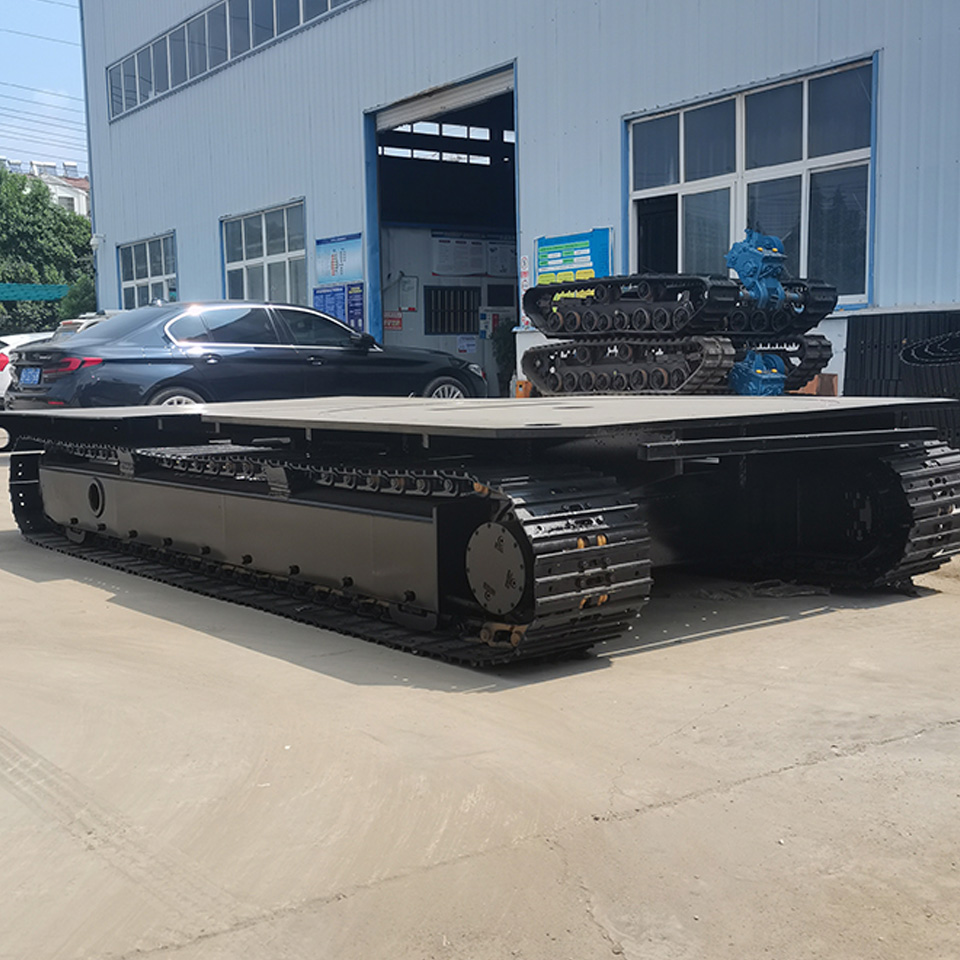
3.6 Module 6: Storage Precautions — Maintenance During Idle Periods
(1)Temperature and Humidity Control
During storage, warehouse temperature should be maintained within an appropriate range (e.g., -15 to 40°C), and air humidity should be maintained at 50-80% to prevent tracks from becoming damp or overheated.
(2)Placement Method
Rubber tracks should be stored in rolls, avoiding folding, and periodically reversed to prevent deformation. Steel crawler undercarriages should be raised during prolonged idle periods so tracks are not under constant pressure at fixed points.
(3)Storage Environment Requirements
| Storage Requirement | Standard | Reason |
|---|---|---|
| Temperature Range | -15 to 40°C | Prevents rubber ageing or metal overheating |
| Humidity Range | 50-80% | Prevents dampness/rust or excessive dryness |
| Avoid Contact | Acids, alkalis, oils, organic solutions | Prevents corrosion and rubber ageing |
| Avoid Heat Sources | >1m from heating devices | Prevents rubber heat ageing |
| Ventilation | Dry, ventilated environment | Reduces corrosion risk |
4. Common Faults and Preventive Measures
| Fault Type | Root Cause | Preventive Measure | MAGEON Recommended Solution |
|---|---|---|---|
| Track Derailment | Improper tension, debris jamming | Daily tension check, timely debris removal | Tension monitoring device |
| Sprocket Tooth Breakage | Impact loads, excessive tooth wear | Avoid high-speed travel on rough terrain, regular tooth inspection | Induction-hardened sprocket, HRC 52-58 |
| Track Roller Leak | Floating seal ageing, debris ingress | Daily cleaning, regular seal inspection | Dual-seal track roller |
| Link Fracture | Excessive tension, debris jamming | Adjust tension by road condition, clean debris | Alloy steel forged links |
| Track Shoe Cracks | Impact loads, material fatigue | Avoid sharp turns, use high-toughness material | 65Mn material + surface hardening |
| Abnormal Noise | Bearing damage, engagement deviation | Regular lubrication, check engagement clearance | Follow “listen→static check→dynamic check” process |
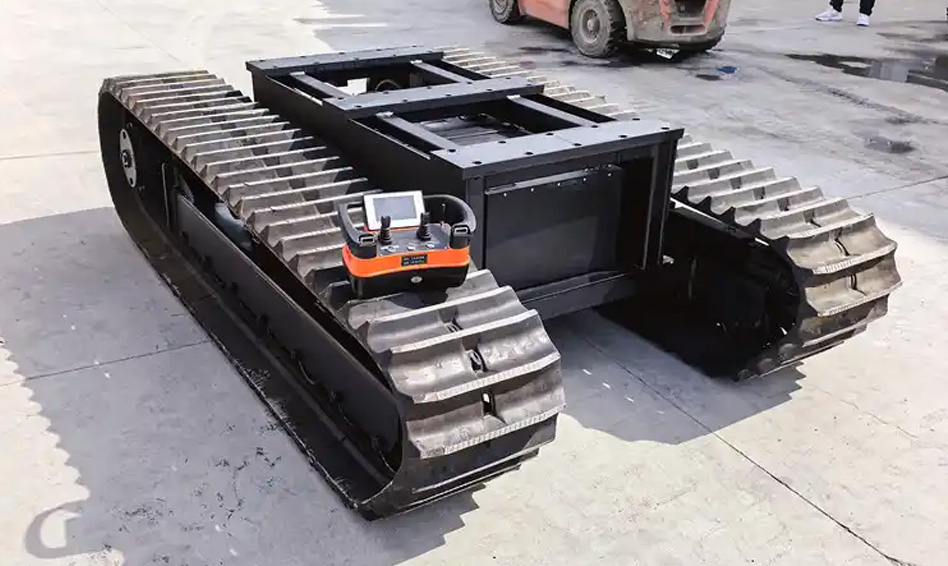
5. MAGEON Full Lifecycle Track Undercarriage Maintenance Services
As a globally leading manufacturer of Custom Tracked Chassis, MAGEON provides full lifecycle services from selection to maintenance:
| Service Stage | Service Content | Customer Value |
|---|---|---|
| Selection Consultation | Operating condition assessment, parameter matching, solution design | Ensures precise undercarriage-equipment matching |
| Parts Supply | Complete range of Undercarriage Parts | Original quality, compatible with mainstream brands |
| Installation Guidance | On-site installation guidance, commissioning support | Ensures correct installation, avoids initial failures |
| Maintenance Training | Six-module maintenance operation training | Enhances equipment manager maintenance capability |
| Spare Parts Support | Rapid spare parts supply, technical consultation | Reduces downtime, ensures equipment availability |
The Rotary Drilling Rig Chassis and Drilling Rig Undercarriage also benefit from MAGEON‘s full lifecycle maintenance service system. MAGEON provides 10-100 ton heavy-duty chassis for rotary drilling rigs, equipped with large-diameter slewing bearings, reinforced track frames, and high-strength track chain designs, with supporting maintenance training and technical support.
6. Frequently Asked Questions (FAQ)
Q1: What routine inspections should be performed before and after each use of a track undercarriage?
A: The oil, electrical, water, and air systems should be routinely inspected to ensure all systems are functioning properly. Additionally, inspect track shoes, sprockets, drive wheels, and other components for wear, paying particular attention to cracks, deformation, excessive wear, and loose bolts and pins. MAGEON recommends establishing an inspection record sheet to document each inspection, forming wear trend data.
Q2: How should a track undercarriage be properly cleaned? What safety precautions apply?
A: Clean mud and debris from the chassis after each shift. The vibration method is recommended — lift one track 30cm, run at high speed forward/reverse to loosen and remove debris. For hardened mud, use a high-pressure washer or tool removal. Wear safety goggles and a helmet, and maintain a safe distance. Avoid direct high-pressure spray at seals.
Q3: How often should grease be applied to a track undercarriage? What type of grease?
A: Track roller and idler bearings require high-temperature lithium grease every 50 hours;tension cylinder nipples require 2-3 strokes of high-temperature lithium grease every 10 hours;gears and chains require weekly lubrication. In low-temperature environments (e.g., -30℃), use low-temperature grease (such as -30℃ grade lithium grease) to ensure good fluidity.
Q4: How should anti-corrosion treatment be performed on a track undercarriage?
A: Apply anti-corrosion treatment, especially after use in humid environments. Apply anti-rust paint or other protective agents to prevent rust. When not in use, store in a dry, ventilated environment, avoiding prolonged exposure to sunlight or rain. Steel crawler undercarriages require special attention to the “static corrosion acceleration effect” during winter idle periods.
Q5: What are the storage precautions for rubber tracks?
A: Rubber tracks should be stored in rolls, avoiding folding, and periodically reversed to prevent deformation. Warehouse temperature should be maintained at -15 to 40°C, and air humidity at 50-80%. Avoid contact with acids, alkalis, oils, and organic solutions, and keep at least 1 metre from heating devices.
Q6: Which operating habits accelerate track undercarriage wear?
A: Five major taboos: ①Sharp turns — severe lateral friction accelerating shoe and sprocket wear;②Pivot turns — one track bears full weight, overloading rollers and links;③High-speed travel on rough terrain — high-frequency link impact causing fracture;④Prolonged continuous travel — oil temperature rise causing seal ageing and leakage;⑤Neglecting tension checks — causing derailment or abnormal wear.
Q7: How do I troubleshoot abnormal noise from a track undercarriage?
A: Troubleshooting should follow the logic of “listen to identify type → static inspection → dynamic troubleshooting,” working from easy to difficult and from external to internal. Focus on the track engagement pair, support roller system, tensioning device, transmission end, and chassis connection components. Common noise sources include bearing damage, engagement deviation, and debris jamming.
Q8: What undercarriage parts does MAGEON supply?
A: MAGEON supplies a complete range of Undercarriage Parts, including: track chains (links, pins, bushings), track shoes, drive sprockets, track rollers, idlers, carrier rollers, track frames, tensioning systems, floating seals, and more. All components are manufactured to MAGEON‘s own technical standards and are compatible with mainstream host brands.
Q9: Can MAGEON customise dedicated chassis for rotary drilling rigs?
A: Yes. The Rotary Drilling Rig Chassis is one of MAGEON’s core products. MAGEON provides 10-100 ton heavy-duty chassis specifically designed for rotary drilling rigs, equipped with large-diameter slewing bearings, reinforced track frames, and high-strength track chain designs. The Drilling Rig Undercarriage also covers 0.5-50 ton load ranges.
Q10: How much cost savings can a complete maintenance system deliver?
A: MAGEON‘s data analysis based on hundreds of actual projects shows: spending 5 minutes daily cleaning undercarriage debris can prevent floating seal leakage causing bearing burnout, with a cost ratio of approximately 1:10+;adjusting tension by road conditions can prevent link fracture and track derailment, with a cost ratio of approximately 1:20+. Establishing a complete six-module maintenance system can reduce the total lifecycle cost of a track undercarriage by 30%-40%.
7. About MAGEON
MAGEON is dedicated to delivering high-quality Steel Crawler Undercarriage and Rubber Track Undercarriage custom solutions to the global heavy machinery industry. With customisation capabilities covering the full load range of 0.5 to 120 tons and hundreds of actual matching project experiences, we tailor travel-drive solutions for every customer’s specific operating conditions, providing full lifecycle services from selection to maintenance.
Our Core Capabilities:
Load Range: Full-load custom solutions from 0.5 to 120 tons
Undercarriage Types: Steel crawler undercarriage, rubber track undercarriage, telescopic crawler undercarriage, dedicated rotary drilling rig chassis
Core Applications: Rotary drilling rigs, exploration drilling rigs, excavator conversions, mining equipment, agricultural machinery, and more
Parts Supply: Complete range of Undercarriage Parts including track chains, track shoes, drive sprockets, track rollers, idlers, and carrier rollers
Maintenance Support: Six-module maintenance training, installation guidance, fault diagnosis, spare parts support
From design to delivery, MAGEON stands for exceptional quality and dependable service, helping your equipment perform efficiently on the most challenging terrains.