 English
 简体中文
简体中文
The track undercarriage is the most critical travel component of heavy machinery and one of the highest maintenance cost items. According to industry statistics, undercarriage-related maintenance costs account for approximately 30%-40% of total lifecycle maintenance costs for heavy equipment, and over 60% of early undercarriage failures are directly related to improper maintenance. As a globally leading manufacturer of Custom Tracked Chassis, MAGEON draws on hundreds of actual matching project experiences covering the full load range of 0.5 to 120 tons to provide a systematic analysis of undercarriage wear mechanisms, daily maintenance operations, and fault prevention methods — helping equipment managers advance from “repair after failure” to “scientific maintenance.”
1. Undercarriage Wear Mechanisms: Why Do Components Fail Prematurely?
Before discussing maintenance methods, understanding the wear mechanisms of core undercarriage components is essential. Only by understanding “why it fails” can one achieve “knowing how to prevent it.”
1.1 Polygonal Effect and Resonance of Track Links
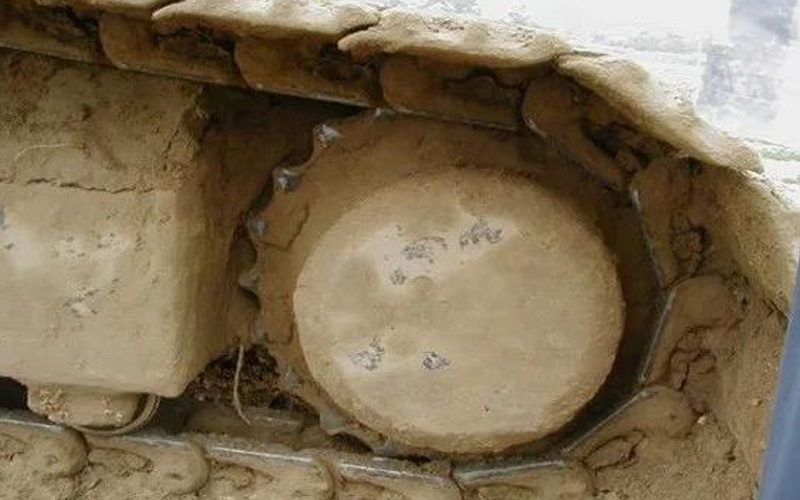
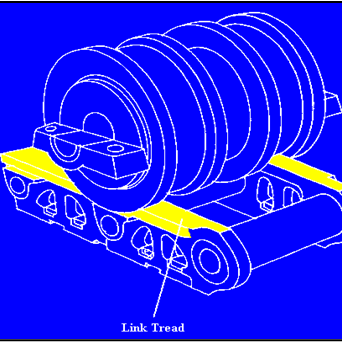
Track links are connected in multiple sections, each with a certain length, and the drive sprocket is gear-shaped. During excavator travel, a phenomenon known as the polygonal effect occurs:when the entire track shoe is parallel to the ground, the drive radius is smaller;when one side of the track shoe contacts the ground, the drive radius is larger. This periodic radius variation causes inconsistent travel speed, generating vibration.
When operating improperly, on uneven roads, with tension variations, or with mud and debris attached to track links, travel causes resonance of the track links, resulting in link jumping accompanied by abnormal noise. In severe cases, this accelerates undercarriage component wear and can even cause track derailment.
MAGEON Engineering Interpretation: The polygonal effect is an inherent characteristic of track travel and cannot be completely eliminated, but its impact can be controlled within acceptable limits through reasonable pitch design and maintaining proper track tension. Resonance is directly related to debris attachment and tension variation — a problem that can be avoided through maintenance.
1.2 Failure Process of Alloy Steel Wear-Resistant Layer
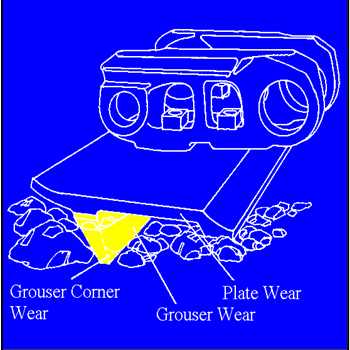
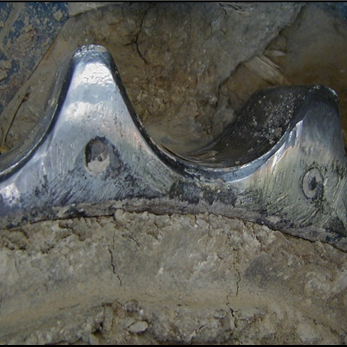
The materials of excavator track rollers, tracks and guards, drive sprockets, and carrier rollers are cast and forged from alloy steel with added wear-resistant materials. Although a protective film is formed on the metal surface through heat treatment, if operating improperly, with improper track tension, or with debris present, any metal protective film will be worn away, ultimately accelerating the wear of track rollers, tracks and guards, drive sprockets, and carrier rollers.
Failure Chain: Debris ingress → Protective film wear → Substrate exposure → Accelerated wear → Component failure
1.3 Oil Leak Mechanism of Floating Seals
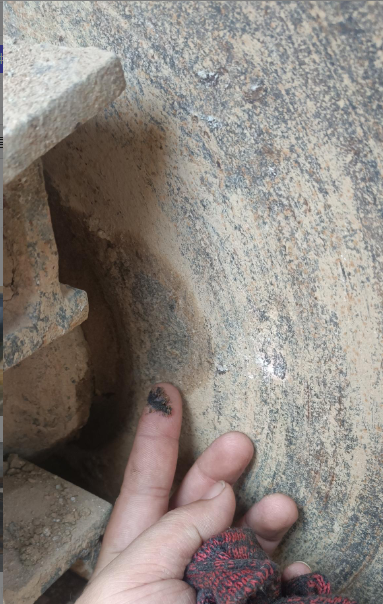
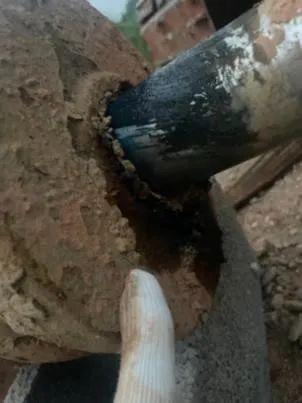
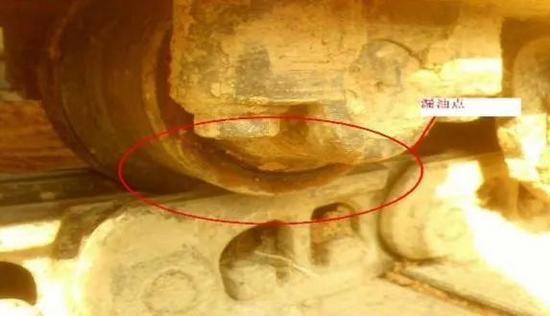
The internal components of excavator travel motors and reducers, track rollers, and carrier rollers require gear oil for lubrication. Floating seals are a type of non-contact seal that prevents oil leakage. Under normal conditions, they do not leak;however, when external mud, sand, and other debris accumulate excessively, debris enters the seal interior and causes seal damage, leading to oil leakage. Additionally, prolonged excavator travel causes oil temperature to rise, ageing the floating seals and ultimately causing leakage.
MAGEON Maintenance Tip: Floating seal leakage is the primary signal of track roller and carrier roller failure. Once leakage is detected, it should be addressed within 24 hours;otherwise, bearings will rapidly burn out.
2. Daily Maintenance Operations for Core Undercarriage Components
2.1 Daily Maintenance Operations (Before and After Each Shift)
Pre-Shift Inspection:
Check track tension — adjust to specified standards per the Operator‘s Manual. Insufficient tension causes derailment;excessive tension accelerates pin and bushing wear.
Check undercarriage components for abnormalities — visually inspect track rollers, idlers, and drive sprockets for oil leaks, loose bolts, and track shoe wear or breakage.
Post-Shift Cleaning (Critical Step):
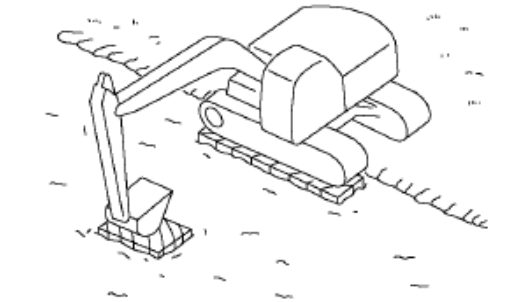
At the end of each shift, lift one side of the excavator track 30cm off the ground, run the track at high speed forward and reverse repeatedly, using vibration to loosen and remove debris. This is the most effective daily cleaning method recommended by MAGEON‘s service team.
| Cleaning Method | Operation Steps | Applicable Scenarios | Precautions |
|---|---|---|---|
| Vibration Method | Lift one track 30cm, run at high speed forward/reverse | Daily cleaning of loose mud | Wear safety goggles and helmet |
| Pry Bar Method | Use pry bar or screwdriver to remove debris | Hardened mud that vibration cannot remove | Maintain safe distance |
| Washing Equipment | Use high-pressure washing equipment | Severe debris accumulation | Avoid direct high-pressure spray at seals |
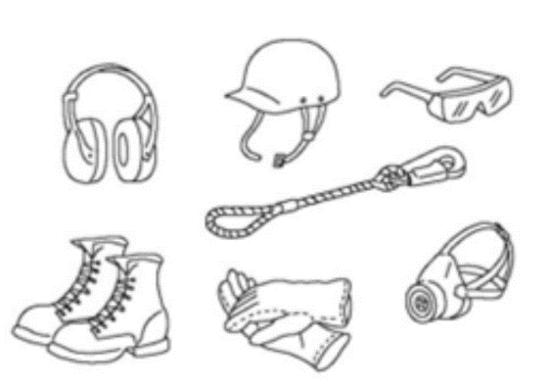
Safety Warning: Wear safety goggles and a helmet during debris cleaning, and maintain a safe distance to prevent injuries from flying debris.
2.2 Periodic Maintenance (Every 250 Hours)
MAGEON Recommended Interval: When undercarriage components have excessive debris or abnormal operation, or every 250 hours, perform cleaning to extend component service life.
| Maintenance Item | Frequency | Operation Method | Key Points |
|---|---|---|---|
| Track tension check | Daily | Measure sag, adjust per manual | Too tight accelerates wear;too loose causes derailment |
| Undercarriage debris cleaning | Daily/250H | Vibration + tool removal | Focus on track roller and idler areas |
| Floating seal inspection | Weekly | Visual check for leaks | Address leaks within 24 hours |
| Idler and tension cylinder cleaning | Weekly | Remove surface oil, sand, mud | Prevent seal failure and leakage |
| Comprehensive undercarriage inspection | Every 500H | Check wear on all components | Record wear data to predict replacement timing |
2.3 Specialised Maintenance for Idlers and Tension Cylinders
The idler and tension cylinder assembly is the device that maintains standard track tension. Tension varies with operating conditions and undercarriage debris, so regular inspection and adjustment are required to maintain standard tension. When the idler and tension cylinder surfaces have oil, sand, mud, or other debris, they must be cleaned;otherwise, seal failure and leakage will occur.
3. Undercarriage Operation Taboos: These Behaviours Are Shortening Your Undercarriage Life
MAGEON has summarised five major taboos in undercarriage operation based on extensive actual project experience:
| Operation Taboo | Damage Mechanism | Consequence | Correct Practice |
|---|---|---|---|
| Sharp turns | Severe lateral friction between track and ground | Accelerated track shoe and sprocket wear | Slow down before turning |
| Pivot turns | One track bears full equipment weight | Track roller and link overload | Avoid pivot turns on hard surfaces |
| High-speed travel on rough terrain | High-frequency impact on track links | Link fracture, sprocket tooth breakage | Reduce travel speed, pass smoothly |
| Prolonged continuous travel | Sustained oil temperature rise | Floating seal ageing and leakage | Stop and rest every 2 hours |
| Neglecting tension checks | Improper tension causes abnormal wear | Derailment or accelerated wear | Check before each shift |
MAGEON Golden Operating Rules:
Avoid sharp turns, pivot turns, and high-speed travel on rough terrain
Check undercarriage components for abnormalities before each shift
4. Undercarriage Components & Market Trends: Why Maintenance Is More Important Than Ever
4.1 Global Undercarriage Market Continues to Grow
The global undercarriage market is in a period of steady growth. According to QYResearch statistics and forecasts, the global tracked undercarriage system market reached $13.36 billion** in 2025, expected to reach **$19.44 billion by 2032, with a CAGR of 5.5%. Among this, the global steel crawler undercarriage revenue was approximately 48.77 billion RMB in 2025, projected to approach 68.35 billion RMB by 2032.
China‘s undercarriage parts exports have also shown strong performance. In June 2026, China’s tracked undercarriage parts exports reached $88.1 million (YoY +4.0%), covering 80 destination countries, with the Russian Federation accounting for 23.4% and the top 8 countries collectively accounting for 53.0%.
4.2 Why Maintenance Is More Important Than Ever
As equipment保有量 continues to grow and mining operations extend to deeper, more remote locations, undercarriage maintenance costs as a proportion of total equipment lifecycle costs continue to rise. Industry trends show that manufacturers and fleet operators face dual pressures of heightened equipment availability expectations and tighter lifecycle cost control, driving more nuanced evaluation of component-level trade-offs between initial procurement cost, serviceability, and replacement cadence.
Meanwhile, predictive maintenance algorithms and telematics-enabled condition monitoring are transforming undercarriage maintenance models — enabling more proactive replacement schedules through condition monitoring, reducing unscheduled downtime, and extending component life.
MAGEON‘s Practice: When customising undercarriages, MAGEON fully considers maintenance convenience design — modular components, standardised interfaces, and easy tension adjustment mechanisms — ensuring customers can perform most maintenance work under field conditions.
5. MAGEON Full Lifecycle Undercarriage Services
As a globally leading manufacturer of Custom Tracked Chassis, MAGEON provides full lifecycle services from selection to maintenance:
| Service Stage | Service Content | Customer Value |
|---|---|---|
| Selection Consultation | Operating condition assessment, parameter matching, solution design | Ensures precise undercarriage-equipment matching |
| Parts Supply | Complete range of Undercarriage Parts | Original quality, compatible with mainstream brands |
| Installation Guidance | On-site installation guidance, commissioning support | Ensures correct installation, avoids initial failures |
| Maintenance Training | Operation and maintenance training, fault diagnosis guidance | Enhances equipment manager maintenance capability |
| Spare Parts Support | Rapid spare parts supply, technical consultation | Reduces downtime, ensures equipment availability |
6. Frequently Asked Questions (FAQ)
Q1:What is the recommended maintenance frequency for track undercarriages?
A:MAGEON recommends:Before each shift — check track tension and undercarriage components;After each shift — clean mud and debris from tracks and rollers (vibration method recommended — lift one track 30cm, run at high speed forward/reverse);Every 250 hours — comprehensive undercarriage cleaning;Every 500 hours — comprehensive inspection with wear data recording.
Q2:What is the polygonal effect of track links? Why does it cause vibration?
A:Track links are connected in multiple sections, and the drive sprocket is gear-shaped. During travel, the drive radius varies periodically — smaller when the track shoe is parallel to the ground, larger when one side contacts the ground. This radius variation causes inconsistent travel speed, generating vibration known as the polygonal effect. When tension is improper or debris is attached, vibration intensifies into resonance, potentially causing link jumping and track derailment.
Q3:What causes floating seal leakage? How can it be prevented?
A:Floating seal leakage has two main causes:①Excessive external mud, sand, and debris accumulation entering the seal interior causing damage;②Prolonged travel causing oil temperature rise and seal ageing. Prevention measures include:daily post-shift debris cleaning (focusing on track roller and carrier roller areas), avoiding prolonged continuous travel, and regular seal inspection. Once leakage is detected, address within 24 hours;otherwise, bearings will rapidly burn out.
Q4:What materials are track rollers and carrier rollers made of? How should wear be handled?
A:Track rollers, tracks and guards, drive sprockets, and carrier rollers are cast and forged from alloy steel with added wear-resistant materials, with heat-treated protective films on metal surfaces. However, improper operation, incorrect tension, or debris presence will wear away the protective film and accelerate wear. When wear reaches its limit, replace promptly — set replacement is recommended to avoid uneven wear.
Q5:What safety precautions should be taken when cleaning undercarriage debris?
A:Wear safety goggles and a helmet, and maintain a safe distance to prevent injuries from flying debris. The vibration method is recommended (lift one track 30cm, run at high speed). For hardened mud that vibration cannot remove, use a pry bar or screwdriver;use washing equipment when necessary.
Q6:Which operating habits accelerate undercarriage wear?
A:Five major taboos:①Sharp turns — severe lateral friction, accelerating track shoe and sprocket wear;②Pivot turns — one track bears full weight, overloading rollers and links;③High-speed travel on rough terrain — high-frequency impact on links, prone to fracture;④Prolonged continuous travel — oil temperature rise causing floating seal ageing and leakage;⑤Neglecting tension checks — causing derailment or abnormal wear.
Q7:How should idlers and tension cylinders be maintained?
A:The idler and tension cylinder assembly maintains standard track tension. Maintenance points:①Regularly inspect and adjust track tension, as tension varies with operating conditions and debris;②Clean oil, sand, mud, and other debris from idler and tension cylinder surfaces promptly to prevent seal failure and leakage;③Check idler seals for integrity and lubricant leakage.
Q8:What is the global undercarriage market size and growth trend?
A:According to QYResearch, the global tracked undercarriage system market reached $13.36 billion in 2025, expected to reach $19.44 billion by 2032, with a CAGR of 5.5%. Global steel crawler undercarriage revenue was approximately 48.77 billion RMB in 2025, projected to approach 68.35 billion RMB by 2032. China‘s undercarriage parts exports reached $88.1 million in June 2026 alone, covering 80 destination countries.
Q9:What undercarriage parts does MAGEON supply?
A:MAGEON supplies a complete range of Undercarriage Parts, including:track chains (links, pins, bushings), track shoes, drive sprockets, track rollers, idlers, carrier rollers, track frames, tensioning systems, floating seals, and more. All components are manufactured to MAGEON’s own technical standards and are compatible with mainstream host brands.
Q10:Why is undercarriage maintenance more important than overall machine maintenance?
A:Undercarriage-related maintenance costs account for approximately 30%-40% of total lifecycle maintenance costs for heavy equipment, and over 60% of early undercarriage failures are directly related to improper maintenance. Undercarriage components endure impact, abrasion, and mud/water ingress in harsh conditions — improper maintenance leads to chain failures:a single floating seal leak can burn out bearings within 24 hours;one derailment can cause link fracture and sprocket tooth breakage. Scientific maintenance can extend undercarriage life by over 30%.
7. About MAGEON
MAGEON is dedicated to delivering high-quality Steel Crawler Undercarriage and Rubber Track Undercarriage custom solutions to the global heavy machinery industry. With customisation capabilities covering the full load range of 0.5 to 120 tons and hundreds of actual matching project experiences, we tailor travel-drive solutions for every customer‘s specific operating conditions, providing full lifecycle services from selection to maintenance.
Our Core Capabilities:
Load Range: Full-load custom solutions from 0.5 to 120 tons
Undercarriage Types: Steel crawler undercarriage, rubber track undercarriage, telescopic crawler undercarriage
Parts Supply: Complete range of Undercarriage Parts including track chains, track shoes, drive sprockets, track rollers, idlers, and carrier rollers
Maintenance Support: Installation guidance, maintenance training, fault diagnosis, spare parts support
From design to delivery, MAGEON stands for exceptional quality and dependable service, helping your equipment perform efficiently on the most challenging terrains.