 English
 简体中文
简体中文
The crawler crane is the core equipment for large-scale lifting operations in wind power installation, bridge construction, nuclear power engineering, and other projects. Its undercarriage, as the load-bearing and travel foundation of the entire machine, must not only support hundreds or even thousands of tonnes of machine weight and lifting loads, but also travel stably and position precisely on rugged, soft, and muddy construction sites. As a globally leading manufacturer of Custom Tracked Chassis, MAGEON draws on extensive matching experience in the crawler crane sector to provide a systematic analysis of dedicated maintenance strategies, core component care essentials, and periodic management standards for crawler crane undercarriages — helping equipment managers master the scientific maintenance of this “walking foundation” of large lifting equipment.
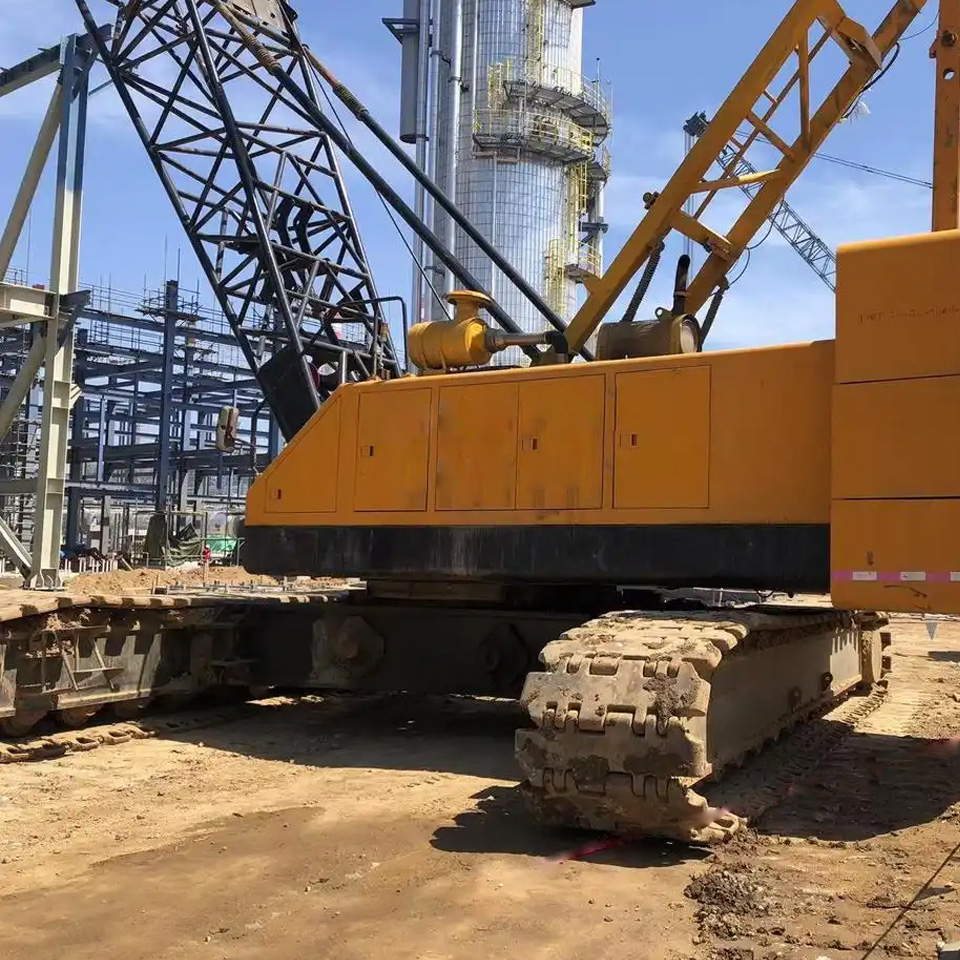
1. The Distinctiveness of Crawler Crane Undercarriages: Why Excavator Maintenance Logic Doesn‘t Apply
While crawler crane undercarriages share structural similarities with excavator undercarriages, their operating conditions differ fundamentally. Understanding these differences is the prerequisite for developing correct maintenance strategies.
1.1 Three Key Differences of Crawler Crane Undercarriages
| Comparison Dimension | Crawler Crane Undercarriage | Excavator Undercarriage | Impact on Maintenance |
|---|---|---|---|
| Load Characteristics | Withstands enormous lifting overturning moments and dynamic loads | Mainly bears machine weight and digging reaction forces | Track shoes and rollers endure higher alternating stresses |
| Travel Frequency | Low travel frequency but long single travel distances | High travel frequency, frequent short-distance moves | Different track link wear patterns |
| Slewing Mechanism | Slewing ring and slewing bearing require high-frequency lubrication | Lower slewing frequency | Slewing mechanism maintenance is a crawler crane-specific priority |
| Site Conditions | Often operates on soft, muddy, uneven lifting sites | Relatively fixed conditions such as mines and job sites | Higher ground pressure control and undercarriage stability requirements |
MAGEON Engineering Interpretation: Crawler crane undercarriage maintenance cannot simply follow excavator maintenance protocols. During lifting operations, the undercarriage withstands enormous overturning moments — for a 1,250-tonne class crawler crane, the overturning moment on the undercarriage during lifting can reach tens of thousands of tonne-metres. This condition places far higher demands on track shoe bending strength, track roller load capacity, and track frame torsional rigidity than excavators.
1.2 Technical Parameter Characteristics of Crawler Crane Undercarriages
Crawler crane undercarriage technical parameters are closely related to equipment tonnage. Based on industry matching experience, MAGEON has summarised typical parameters for crawler crane undercarriages across different tonnages:
| Equipment Tonnage | Track Shoe Width | Track Ground Contact Length | Track Frame Type | Typical Applications |
|---|---|---|---|---|
| 25-100 tonnes | 600-800mm | 5,500-6,500mm | Fixed/telescopic | Municipal bridges, factory construction |
| 100-300 tonnes | 800-1,000mm | 6,500-7,500mm | Mainly telescopic | Wind power auxiliary lifting, railway construction |
| 300-800 tonnes | 1,000-1,200mm | 7,500-8,500mm | Large telescopic | Wind power main crane, nuclear construction |
| 800+ tonnes | 1,200-2,000mm | 8,500-10,580mm | Ultra-large custom | Ultra-large wind power, petrochemical |
Technical Note: Track width is one of the core parameters in crawler crane undercarriage design. Taking Zoomlion‘s ZCT3500V telescopic boom crawler crane as an example, the machine weighs 226 tonnes and uses a variable-gauge telescopic undercarriage, with a fully retracted outer track width of 4.7m and a fully extended outer track width of up to 7.65m, enabling 360° operation. The XCMG XLC17000 (1,250-tonne class) crawler crane uses ultra-wide track shoes to significantly reduce ground pressure and effectively alleviate soft soil foundation bearing pressure. MAGEON can customise the most suitable track width solution based on crawler crane tonnage, lifting conditions, and site conditions.
2. In-Depth Analysis of Crawler Crane Undercarriage Core Component Maintenance
The core components of a crawler crane undercarriage include track shoes, track rollers, carrier rollers, idlers, drive sprockets (“four wheels one track”), as well as travel motors and reducers. The following are maintenance essentials specifically for the special operating conditions of crawler cranes.
2.1 Track Shoes and Track Chains
Wear Characteristics: Crawler crane track shoes withstand enormous overturning moments during lifting operations, with track shoe edges and grousers experiencing bending moments far exceeding those of excavators. After prolonged operation, track shoes may develop cracks, deformation, and grouser wear.
Maintenance Standards:
Weekly inspection of track shoes, track rollers, carrier rollers, and idlers for wear
Replace when track shoe cracks exceed 10mm
Remove mud and debris from between tracks to prevent jamming and component deformation
Track tension is typically measured by sag, generally 30-50mm;too loose causes derailment, too tight accelerates track shoe and roller wear
MAGEON Technical Features: MAGEON crawler crane-specific track shoes are forged from high-strength alloy steel, quenched and tempered with surface hardening, hardness controlled in the 32-38HRC golden zone, retaining sufficient toughness to absorb dynamic impact loads during lifting operations while ensuring wear resistance.
2.2 Track Rollers and Carrier Rollers
Wear Characteristics: Crawler crane track rollers are numerous and widely spaced, with uneven load distribution — rollers on the boom side bear greater pressure. Track roller oil leakage is one of the most common crawler crane undercarriage failures.
Maintenance Standards:
Weekly inspection of track roller surfaces for depressions;replace if depth exceeds limits
Monthly application of lithium-based grease to travel motor pins, track frame articulation points, and other locations
Check travel reducer oil level and top up gear oil if insufficient
Check floating seals for leaks;address within 24 hours if detected
2.3 Slewing Mechanism: The Crawler Crane-Specific Maintenance Priority
Slewing ring and slewing bearing lubrication is the core maintenance item that distinguishes crawler crane undercarriages from excavator undercarriages.
| Lubrication Point | Lubrication Interval | Lubrication Requirement | Maintenance Significance |
|---|---|---|---|
| Slewing ring external teeth | Daily | Apply dedicated open gear grease | Prevents tooth surface wear and pitting |
| Slewing bearing rollers | Monthly or every 250 working hours | Apply lithium-based grease | Ensures smooth slewing, prevents bearing seizure |
Insufficient slewing mechanism lubrication leads to accelerated slewing ring wear, affecting precise positioning and safety of lifting operations. MAGEON considers slewing mechanism lubrication convenience as an important design consideration when customising crawler crane undercarriages, optimising lubrication point layout and lubrication channel design to ensure operators can quickly complete daily lubrication tasks.
2.4 Travel Reducers and Travel Motors
Maintenance Standards:
Check travel reducer oil level and quality every 500 hours
Change gear oil every 2,000 hours or annually
Check travel motors for abnormal noise and oil leaks
Check hydraulic line connections for looseness and leakage
3. Crawler Crane Undercarriage Maintenance Schedule and Operation Standards
3.1 Daily Maintenance
| Maintenance Item | Operation Content | Inspection Standard |
|---|---|---|
| Undercarriage cleaning | Remove mud and debris from tracks and rollers | No debris jamming between tracks |
| Track tension | Measure track sag | Sag 30-50mm |
| Oil leak inspection | Visual check of track rollers, idlers, travel motors | No oil seepage |
| Bolt tightness | Check track shoe and sprocket bolts | No looseness |
| Slewing ring lubrication | Apply grease to slewing ring external teeth | Uniform tooth surface coating |
3.2 Weekly Maintenance
Inspect track shoes, track rollers, carrier rollers, idlers for wear
Remove mud and debris from between tracks to prevent jamming
Check track frame for deformation or cracks
Check electrical wiring connections for tightness, wear, and ageing
3.3 Monthly Maintenance
Apply lithium-based grease to travel motor pins and track frame articulation points
Check travel reducer oil level and top up if insufficient
Check slewing bearing roller lubrication condition
Check brakes, operation condition, and connection bolt tightness
3.4 Every 500 Hours
Check hydraulic system lines and filters
Check travel reducer oil quality and replace if necessary
Check brake system including brake discs and pads
3.5 Annual Maintenance
Perform seasonal maintenance before summer or winter
Comprehensive inspection of track link wear;replace when link wear exceeds 3mm
Change travel reducer gear oil
3.6 Maintenance Schedule Overview
| Maintenance Interval | Maintenance Items | Key Standards |
|---|---|---|
| Daily | Cleaning, tension check, leak inspection, slewing ring lubrication | Sag 30-50mm, no leaks |
| Weekly | Four wheels one track wear check, track frame check | Track shoe cracks <10mm, no roller depressions |
| Monthly | Travel mechanism lubrication, slewing bearing lubrication, reducer oil level | Grease applied until overflow |
| Every 500 hours | Hydraulic system check, brake system check | No line leaks, brake pad thickness >3mm |
| Annually | Seasonal maintenance, gear oil change, comprehensive inspection | Link wear <3mm |
4. Five Major Operation Taboos for Crawler Crane Undercarriage Maintenance
| Operation Taboo | Damage Mechanism | Consequence | Correct Practice |
|---|---|---|---|
| Travelling under load | Undercarriage bears dual dynamic loads of lifting + machine | Track roller and track shoe overload | Avoid long-distance travel under load |
| Sharp turns | Severe lateral friction between track and ground | Accelerated track shoe and sprocket wear | Slow down before turning |
| Failure to adjust ground pressure on soft ground | Track sinking causes undercarriage tilt | Affects lifting stability, overturning risk | Use wide track shoes or lay road plates on soft ground |
| Neglecting slewing mechanism lubrication | Accelerated slewing ring wear | Reduced slewing precision, safety hazard | Lubricate slewing ring external teeth daily |
| Prolonged continuous travel | Sustained oil temperature rise, floating seal ageing | Oil leaks, bearing burnout | Stop and check oil temperature every 2 hours |
MAGEON Golden Operating Rules:
Avoid long-distance travel under load
Assess ground pressure before operating on soft ground;widen tracks if necessary
Check track tension (30-50mm) and slewing ring lubrication before each shift
Clean undercarriage debris after each shift
Check travel reducer oil level and slewing bearing lubrication monthly
5. Crawler Crane Undercarriage Market Trends and Maintenance Economics
5.1 Global Undercarriage Market Continues to Grow
According to Hengzhou Chengsi research statistics, the global steel crawler undercarriage revenue was approximately 48.77 billion RMB in 2025, projected to approach 68.35 billion RMB by 2032, with a CAGR of 4.9% for 2026-2032. In 2025, steel crawler undercarriage production reached 902,000 units, with an average selling price of $7,480.6 per unit. China‘s crawler crane industry market size maintains an average annual growth rate of over 5%, expected to reach the trillion-level by 2025.
5.2 Maintenance Economics of Crawler Crane Undercarriages
Crawler crane undercarriages are among the highest lifecycle maintenance cost components. MAGEON summarises the following maintenance input-output ratios based on actual project data:
| Maintenance Input | Maintenance Cost | Consequence Without Maintenance | Repair Cost | Cost Ratio |
|---|---|---|---|---|
| Daily cleaning (5 minutes) | ≈0 | Debris jamming → track shoe deformation | Track shoe replacement + downtime | 1:10+ |
| Daily slewing ring lubrication | Small amount of grease | Ring wear → reduced slewing precision | Slewing ring replacement | 1:20+ |
| Weekly tension check | Labour cost | Derailment → track chain assembly damage | Chain assembly replacement | 1:15+ |
| Monthly travel mechanism lubrication | Grease cost | Bearing dry friction → travel motor damage | Travel reducer replacement | 1:8+ |
Core Conclusion: Establishing a scientific crawler crane undercarriage maintenance system can reduce the total lifecycle cost of the undercarriage by 30%-40%.
6. MAGEON Crawler Crane Undercarriage Customisation and Full Lifecycle Services
As a globally leading manufacturer of Custom Tracked Chassis, MAGEON possesses the following core capabilities in crawler crane undercarriages:
| Core Capability | Technical Advantage & Customer Value |
|---|---|
| Large Crawler Undercarriage Customisation | Covers 25-800 tonne crawler crane undercarriage customisation, precisely matched to equipment tonnage, lifting conditions, and site conditions |
| Telescopic Undercarriage Design | Provides variable-gauge telescopic crawler undercarriages, narrowing for transport and expanding for operation, balancing stability and transport convenience |
| Full Load Coverage | Covers full load range from 0.5 to 120 tonnes for undercarriage customisation, meeting different crawler crane specifications |
| Parts Supply | Provides four wheels one track and complete undercarriage accessories, including track shoes, drive sprockets, track rollers, idlers, and carrier rollers |
| End-to-End Service | One-stop service from operating condition assessment, solution design, manufacturing and delivery to after-sales support |
The Rotary Drilling Rig Chassis and Drilling Rig Undercarriage also benefit from MAGEON’s full lifecycle service system. MAGEON provides 10-100 tonne heavy-duty chassis for rotary drilling rigs, equipped with large-diameter slewing bearings, reinforced track frames, and high-strength track chain designs, with supporting maintenance training and technical support.
7. Frequently Asked Questions (FAQ)
Q1: What is the standard track tension for a crawler crane undercarriage? How is it adjusted?
A: Crawler crane undercarriage track tension is typically measured by sag, with a standard range of 30-50mm. Too loose causes derailment;too tight accelerates track shoe and track roller wear. Adjustment is made via the tension cylinder, ensuring both tracks have consistent tension. MAGEON recommends checking track tension before each shift and adjusting appropriately based on site conditions.
Q2: What is the difference between crawler crane undercarriage maintenance and excavator undercarriage maintenance?
A: Core differences include: ①Slewing mechanism maintenance — crawler crane slewing rings require daily lubrication, and slewing bearings require monthly or 250-hour lubrication, a maintenance item not present in excavator undercarriages;②Load characteristics — crawler cranes withstand enormous lifting overturning moments, with track shoes and rollers enduring higher alternating stresses;③Travel frequency — crawler cranes have low travel frequency but long single travel distances, with different wear patterns;④Site conditions — crawler cranes often operate on soft, muddy sites, requiring higher ground pressure control.
Q3: When do crawler crane undercarriage track shoes need replacement?
A: MAGEON recommends weekly inspection of track shoe wear. Replacement is needed when: track shoe cracks exceed 10mm;grouser wear exceeds 30% of original height;track shoes show significant deformation or elongated bolt holes. Additionally, track link wear exceeding 3mm also requires replacement.
Q4: How is the slewing mechanism of a crawler crane undercarriage maintained?
A: The slewing mechanism is a crawler crane-specific maintenance priority. Slewing ring external teeth require daily lubrication with dedicated open gear grease;slewing bearing rollers require monthly or every 250 working hours lubrication with lithium-based grease. Insufficient slewing mechanism lubrication leads to accelerated ring wear, affecting precise positioning and safety of lifting operations.
Q5: How often does a crawler crane undercarriage require maintenance?
A: MAGEON recommends: Daily — clean undercarriage, check tension (30-50mm), lubricate slewing ring;Weekly — check four wheels one track wear, remove debris from between tracks;Monthly — lubricate travel mechanism, check reducer oil level, lubricate slewing bearing;Every 500 hours — check hydraulic and brake systems;Annually — seasonal maintenance and gear oil change.
Q6: How can the undercarriage be protected when a crawler crane operates on soft ground?
A: On soft ground, crawler crane undercarriages face sinking and tilting risks. MAGEON recommends: ①Use ultra-wide track shoes to reduce ground pressure — taking XCMG XLC17000 (1,250-tonne class) as an example, its ultra-wide track shoes significantly reduce ground pressure and effectively alleviate soft soil foundation bearing pressure;②Lay road plates when necessary to distribute loads;③Avoid large-amplitude slewing operations on soft ground;④Assess site bearing capacity before operation to ensure it meets equipment ground pressure requirements.
Q7: Can MAGEON customise dedicated undercarriages for crawler cranes?
A: Yes. MAGEON provides customisation services for 25-800 tonne crawler crane undercarriages, precisely matched to equipment tonnage, lifting conditions, and site conditions. The Rotary Drilling Rig Chassis and Drilling Rig Undercarriage are also MAGEON‘s core product lines, covering 10-100 tonne load ranges.
Q8: What crawler crane undercarriage parts does MAGEON supply?
A: MAGEON supplies a complete range of crawler crane undercarriage parts, including: track shoes, track chains (links, pins, bushings), drive sprockets, track rollers, idlers, carrier rollers, track frames, tensioning systems, floating seals, slewing bearings, and other complete Undercarriage Parts, all manufactured to MAGEON’s own technical standards and compatible with mainstream crawler crane brands.
Q9: How often should the travel reducer gear oil be changed on a crawler crane undercarriage?
A: MAGEON recommends changing travel reducer gear oil every 2,000 hours or annually (whichever comes first). Check oil level and quality every 500 hours;if the oil is cloudy, foamy, or has an odour, change it earlier. Use the manufacturer‘s specified gear oil type and avoid mixing different brands.
Q10: What is the return on investment for crawler crane undercarriage maintenance?
A: MAGEON’s actual project data shows: spending 5 minutes daily cleaning undercarriage debris can prevent track shoe deformation, with a cost ratio of approximately 1:10+;daily slewing ring lubrication can prevent slewing precision degradation, with a cost ratio of approximately 1:20+;weekly tension checks can prevent derailment accidents, with a cost ratio of approximately 1:15+. Establishing a scientific maintenance system can reduce the total lifecycle cost of a crawler crane undercarriage by 30%-40%.
8. About MAGEON
MAGEON is dedicated to delivering high-quality Steel Crawler Undercarriage and Rubber Track Undercarriage custom solutions to the global heavy machinery industry. With customisation capabilities covering the full load range of 0.5 to 120 tonnes and hundreds of actual matching project experiences, we tailor travel-drive solutions for every customer‘s specific operating conditions, providing full lifecycle services from selection to maintenance.
Our Core Capabilities:
Load Range: Full-load custom solutions from 0.5 to 120 tonnes
Undercarriage Types: Steel crawler undercarriage, rubber track undercarriage, telescopic crawler undercarriage, crawler crane dedicated chassis, dedicated rotary drilling rig chassis
Core Applications: Crawler cranes, rotary drilling rigs, exploration drilling rigs, mining equipment, agricultural machinery, and more
Parts Supply: Complete range of Undercarriage Parts including track shoes, track chains, drive sprockets, track rollers, idlers, and carrier rollers
Maintenance Support: Installation guidance, maintenance training, fault diagnosis, spare parts support
From design to delivery, MAGEON stands for exceptional quality and dependable service, helping your equipment perform efficiently on the most challenging terrains.