 English
 简体中文

A rotary drilling rig imposes three requirements on its crawler undercarriage that a general-purpose machine does not: a very high vertical load that must be reacted into the frame without the machine walking, a low-speed, high-torque travel drive that has to hold position while the mast is working, and a wide, stable footprint that keeps the rig from twisting as the drill string applies an off-centre reaction. Steel track undercarriages are the standard answer for all three, and MAGEON supplies the 3–15 ton rubber-padded steel track undercarriage specifically for drilling rigs and mobile crushers at 2–4 km/h travelling speed, alongside the 1–60 ton customised steel range that covers the larger crawler rigs. This article sets out the technical requirements that matter for rig applications.
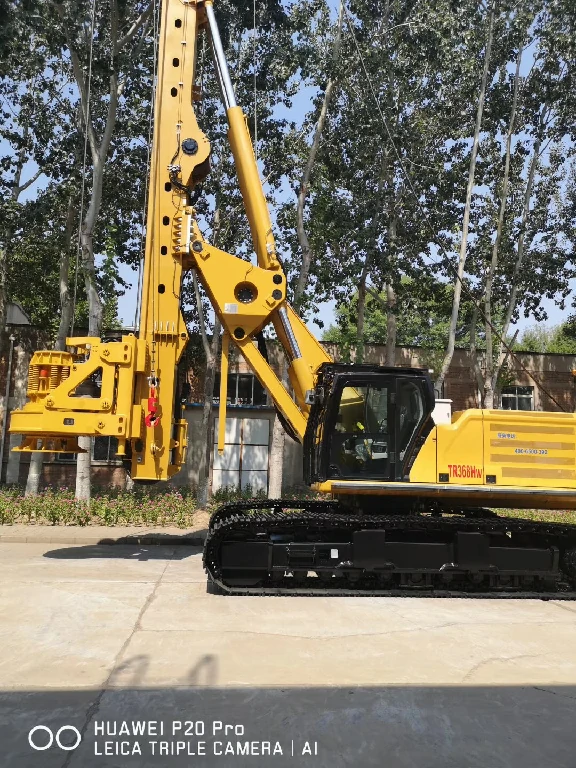
What makes a rotary drilling rig different from other crawler machines?
The working load. A rotary drilling rig applies a large downward feed force at the centre of the mast while the mast is offset from the machine's centre of gravity, and it applies a significant rotary torque reaction through the drill string. The undercarriage therefore carries a load that is large, cyclic, and not centred — a combination that a frame designed for a machine that merely travels and lifts will not handle well.
The second distinguishing factor is that the machine is stationary for most of its working life. A rig spends hours in one position drilling, then tracks a short distance to the next hole. This inverts the wear profile of an undercarriage: the chain does not see high mileage, but the frame sees a sustained static load, and the track tension and roller loading become the critical variables rather than chain wear.
The third is the operating environment. Rigs work on rock, and on drill sites that surface is broken, muddy and often accessed across uncompacted ground. The rig has to reach the hole, hold itself steady while drilling into that rock, and then move to the next one.
What are the key technical requirements for a rig undercarriage?
Requirement one is vertical load capacity with anti-walking stiffness. The frame has to react the drill feed force without the tracks creeping forward, and the welded structure has to resist the torsional load that occurs when the drill string reacts against a hole that is not perfectly vertical. MAGEON's chassis beam is Q345B high-strength steel with the welded structure optimised for load capacity and torsional rigidity, and the track frame is designed so the load from the mast goes down through the crossbeam into the crawler frames rather than through a single point.
Requirement two is track width as a stability measure. This is where the rig specification diverges most from an excavator's. A drilling rig's overturning reaction is applied at the mast, which sits at the front of the machine, well ahead of the crawler centre. The effective support polygon is therefore not the full track footprint but the portion of it that resists rotation about the front of the tracks. A wider track directly widens that polygon, and MAGEON's 200–500 mm range within the 1–60 ton class exists to let this be tuned for each rig configuration.
Requirement three is low-speed, high-torque travel with a holding function. The drive has to move the rig into position and then hold it against the drill reaction. MAGEON's steel track undercarriages are available with hydraulic, electric or mechanical drive, and the drive package is matched to the rig's hydraulic system parameters at the requirement assessment stage, so the motor and travel gearbox are resolved against the actual duty rather than selected from a list.
| Technical requirement | Why it matters on a rotary rig | MAGEON specification |
|---|---|---|
| Vertical load capacity | Reacts drill feed force without the tracks creeping | 1–60 ton range, Q345B welded frame |
| Track width / stability | Resists overturning about the mast offset | 200–500 mm selectable |
| Torsional rigidity | Resists twist from off-centre drill reaction | Optimised welded crossbeam structure |
| Travel speed and drive torque | Positioning speed, and holding against reaction | 1–4 km/h; hydraulic, electric or mechanical drive |
| Surface protection | Rig frequently relocates between holes and over site roads | Steel track with rubber pads, 3–15 tons, 2–4 km/h |
| Slewing / rotary capability | Working in confined or congested areas | Optional integrated 360° slewing bearing |
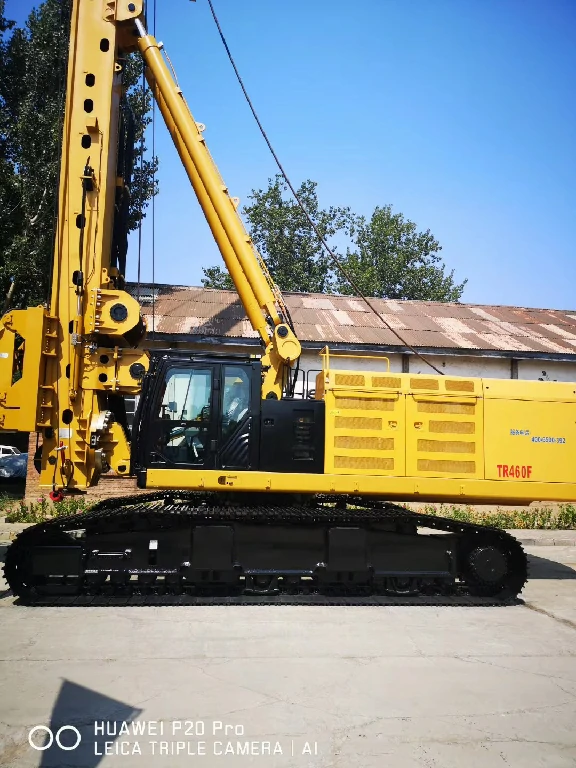
What is the rubber-padded steel track configuration and why does it suit rigs?
MAGEON's 3–15 ton rubber-padded steel track undercarriage is specified for drilling rigs and mobile crushers at 2250 × 300 × 535 mm overall, hydraulic drive, 2–4 km/h travelling speed. The construction is a steel track as the load-bearing running base with rubber pads fitted to the track shoes.
The reason this suits a rig specifically is the relocation pattern. A rig moves between holes, and between holes it often crosses a site road or a prepared platform. A bare steel chain on that surface is a liability — it marks hardstanding, it is noisy near camp and residential areas, and it wears faster on road debris. The rubber-padded arrangement keeps the steel chain's load capacity and mechanical traction for the drilling work while reducing the surface marking and noise on the move.
Note the class limit. This product covers 3–15 tons. Larger crawler rigs, and rigs in the mining class, fall under the 1–60 ton steel track undercarriage range where the surface protection requirement is addressed through the requirement assessment rather than through a standard pad product.
What about the interface on a rig?
Rig interfaces are among the more involved, because the chassis has to carry the mast load path and the machine's own weight, and because rigs are frequently retrofitted. MAGEON customises the mounting flange, bolt pattern, drive shaft height and hydraulic interface to the host structure, surveying the existing equipment one-to-one so the delivered chassis is a drop-in replacement. On a rig replacing an original chassis years after delivery, the original supplier's drawings may no longer exist, and MAGEON's sample-based processing route allows an existing chassis to be used as the measurement reference.
For a rig that works in a confined area — a narrow pit, a congested site, a column-supported structure — the 360° slewing bearing rotary system allows the upper structure to rotate without repositioning the tracks, and MAGEON builds this across the same 1–60 ton envelope. Where a rig needs to work at multiple hole positions without tracking, this is the specification that makes it viable.
What information is needed to specify a rig undercarriage?
Beyond the standard five inputs — machine weight and load distribution, mounting interface dimensions including bolt pattern and drive shaft height, required travelling speed, ground and duty conditions, and drive configuration — a rig enquiry should add the rig class and maximum drilling torque, the mast offset from the crawler centre, the ground conditions on the drill site and on the access route, and the number of holes per shift, which sets the repositioning frequency and therefore the wear profile.
Drawings in DXF, DWG or PDF are accepted and are the fastest route to an accurate quotation, and MAGEON surveys them one-to-one against the host structure, confirming mounting flange dimensions, bolt pattern, drive shaft height and hydraulic interface before manufacturing.
Commercially, the minimum order quantity is one set, standard lead time is approximately 20 days for one set and 30 days for two to three sets, with longer timelines negotiated for volume orders. Every chassis ships with a one-year or 1,000-hour warranty and ISO 9001:2015 certification, with a factory inspection report, material mill certificate and video outgoing inspection available before dispatch. Packaging is a wooden pallet or wooden case, FOB at Shanghai, Ningbo or Shenzhen, with delivery by sea, air or land.
Frequently asked questions
What load capacity does a rotary drilling rig undercarriage need?
It needs the rig's loaded weight plus the peak drill reaction, distributed as the machine loads it. MAGEON's steel track undercarriage range covers 1 to 60 tons, and the rubber-padded steel track variant for drilling rigs and mobile crushers is built at 3–15 tons. The critical specification point is the load distribution and the mast offset, because the overturning reaction is applied well ahead of the crawler centre and it is that offset which determines the effective support polygon, and therefore how wide the tracks need to be.
How wide should the tracks be on a drilling rig?
Wide enough to resist the overturning moment created by the mast offset, and this is a different calculation from an excavator's. MAGEON's steel track range covers 200–500 mm, selected within the 1–60 ton class, and the width is specified against the rig's class, mast offset and ground bearing conditions. Where the rig works on soft ground, width also lowers ground pressure, which reduces the risk of the tracks sinking during a high-feed-force operation and the rig tilting as a result.
Should a drilling rig use a steel track with rubber pads?
Frequently, yes. A rig relocates between holes and often crosses a site road or prepared platform, so surface marking and noise are real issues, while the drilling work itself needs the steel chain's load capacity and mechanical traction. The rubber-padded steel track undercarriage is built for exactly this pattern at 3–15 tons and 2–4 km/h travelling speed. A large mining-class rig would use the 1–60 ton steel range, with surface protection addressed in the requirement assessment.
What drive type is best for a rotary drilling rig?
It depends on the rig's hydraulic system and on the site. MAGEON's steel track undercarriages are available with hydraulic, electric or mechanical drive, and the package is matched to the rig's hydraulic parameters at the requirement assessment stage. For rigs working at altitude, on sensitive ground, or where the machine's own hydraulic capacity is committed to the drilling cycle, an electric drive option removes the travel hydraulic demand from the machine's power budget.
Can a rig undercarriage include a 360° slewing bearing?
Yes, and it is valuable where the rig works in a confined or congested area, because the upper structure can rotate to the working position without repositioning the tracks. MAGEON builds the integrated slewing bearing rotary system across the same 1–60 ton envelope as the standard steel track undercarriage, so a rotary capability does not force a smaller machine class. The slewing torque requirement is a design input and should be stated at enquiry stage.
How long does a custom rig undercarriage take to deliver?
Approximately 20 days for one set and 30 days for two to three sets from approval of the configuration and interface, with longer timelines negotiated for volume orders. The minimum order quantity is one set, so a first rig or a prototype carries no batch penalty. Shipping is by wooden pallet or wooden case, FOB at Shanghai, Ningbo or Shenzhen, with sea, air and land options, and every chassis ships with a one-year or 1,000-hour warranty under ISO 9001:2015 certification.