 English
 简体中文

Mining is the harshest duty class for a crawler undercarriage, and the performance criteria that matter there are not the same ones that matter on a construction site. A mine undercarriage is judged on four things in order: service life under abrasive ground, availability when a part fails underground, the load capacity and frame strength the machine needs, and the economics of consumable replacement over a multi-year campaign. MAGEON supplies customised steel track undercarriages from 1 to 60 tons with 200–500 mm track width, and the range is used across coal mining equipment, mining equipment, drilling rigs and crushers — so the prioritisation below reflects how those machines actually fail.
This article sets out the four performance priorities for mining undercarriage selection, in the order they should be considered, and what to specify to get a chassis that performs underground.
Priority one: wear life against abrasive ground
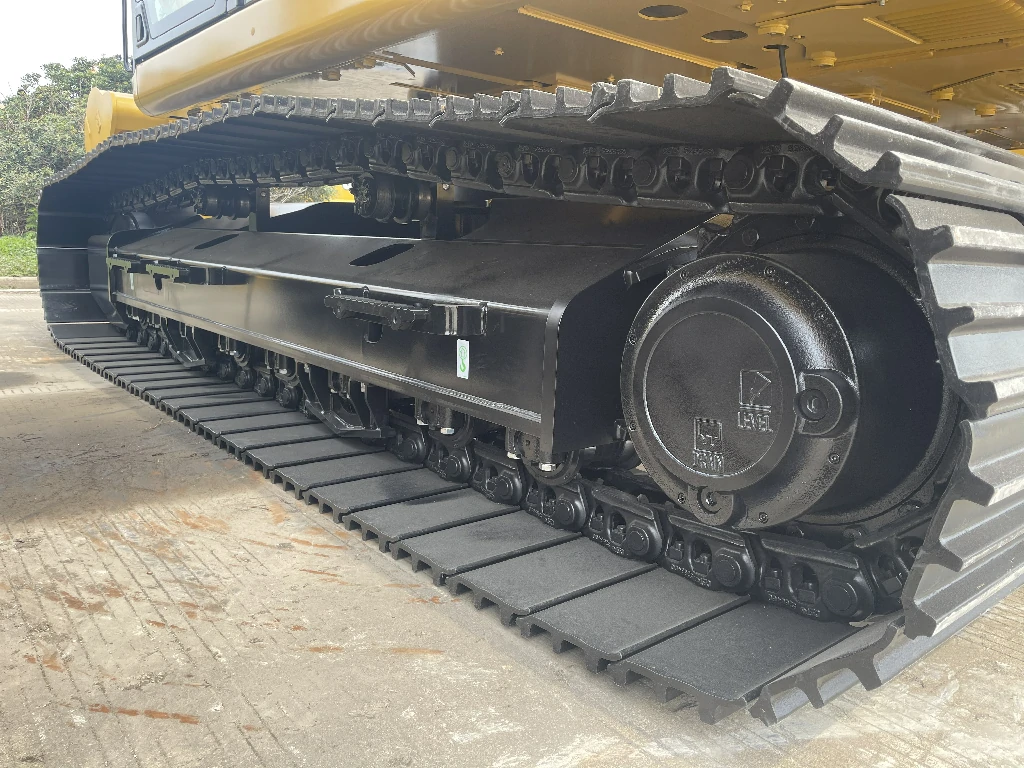
Mining ground is the most abrasive environment a crawler undercarriage meets. Broken rock, ore, coal, and the sharp angular edges that come out of blasting all attack the track chain, the grouser bars, the track rollers, the idler and the drive sprocket simultaneously. The standard planning figure for MAGEON's steel track undercarriage is 5,000–8,000 working hours of chain life on heavy-duty work, and for a mine this is a floor rather than a target — the actual figure depends entirely on what the machine is digging and how much of its shift is spent repositioning over spoil.
The first decision is the material. A steel chain with a taller grouser bar on a longer pitch resists penetration wear in loose material but the bar tips can chip on hard rock, while a shorter pitch and lower bar spread the wear across more contact points. Where the mine works in a hard ore body rather than in spoil, this distinction is worth specifying explicitly rather than accepting the standard configuration.
The second decision is width, because a wider track reduces ground pressure and therefore the rate at which the track is ground into the material, and reduces the impact loading on the grouser bar as the machine crosses uneven ground. MAGEON's 200–500 mm range within the 1–60 ton class exists precisely to allow this tuning against the mine's specific ground.
Third is the frame's contribution to life. A frame that flexes under the machine's weight and dynamic loading accelerates wear at the roller and idler contact points, because the load path becomes uneven. MAGEON's chassis beam is Q345B high-strength steel, with the welded structure optimised for load capacity and torsional rigidity, which keeps the load distributed across the running gear as designed.
Priority two: availability and serviceability underground
A part that fails 300 metres underground is not a repair, it is a recovery operation. This makes availability the second priority and it changes the specification in ways that are not obvious. The first is wear-part accessibility — whether the rollers, idler and sprocket can be inspected and replaced without removing the upper structure, and whether the chain can be split at a link rather than requiring the whole assembly to come off.
The second is the supply chain. A mine needs to hold or be able to rapidly source the consumable set — chain, shoes, rollers, idler, sprocket — in the right specification. A chassis built to a non-standard pitch or a non-standard track width creates a bespoke spare part that cannot be substituted, and in a mine that is a serious commercial problem. This is an argument for specifying a chain and track configuration that has a genuine standard equivalent, even where the frame itself is fully custom.
The third is the drive package. MAGEON's steel track undercarriages are available with hydraulic, electric or mechanical drive. For underground equipment, an electric drive option is worth evaluating for reasons that are not simply about efficiency — an electric travel motor removes the hydraulic lines running to the track frame, which removes both a leak risk underground and a failure point, and it removes the need for a separate hydraulic circuit on a machine that may be operating in a confined heading with limited power available.
The fourth is warranty and supplier support. A one-year or 1,000-hour warranty and ISO 9001:2015 certified production are the baseline, but the more important question for a mine is whether replacement parts can be supplied against the exact configuration. MAGEON supplies a factory inspection report, material mill certificate and video outgoing inspection before dispatch, and the material certificate is what allows a mine's own maintenance function to specify a matching replacement chain.
Priority three: load capacity and structural strength
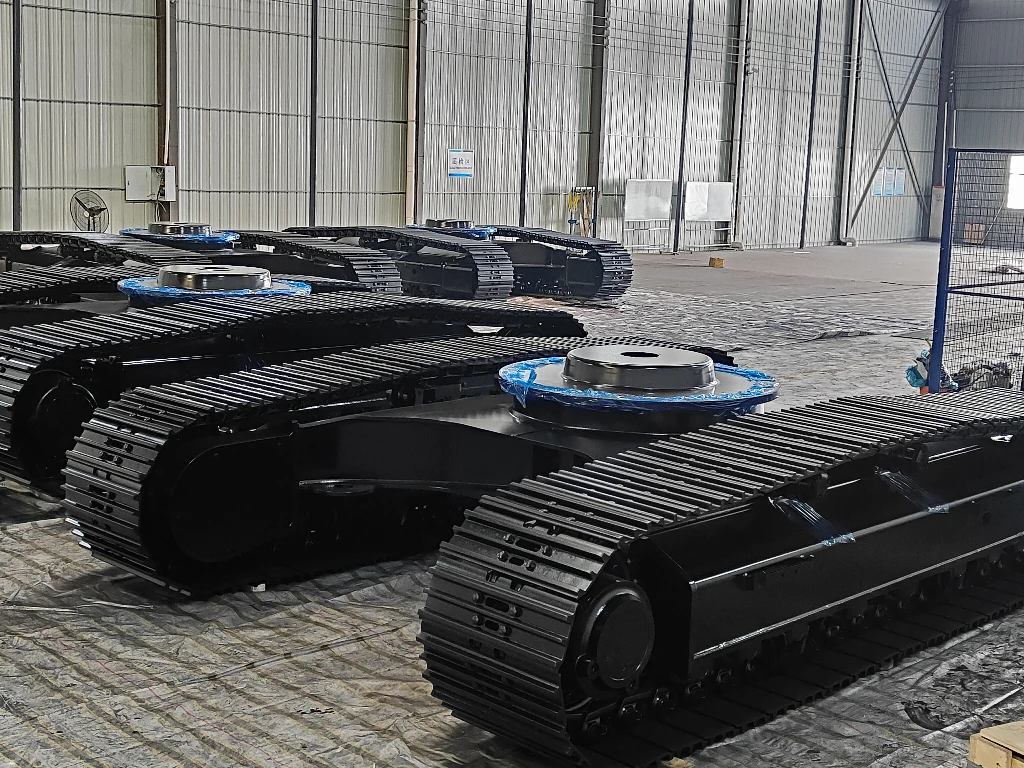
The third priority is matching the chassis to the machine's actual load case, and mining machines are where this is most often under-specified. A mining machine's mass is rarely static — a shovel, a drilling rig, a continuous miner and a screener all shift their weight between ends and between the two crawler units during a work cycle, and the peak load case is not the machine at rest.
What matters is that the load case is stated. MAGEON's requirement assessment covers total machine weight and load distribution, and the distribution figure is the one that determines the crossbeam, roller and sprocket specification. For a machine that slews with a load, the slewing torque is a separate structural input, and MAGEON's optional integrated 360° slewing bearing rotary system is specified against it, built across the same 1–60 ton envelope as the standard chassis so a rotary capability does not force a smaller machine class.
| Priority | Performance criterion | Specified from |
|---|---|---|
| 1 | Wear life in abrasive ground | Chain pitch, grouser profile, track width, frame stiffness |
| 2 | Availability underground | Wear-part accessibility, standard spare parts, drive type |
| 3 | Load capacity and frame strength | Machine weight, load distribution, slewing torque |
| 4 | Total cost per operating hour | Consumable cycle, service intervals, parts supply |
Priority four: total cost per operating hour over the campaign
The fourth priority is the commercial one, and it should be calculated per operating hour rather than on purchase price. MAGEON quotes a customised steel track chassis on negotiation rather than a price list, which means the comparison is genuinely project-by-project. The inputs to the calculation are: the consumable replacement cycle, the service intervals, the parts availability position, and the labour cost of doing the work underground.
Two factors shift the answer more than the others. The first is ground damage, which in mining is usually not a concern — the ground is being blasted and excavated anyway — so the advantage that a rubber undercarriage holds in surface-protection applications largely disappears here. The second is the speed of the repair. A machine that is down for a day per chain replacement in a mine is not losing a day of production from the machine, it is losing a shift for the crew, the ventilation, the power and the supervision that go with it. This is why the consumable cycle and the parts supply position should be evaluated together rather than the purchase price alone.
On the commercial parameters themselves: the minimum order quantity is one set, so a mine's first chassis does not carry a batch penalty. The standard lead time is approximately 20 days for one set and 30 days for two to three sets, with longer timelines negotiated for volume orders. Packaging is a wooden pallet or wooden case, FOB at Shanghai, Ningbo or Shenzhen, with delivery by sea, air or land.
What are the practical limits of steel tracks in mining?
The first limit is the pace of wear in a specific orebody. A machine working a hard, abrasive ore will consume its chain considerably faster than the same machine in a soft deposit, and the cost of the wear items should be modelled on the actual ground rather than on a general planning figure.
The second is the weight penalty. A steel chain and a full steel running gear are heavier than a rubber track arrangement of the same capacity, and on a machine where payload is the limiting factor, the undercarriage weight is a direct reduction in working payload. This is the one case where a rubber track undercarriage can be the better commercial answer, and MAGEON's rubber range covers 1 to 15 tons.
The third is confined heading work. Underground, machine width is severely constrained, and the 200–500 mm track width range means the design has to fit the heading rather than the machine. Where a machine must work in a narrow heading, the 360° slewing bearing option is often the more valuable specification, because it allows the upper structure to rotate without repositioning the tracks in a space where repositioning is very difficult.
How do you specify a mining machine undercarriage?
Beyond the standard five inputs — machine weight and load distribution, mounting interface dimensions including bolt pattern and drive shaft height, required travelling speed, ground and duty conditions, and drive configuration — a mining enquiry should add the orebody and ground description, the expected service life target for the machine, the underground space constraints including heading width, the drive preference, and the spare parts position.
Drawings in DXF, DWG or PDF are accepted and are the fastest route to an accurate quotation, and MAGEON surveys them one-to-one against the host structure, confirming mounting flange dimensions, bolt pattern, drive shaft height and hydraulic interface before manufacturing. Because a mine's machine usually has a complex interface — slewing, oscillation, and a heavy upper structure — the survey is worth doing properly rather than from a catalogue dimension.
Frequently asked questions
How long do steel track undercarriages last in mining conditions?
Plan for 5,000–8,000 working hours of chain life on heavy-duty work, and treat that as a floor for mining rather than a target. Actual life against a hard, abrasive orebody is typically shorter, because the chain, shoes, rollers, idler and sprocket all wear simultaneously. The frame normally outlasts the chain, so the consumable items are the recurring cost and the frame is the capital item. Lubrication runs at approximately 200–250 working hours, and wear items are replaced on a scheduled basis rather than reactively.
Should I specify an electric drive for underground mining machines?
It is worth evaluating, and the reason is not primarily efficiency. An electric travel motor removes the hydraulic lines running down to the track frame, which eliminates a leak source and a failure point underground, and it removes the need for a dedicated travel hydraulic circuit on a machine with limited power headroom. MAGEON's steel track undercarriages are available with hydraulic, electric or mechanical drive, and the choice is confirmed at the requirement assessment stage before production.
How do I ensure spare parts are available for a custom mining undercarriage?
Specify the chain and track configuration so that a genuine standard equivalent exists, even where the frame and mounting interface are fully custom. A bespoke pitch or width creates a spare part that cannot be substituted, and in a mine that is a commercial risk rather than an inconvenience. The material mill certificate supplied with the chassis also allows your own maintenance function to specify a matching replacement. MAGEON's full assembly supply means the wear parts are identified as a package, which simplifies the spare parts list.
Is a rubber track undercarriage ever the better choice in mining?
Rarely for the working face, because abrasive rock destroys a rubber pad long before the chain would be consumed, and ground damage is not a consideration underground. The exception is payload-constrained machines on soft ground, where the weight saving of a rubber arrangement can outweigh the wear economics. MAGEON's rubber track undercarriage family covers 1 to 15 tons, so for a small underground machine this is a genuine option rather than a compromise.
What about heading width constraints?
Machine width underground is a hard limit, and the 200–500 mm track width range has to be specified against the heading rather than the machine. Where the machine must rotate to work a face in a confined space, the integrated 360° slewing bearing rotary system is usually the more valuable specification, because it removes the need to reposition the tracks in a space where that is very difficult. MAGEON builds the slewing-bearing version across the same 1–60 ton envelope as the standard chassis, and the slewing torque requirement is the design input.
What support comes with the chassis?
A one-year or 1,000-hour warranty, production under ISO 9001:2015 quality management, a factory inspection report, a material mill certificate for the Q345B chassis beam material, and video outgoing inspection before dispatch. The standard lead time is approximately 20 days for one set and 30 days for two to three sets, with a minimum order quantity of one set, so a mine's first unit carries no batch penalty. FOB is available at Shanghai, Ningbo or Shenzhen, with sea, air and land delivery.