 English
 简体中文

Steel track undercarriages remain the standard walking system for hydraulic excavators because they combine three things nothing else matches: the ability to carry the machine's full weight on a narrow footprint, mechanical bite that does not depend on friction coefficient, and a service life measured in thousands of working hours rather than months. MAGEON supplies customised steel track undercarriages for crawler machines from 1 to 60 tons, and the practical advantage for an excavator builder is not simply durability — it is the fact that the chassis outlives the machine's upper structure, so a worn chain is a consumable replacement rather than a capital loss.
This article sets out what a steel track undercarriage actually delivers on an excavator, how the construction details create those benefits, where the limits of the design sit, and what information you need to specify one for your own machine.
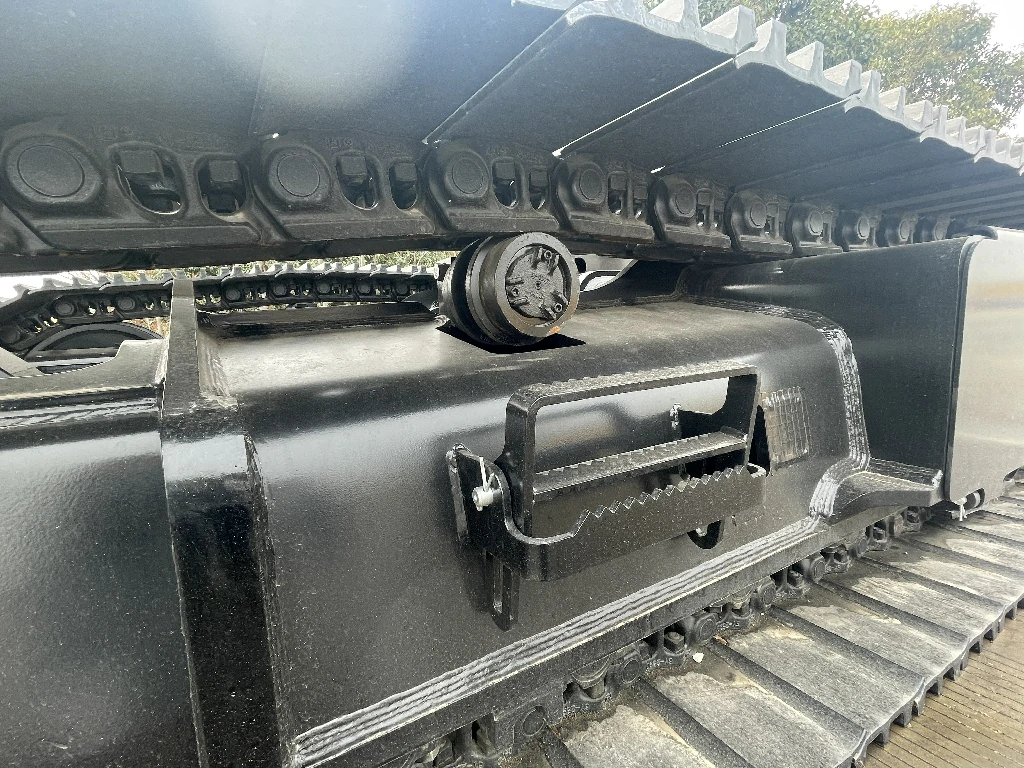
Why do excavators use steel tracks instead of rubber?
The core reason is load distribution combined with mechanical penetration. A steel track transfers the excavator's weight through a chain of forged track links terminating in a track shoe with a welded grouser bar, so contact is concentrated into a narrow line rather than a broad patch. That produces high ground pressure — which is exactly what you want when the excavator is digging into compacted clay, working in a quarry face, or climbing a rubble slope, and exactly what makes steel unsuitable on a customer's lawn.
Rubber track undercarriages solve the ground damage problem, and MAGEON builds them from 1 to 15 tons, but they solve it by trading away the very thing an excavator depends on. A rubber pad grips by friction over a wide area rather than by cutting into the ground. On soft soil, sand, mud and turf that is a better answer. On broken rock, on a hardpan slope, or when the machine has to push a bucket full of spoil, mechanical bite is worth more than a low contact pressure.
There is a third configuration worth knowing: a steel track with bolt-on rubber pads. MAGEON's 3–15 ton rubber-padded steel track undercarriage uses a steel chain as the load-bearing base with rubber pads fitted to the track shoes, at 2–4 km/h travelling speed. Drilling rigs and mobile crushers that relocate frequently between a paved yard and a soft worksite run on exactly this layout.
What is the service life of a steel track undercarriage?
On heavy-duty excavation, a steel track undercarriage is planned around 5,000–8,000 working hours. The frame is a welded Q345B high-strength steel structure — the same beam specification MAGEON uses across the 1–60 ton range — and it routinely outlasts the chain it carries. This is the single most important commercial fact about a steel chassis: the frame and the running gear are capital, the chain and shoes are consumables.
Maintenance is scheduled rather than reactive. Lubrication intervals run at approximately 200–250 working hours, track tension is checked periodically, and wear items — track shoes, rollers, idler and drive sprocket — are replaced as they reach their wear limit rather than when they fail. For an equipment manufacturer servicing a fleet, that predictability is what makes a steel chassis economical.
| Attribute | Steel track undercarriage | Rubber track undercarriage |
|---|---|---|
| Load capacity range | 1–60 tons | 1–15 tons |
| Travelling speed | 1–4 km/h | 0–2 km/h (compact class) |
| Ground contact | Concentrated on grouser bar | Broad patch across pad width |
| Design life | 5,000–8,000 working hours | 800–1,500 pad hours |
| Ground damage | Significant on paving and turf | Minimal |
| Traction on broken rock | Superior | Reduced once pad wears |
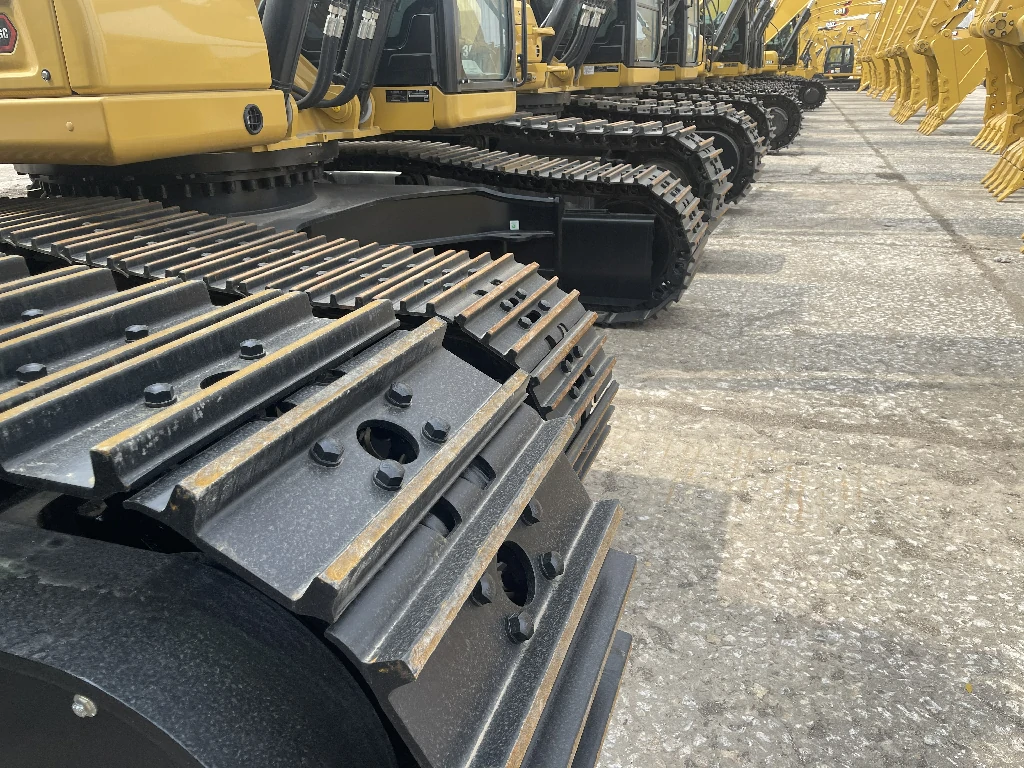
How do steel tracks handle digging and pushing loads?
An excavator spends much of its working life applying force against the ground — pushing a blade, pulling itself up a ramp, holding position against a bucket full of material. This is a case where a wide, low-pressure contact patch works against the machine. A rubber pad slides; a grouser bar digs in.
Chain pitch on MAGEON steel track undercarriages is a variable you can specify, and it governs how the grouser bar interacts with the ground. A taller bar on a longer pitch produces higher drawbar pull and works well in mud, rubble and broken rock. The same geometry that grips a quarry floor will tear up paving, which is why a site operator who has to cross a client's yard or a public road should consider the rubber-padded steel variant rather than a bare steel chain.
Drive torque path is straightforward: hydraulic motor to travel gearbox to drive sprocket to track chain to the ground. MAGEON steel track undercarriages are available with hydraulic, electric or mechanical drive, matched to the customer's power system. The gearbox reduces speed and multiplies torque, and the sprocket transfers that torque into the chain. Because the whole assembly is supplied as one unit, the ratios are matched once rather than being sorted out after delivery.
What are the main components and how are they built?
The component list of a steel track undercarriage is fixed, and it is worth knowing because most wear conversations happen at this level. MAGEON supplies the complete assembly — steel tracks, track links, track rollers, front idlers, drive sprockets, hydraulic motors, travel gearboxes, crossbeams and an optional slewing bearing — which removes the customer from having to source and match eight separate suppliers.
The structural core is the crossbeam and the upper frame, fabricated from Q345B high-strength steel. The welded structure is optimised for load capacity and torsional rigidity, which is what lets the assembly support 1 to 60 tons without flex under boom load. Track shoes carry the grouser bars; track rollers support the chain and transfer the machine load; the front idler guides and tensions the chain; and the drive sprocket converts motor torque into traction.
For an excavator that must slew while travelling, or work in a confined pit where the upper structure needs to rotate independently, the optional slewing bearing integrates a 360° rotary system into the chassis. MAGEON builds this version across the same 1–60 ton envelope, which means a slewing-capable chassis does not force a smaller machine class.
What are the limitations of steel track undercarriages?
The honest answer is ground damage and noise. A bare steel chain on a paved yard leaves tracks, breaks up asphalt edges and is materially noisier at speed than a rubber pad. If the machine operates on public roads, on a customer's field, or on a rented site where surface damage becomes a commercial liability, this is a real cost that does not appear on the equipment budget sheet.
Second limitation is speed against sharp edges. Steel tolerates faster travel than rubber, but a bare steel grouser bar driven at speed across broken rock or construction debris will wear faster and can damage the pad or chain interface. Third, on very soft or wet ground the concentrated contact pressure of a steel chain can cause sinking, where a wide rubber footprint would float the machine.
None of these are reasons to reject a steel chassis. They are reasons to specify the right configuration — a rubber-padded steel track, a narrower grouser bar, a reduced travelling speed — at the quotation stage rather than after the machine is built.
How do you specify a steel track undercarriage for an excavator?
Five data points let MAGEON produce a firm configuration and price. First, total machine weight and load distribution across the two crawler units. Second, the mounting interface — flange dimensions, bolt pattern, drive shaft height, and the hydraulic interface, including port positions and hose routing. Third, required travelling speed. Fourth, the ground and duty conditions, including whether the machine crosses paved surfaces. Fifth, the drive configuration, whether hydraulic, electric or mechanical.
Drawings in DXF, DWG or PDF are accepted and are the fastest route to an accurate quotation. MAGEON surveys them one-to-one against the host structure, so the chassis is a drop-in replacement rather than a rebuild. If drawings are not available, the five points above are enough to begin, and the interface can be confirmed during the design stage.
On commercial terms: the minimum order quantity is one set, so a prototype or a first production run carries no batch penalty. Standard lead time is approximately 20 days for one set and 30 days for two to three sets, with longer timelines negotiated for volume orders. Every chassis ships with a one-year or 1,000-hour warranty and ISO 9001:2015 certification, with video inspection provided before dispatch. Packaging is a wooden pallet or wooden case, with FOB available at Shanghai, Ningbo or Shenzhen, and delivery by ocean, air or land.
Frequently asked questions
How long does a steel track undercarriage last on an excavator?
On heavy-duty excavation, plan for 5,000–8,000 working hours. The welded Q345B frame normally outlasts the chain, so the chain, shoes, rollers, idler and sprocket are consumed and replaced while the frame stays in service. Actual life depends on ground conditions, machine mass, duty cycle and maintenance discipline — working in broken rock shortens it considerably compared to working in a yard.
Can steel track undercarriages be used on paved surfaces?
They can be physically used, but a bare steel chain will damage asphalt and concrete and is significantly noisier. For machines that travel frequently on paving, the correct specification is a steel track with bolt-on rubber pads, which keeps the steel load path and traction while reducing surface marking. MAGEON's 3–15 ton rubber-padded steel track undercarriage is built for exactly this duty, at 2–4 km/h travelling speed.
What is the difference between a steel and a rubber track undercarriage for an excavator?
Steel carries more load, tolerates higher travel speed, lasts roughly five times longer in working hours and grips broken rock far better. Rubber spreads the load over a wider area, protects surfaces, runs quieter and suits soft ground. For an excavator working in rock or hardpan, steel is normally correct. For a mini excavator on turf, in landscaping, or working on a customer's site, rubber or a rubber-padded steel track is usually the better commercial answer.
Can you supply the hydraulic motor and travel gearbox?
Yes. MAGEON delivers the complete undercarriage assembly including the drive package, with hydraulic, electric or mechanical drive available on the steel track undercarriage range. The drive is matched to your hydraulic system parameters at the requirement assessment stage, so the ratios and motor mounting are resolved before manufacturing rather than after delivery.
How do I know the chassis will fit my excavator?
Provide your drawings in DXF, DWG or PDF format. MAGEON surveys them one-to-one against the host structure and confirms mounting flange dimensions, bolt pattern, drive shaft height and hydraulic interface before production. This verification is the single most important step in ordering a custom undercarriage, because it determines whether the chassis bolts straight on or whether the upper structure needs modification.
What information do you need for a quotation?
Total machine weight and load distribution, mounting interface dimensions including bolt pattern and drive shaft height, required travelling speed, ground and duty conditions, and the drive configuration. Drawings accelerate the process, but the five points above are sufficient to start a configuration and price discussion, and MAGEON's engineering team replies within one working day on a technical enquiry.