 English
 简体中文

Steel track undercarriages handle heavy-duty bulldozer work because traction in a bulldozer application comes from three things at once: mechanical bite from the grouser bar, frame stiffness that resists the pitching and twisting loads a blade creates, and a contact geometry that keeps the machine from sliding. A bulldozer spends its working life pushing — pushing soil, pushing rock, pushing a full blade against a stationary mass — so the undercarriage is not simply carrying the machine, it is the element that decides whether the push succeeds. MAGEON supplies customised steel track undercarriages from 1 to 60 tons with 200–500 mm track width and 1–4 km/h travelling speed, and the design decisions that matter for bulldozers concentrate on exactly these three areas.
This article explains how each traction variable works, what limits it, and how to specify a steel track undercarriage for a bulldozer or a crawler dozer.
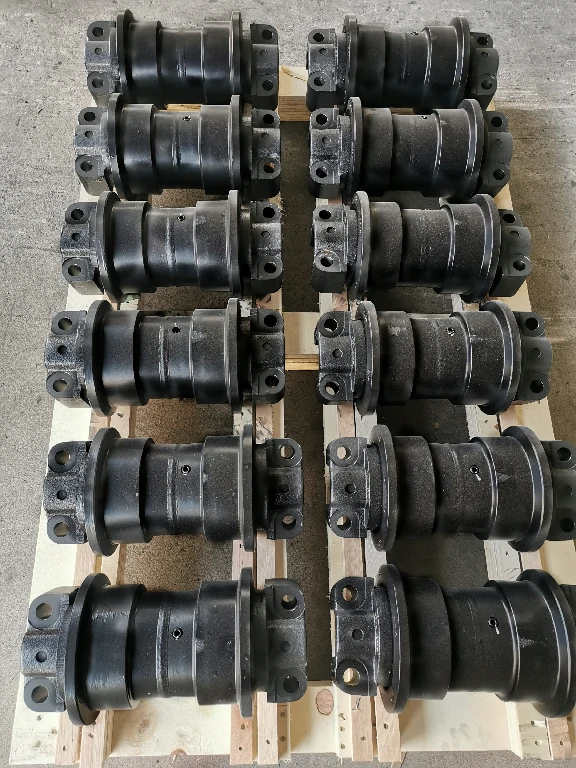
What actually drives traction on a steel track?
Three parameters govern it, and they interact. The first is grouser bar height and profile — the bar is the part that actually contacts the ground, and its height sets how far the track penetrates the surface before the shoe plate bears on it. A taller bar penetrates further, which multiplies the vertical load the soil has to resist before the track slides, and that is the difference between a bulldozer that pulls and a bulldozer that spins.
The second is chain pitch, which is the distance between successive grouser bars. A longer pitch means fewer bars contact the ground at any moment but each penetrates deeper, which usually increases drawbar pull in soft and broken material. A shorter pitch distributes the load over more contact points, which suits hardpan and rock where a deep bar would chip rather than dig. This is a design decision made against the expected ground, not a free parameter.
The third is the track weight distribution and the resulting ground pressure. Ground pressure is set by machine weight divided by total contact area, and it determines whether the track sinks. A bulldozer working in soft saturated soil needs enough area to float; the same machine working on a quarry floor wants concentrated pressure for bite. Because MAGEON's steel track undercarriage width is selectable from 200 to 500 mm within the 1–60 ton range, the width is chosen to place ground pressure where the duty requires it.
How does frame stiffness affect the push?
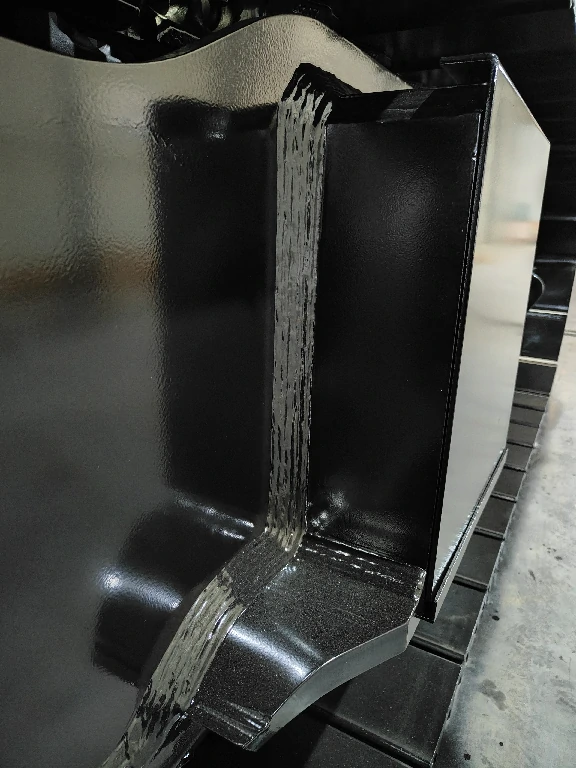
More than most buyers expect. A bulldozer blade generates a large horizontal reaction force, and that force is reacted into the undercarriage at the track frame and the crossbeam. MAGEON's chassis beam is fabricated from Q345B high-strength steel with the welded structure optimised for load capacity and torsional rigidity. That matters because a frame that flexes under a hard push loses the mechanical advantage of the machine's weight transfer and lets the track lift at the front.
The practical symptom of an under-specified frame is a bulldozer that will not hold a grade. The blade fills, the machine starts to climb, the front of the track lifts, the grouser bars lose penetration depth, and the push stalls. The operator compensates by raising the blade, which makes it worse. This is a chassis problem, not an operator problem, and it is why the frame specification should be checked against the machine's class rather than assumed from a similar model.
What are the operating conditions where steel tracks are essential?
Bulldozers work in the heaviest ground classes: raw and broken rock, wet clay, and the compacted spoil of a landfill or a quarry face. In all three, a rubber pad is the wrong tool, for a specific reason. Rubber grips by friction over a compliant area, so a pad that has to resist a horizontal load deforms at the contact patch and the friction coefficient falls exactly when the machine is working hardest. A grouser bar does not deform; it converts the horizontal load into a vertical bearing pressure the soil can resist.
The second condition where steel is essential is long-push, low-speed work — pushing a fill for hundreds of metres at walking pace. This is a duty cycle that rewards chain life and frame rigidity, and it is the standard operating pattern of a crawler dozer on a bulk earthworks contract. MAGEON's steel track undercarriage planning figure of 5,000–8,000 working hours of chain life is drawn from exactly this class of duty.
Third is the mixed-surface case, where a steel track with bolt-on rubber pads is the correct answer: a bulldozer that works a quarry but travels between working faces on haul roads, where a bare steel chain would be destroyed by road debris. MAGEON's rubber-padded steel track undercarriage is built for 3–15 tons at 2–4 km/h and serves the same need — keep the steel load path, protect the surface.
What are the limits of steel track traction?
The limits are worth stating plainly, because they define the boundary of the specification. A bare steel track on a paved or compacted surface is inefficient — the grouser bar skids rather than digs, wear accelerates, and the machine's ground pressure damages the surface it works on. If a bulldozer spends most of its time on a hardstand or a yard rather than in the material, a bare steel chain is over-specified and a rubber-padded variant will serve better.
The second limit is speed against sharp debris. Steel tolerates faster travel than rubber, but a grouser bar driven at 4 km/h across broken rock or construction spoil will chip and wear faster than at working speed. If the route to the face crosses such ground, the travelling speed in the specification should reflect it, and MAGEON's 1–4 km/h range is normally specified toward the lower end for a dozer that spends time repositioning.
The third limit is weight distribution. A bulldozer with a rear-mounted ripper or a heavy push blade shifts load rearward, and the load case that sizes the frame is the push, not the travel. This needs to be stated in the requirement assessment, because it is the input that determines whether the frame is adequate.
| Traction variable | Effect on bulldozer performance | Specified from |
|---|---|---|
| Grouser bar height | Penetration depth and drawbar pull in soft material | Ground type, material being pushed |
| Chain pitch | Balance of penetration against contact point count | Hardpan or broken rock, vs soft ground |
| Track width | Ground pressure and floatation | Machine weight, soil bearing capacity |
| Frame stiffness | Holds grouser bar contact under push load | Machine class, push load case |
| Travelling speed | Repositioning rate and wear on debris | Route surface, operating pattern |
How is a bulldozer undercarriage configured in practice?
The MAGEON approach starts with the requirement assessment: machine weight and load distribution, mounting interface dimensions including bolt pattern and drive shaft height, required travelling speed, ground and duty conditions, and drive configuration. For a bulldozer, the load distribution data is the item most often under-supplied, because the machine's mass shifts substantially between blade work, ripper work and travel, and the push case is the governing one.
On the drive side, a bulldozer's travel drive has to absorb a reaction from the blade that has nothing to do with the travel function, so the motor and travel gearbox selection is made with the push load case in mind rather than the travel speed alone. MAGEON's steel track undercarriages are available with hydraulic, electric or mechanical drive, and the drive package is matched to the machine's hydraulic system parameters at the assessment stage.
On the structure, the 1–60 ton range with 200–500 mm track width covers the crawler dozer class fully, and the option of an integrated 360° slewing bearing rotary system is available where the machine must change working direction without repositioning the whole chassis. Where the machine is a crawler with an oscillating frame, the interface between the chassis and the oscillation joint is part of the mounting interface survey and needs to be captured accurately in the drawings.
What information is needed for a bulldozer quotation?
The five standard items apply: total machine weight and load distribution, mounting interface dimensions including bolt pattern and drive shaft height, required travelling speed, ground and duty conditions including what material is being pushed, and the drive configuration. Drawings in DXF, DWG or PDF are accepted, and MAGEON surveys them one-to-one against the host structure, confirming mounting flange dimensions, bolt pattern, drive shaft height and hydraulic interface before manufacturing.
Commercially, the minimum order quantity is one set, standard lead time is approximately 20 days for one set and 30 days for two to three sets, with longer timelines negotiated for volume orders. Every chassis ships with a one-year or 1,000-hour warranty and ISO 9001:2015 certification, with a factory inspection report, material mill certificate and video outgoing inspection available before dispatch. Packaging is a wooden pallet or wooden case, FOB at Shanghai, Ningbo or Shenzhen, with delivery by sea, air or land.
Frequently asked questions
Why does my bulldozer's track slip in wet clay?
Three causes are possible, and they are diagnosed in that order. First, the track is too narrow for the machine weight and the soil's bearing capacity, so the track sinks rather than gripping, and the grouser bar never engages. Second, the grouser bar height is too low for the material, so the track skims the surface. Third, the frame is flexing under the push load, lifting the front of the track and reducing penetration depth. MAGEON's steel track undercarriage addresses all three through the width selection, the chain and grouser specification against the ground, and the Q345B welded frame sized to the push load case.
Is a rubber track undercarriage ever right for a bulldozer?
Rarely for the working face, and the reason is mechanical rather than commercial. Rubber grips by friction over a compliant area, so a pad resisting a horizontal push deforms at the contact patch and loses grip exactly when the load is highest. A steel track with bolt-on rubber pads is a workable compromise for a dozer that works a quarry but travels on roads, because the steel chain carries the load and the pads protect the surface. For a machine working on a soft field with low ground pressure requirements, a full rubber track can be correct, but that is a different machine class.
How fast should a bulldozer travel between working faces?
Slower than most buyers expect, and this is a deliberate specification choice rather than an oversight. MAGEON's steel track undercarriage range covers 1–4 km/h, and a dozer that spends its life repositioning is normally specified toward the lower end. Higher speed against broken rock or construction spoil accelerates grouser bar and chain wear significantly, and in a push-intensive duty the working hours are better spent on the push than on the travel. The rubber-padded variant, at 2–4 km/h, exists for machines whose travel route is on a hard surface where a bare chain would be destroyed.
What is the chain life on a bulldozer?
Plan for 5,000–8,000 working hours on heavy-duty work, with the frame normally outlasting the chain. The chain, track shoes, rollers, idler and sprocket are the consumable items; the welded Q345B frame is not. Lubrication runs at approximately 200–250 working hours, and track tension is checked on a scheduled basis. Actual life depends heavily on how much broken rock the machine works and how often the blades and rippers are being dragged across the track path.
Can you supply a chassis for a machine with an oscillating frame?
Yes, and the oscillation joint is captured as part of the mounting interface survey. The flange dimensions, bolt pattern, drive shaft height and hydraulic interface are all surveyed one-to-one against the host structure and confirmed in writing before manufacturing, so the oscillation interface is resolved at the design stage rather than at assembly. MAGEON's chassis covers 1 to 60 tons with 200–500 mm track width and is built to order, so the machine's actual configuration is the design input.
How long does a custom bulldozer undercarriage take?
Approximately 20 days for one set and 30 days for two to three sets from approval of the configuration and interface, with longer timelines for volume orders. The minimum order quantity is one set, so a prototype carries no batch penalty. The configuration and price come back within one working day of a technical enquiry when the weight, interface, speed, ground conditions and drive requirement are supplied, and every chassis ships with a one-year or 1,000-hour warranty under ISO 9001:2015 certification.