 English
 简体中文

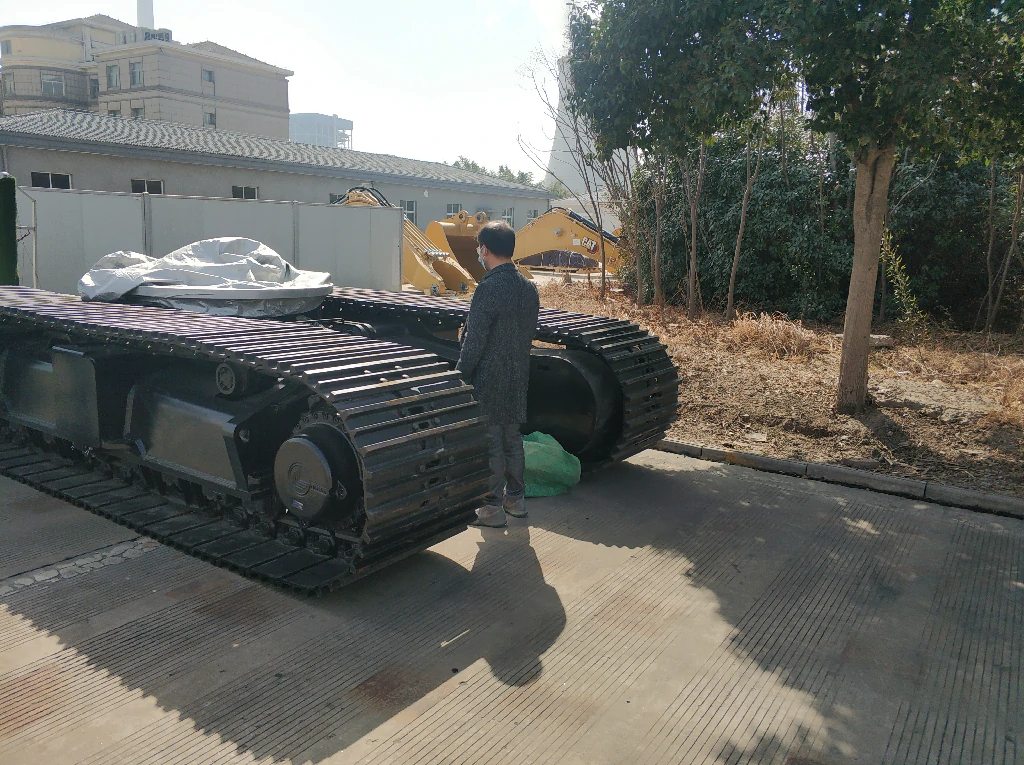
Steel track undercarriages are the right answer for agricultural crawler machines that work in the heaviest soil conditions — specifically sugarcane harvesting, deep tillage, land remediation and orchard operations in hilly or rocky terrain. The determining factor is not the crop but the ground: where the machine has to cross compacted, wet, stony or freshly worked soil, a steel track's narrow grouser-bar footprint delivers traction and durability that a rubber pad cannot match. MAGEON's steel track undercarriage range covers 1 to 60 tons, and a custom triangular rubber tracked undercarriage for sugarcane harvesters has already been supplied at 5.5 tons with two independent crawler units, which shows how the configuration is matched to the machine rather than to a catalogue.
This article covers the agricultural applications where steel tracks are the correct specification, where they are not, and how the seasonal working pattern in agriculture affects the durability calculation.
What makes agricultural duty different from construction duty?
Three characteristics of farm work change the undercarriage calculation. The first is soil variability — a single field may contain soft mud after rain, hard dry clay, and stones from old tree roots and clearing operations, sometimes within the same working pass. A chassis tuned for one condition will be wrong for the other two, and a steel track tolerates that variability better than a rubber pad because its traction comes from mechanical penetration rather than friction over a compliant surface.
The second is seasonal intensity. Agricultural machines are often used intensively for a short season and then parked. A sugarcane harvester might run hard for eight to ten weeks a year. This makes total operating hours across the asset's life relatively low, which shifts the economics: if the chain will not be consumed within the machine's service life anyway, the higher initial cost of a steel chassis is amortised over more years, and the rubber pad's frequent replacement cycle becomes an argument against it.
The third is ground damage in the customer's field. Steel tracks do mark soil, and on a soft cultivated field that is a genuine cost. But agricultural ground is usually being disturbed anyway — a harvester or a tiller is there to break the soil surface — so the ground-damage penalty that dominates construction and landscaping decisions is much smaller here.
Where steel tracks are the correct specification
Sugarcane harvesting is the clearest case. Harvesters work in fields that are often wet at the base of the cane row, with heavy cane trash and stalk residue that would cut a rubber pad. MAGEON's triangular rubber tracked undercarriage for sugarcane harvesters used two independent crawler units on a 5.5-ton machine, with overall dimensions of 1780 × 450 × 1161 mm — a configuration chosen to spread the weight across the row without the machine sinking or tipping into the furrow.
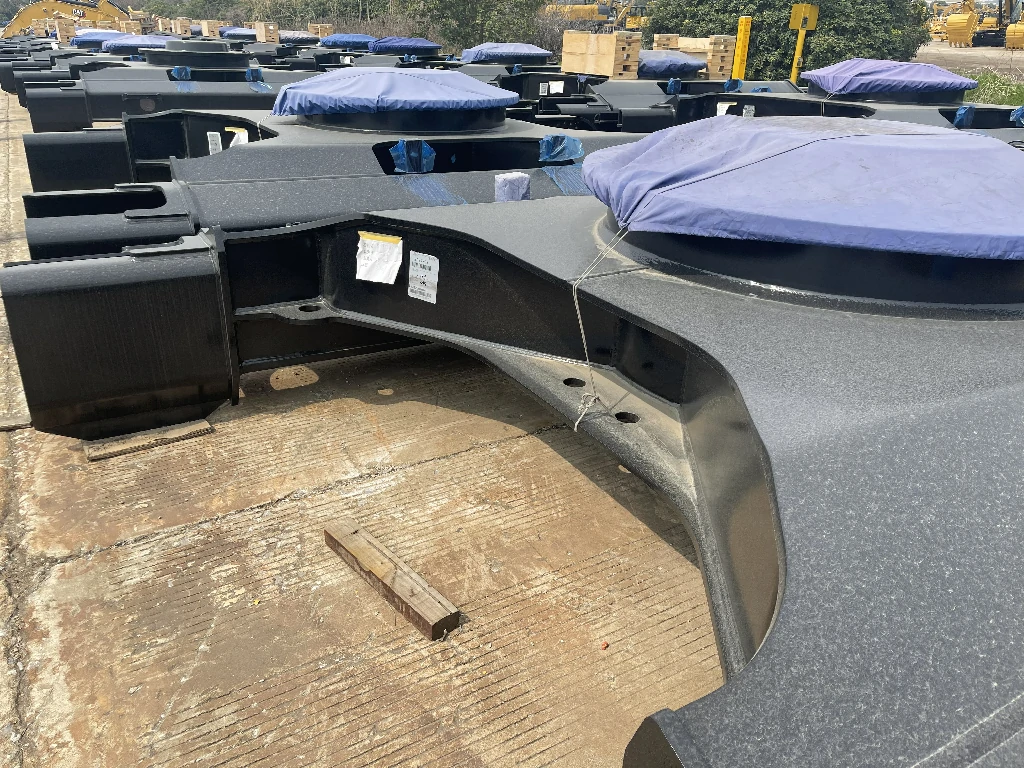
Deep tillage and subsoiling is the second. These machines exist to break compacted hardpan at depth, and they do so with significant downforce while the tracks resist being pulled sideways through the soil. Steel grouser bars dig in and hold the machine against a lateral load that would slide a rubber pad. Orchard and vineyard operations on slopes are the third, where the requirement is stability on an incline and low ground pressure on the row, and where the terrain is frequently stony from clearing operations.
Land remediation and farmland renovation equipment is the fourth. These are heavy machines working in broken ground, and MAGEON's steel track undercarriages are specified for this class routinely. Farmland drainage trenching, which is a specialist crawler application involving long-duration work in the soil, is the fifth.
Where steel tracks are the wrong specification
On soft, wet, or sandy ground where the machine's priority is floatation rather than traction, rubber is the better engineering answer. A wide rubber pad spreads the load and lets the machine work a field that a steel track would rut and sink into. MAGEON's rubber track undercarriage family covers 1 to 15 tons precisely for this class.
On turf and pasture, where the machine must cross a field without damaging the sward — which is the normal requirement on a working farm with grazing animals — a rubber track or a rubber-padded steel track is the correct choice. MAGEON's rubber-padded steel track undercarriage for drilling rigs and mobile crushers uses a steel chain as the load-bearing base with rubber pads bolted to the track shoes, and the same logic applies to an agricultural machine that moves between a field and a yard.
The distinction to keep in mind is that the choice is really about ground condition and travel surface, not about the fact that the machine is an agricultural one. A sugarcane harvester working in wet clay wants steel. The same harvester crossing a farm track to reach the field wants pads.
| Agricultural application | Dominant ground condition | Recommended track type |
|---|---|---|
| Sugarcane harvesting | Wet clay, cane trash, residue | Steel track, or steel with rubber pads on travel routes |
| Deep tillage and subsoiling | Compacted hardpan, high downforce | Steel track |
| Land remediation | Broken, stony, uneven ground | Steel track |
| Orchard and slope work | Stony rows, incline | Steel track for traction, wide gauge for stability |
| Pasture and turf work | Sward must not be damaged | Rubber track or rubber-padded steel track |
| Wet soft field, floatation priority | Saturated or sandy soil | Rubber track |
How does the seasonal duty pattern affect the durability calculation?
Because agricultural machines see fewer annual hours than construction equipment, the planning figure for a steel chain's 5,000–8,000 working hour life should be spread over the machine's actual service life rather than assumed to be consumed quickly. A harvester running eight weeks a year at 10 hours a day reaches roughly 400 hours annually, so a 5,000-hour chain represents more than a decade of service — which usually means the chain outlives the machine and the frame is the only structural item that matters at end of life.
The corollary is that the maintenance schedule should follow the seasonal cycle rather than a fixed hour count. Lubrication at 200–250 working hours means roughly one service per season rather than one per month, and the track tension check should happen at the start of each working period, because a machine that has sat for months may have settled. This is a different maintenance rhythm from a construction fleet, and it is worth planning for explicitly rather than discovering it after the first season.
What configuration details matter most for agricultural machines?
Track width and track gauge. Agricultural machines are often wide relative to their weight, and the operating width has to match the crop row spacing — a harvester that cannot straddle the row correctly loses more time than the undercarriage saves. MAGEON's 5.5-ton triangular sugarcane harvester undercarriage measures 1780 × 450 × 1161 mm, and the 450 mm dimension in that arrangement is set by the row and the machine layout, not by the load.
Second, the drive configuration. Agricultural machines have seasonal hydraulic demand, and where the machine's own system cannot also drive the tracks at the required speed, an electric drive option is worth evaluating against the standard hydraulic arrangement. MAGEON's steel track undercarriages are available with hydraulic, electric or mechanical drive.
Third, corrosion exposure. Machines working in wet soil and stored outdoors between seasons face sustained moisture, and the finish specification and the protection of the roller and idler surfaces are worth confirming at order stage. A 360° slewing bearing configuration is also worth considering for machines that must change working direction frequently in a confined field without repositioning the whole machine.
How do you specify an undercarriage for an agricultural machine?
Five inputs: total machine weight and load distribution, the mounting interface dimensions including bolt pattern and drive shaft height, the required travelling speed, the ground and duty conditions including the crop and the travel surfaces between the field and the yard, and the drive configuration. Drawings in DXF, DWG or PDF are accepted and are the fastest route, and a measured sample of the existing chassis is an accepted alternative when drawings are unavailable.
Commercially, MAGEON's minimum order quantity is one set, standard lead time is approximately 20 days for one set and 30 days for two to three sets, with longer timelines negotiated for volume orders. Every chassis ships with a one-year or 1,000-hour warranty and ISO 9001:2015 certification, with video outgoing inspection available before dispatch.
Frequently asked questions
Are steel tracks suitable for sugarcane harvesting?
Yes — wet clay, cane trash and stalk residue are conditions that work against a rubber pad, and steel tracks are the standard answer. MAGEON has supplied a custom triangular rubber tracked undercarriage for a sugarcane harvester at 5.5 tons, using two independent crawler units on a 1780 × 450 × 1161 mm arrangement, which is configured to straddle the row while resisting sinking in the furrow. The choice between a bare steel track and a rubber-padded steel track on that machine comes down to whether it travels on paved surfaces between fields.
Will steel tracks damage a farmer's field?
They will, and in most agricultural applications that cost is acceptable because the machine is there to break the soil surface anyway. Where the sward must be preserved — pasture, turf, a harvested field that is being conserved — a rubber track or a rubber-padded steel track is the correct specification. A steel track with bolt-on rubber pads is the compromise when the machine needs steel traction in the field and needs to travel on a yard or a road without marking it.
How often does an agricultural undercarriage need maintenance?
The steel track undercarriage lubrication interval is approximately 200–250 working hours, and track tension, rollers, idler and sprocket are inspected on a scheduled basis. On a seasonal agricultural machine this works out to roughly one service per working season rather than a monthly interval, and the track tension check should be done at the start of each season, because a machine that has stood for months may have settled. The planning figure for chain life remains 5,000–8,000 working hours.
Can I convert an existing agricultural machine to a wider track for stability?
That is a chassis replacement rather than a track change, and it is often the more economical route. Changing the track width affects the track gauge, the frame, the drive sprocket and the mounting interface, so it is normally resolved by specifying a new customised steel track undercarriage engineered to the machine. MAGEON customises the mounting flange, bolt pattern, drive shaft height and hydraulic interface to the host structure, surveyed one-to-one, so the replacement is a drop-in unit rather than a rebuild.
What about low-horsepower agricultural machines?
The drive configuration is specified per project, with hydraulic, electric and mechanical options available on the steel track undercarriage range. The drive package is matched to the machine's actual hydraulic system parameters, so a low-flow machine gets a matched motor and gearbox rather than an oversized one. Because the minimum order quantity is one set, a low-volume agricultural machine builder can order a single prototype without a batch penalty.
How long does a custom agricultural undercarriage take to deliver?
Approximately 20 days for one set and 30 days for two to three sets, with longer timelines negotiated for volume orders, from the point the configuration and interface are approved. Shipping is by wooden pallet or wooden case, FOB Shanghai, Ningbo or Shenzhen, with sea, air and land options. The configuration and price are returned within one working day of a technical enquiry, provided the weight, interface, speed, ground conditions and drive requirement are supplied.